Paraguay
Beschreibung
Bradt's Paraguay was the first standalone guidebook to the country published internationally, and this new fourth edition remains the most detailed guide available. Covering the whole of this little-explored South American nation, it complements the best-known...Format auswählen
- Kartonierter EinbandCHF 38.00

Wird oft zusammen gekauft
Andere Kunden kauften auch
Beschreibung
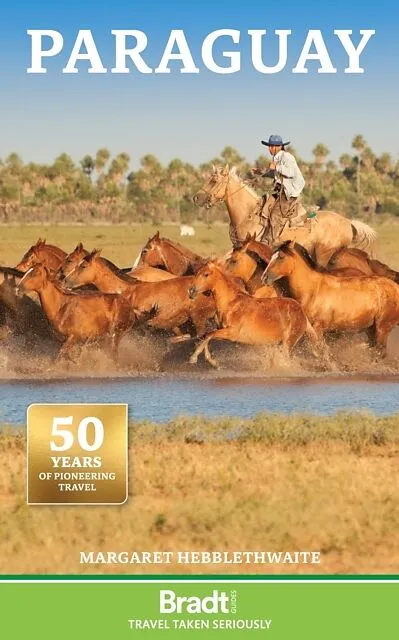
Bradt's Paraguay was the first standalone guidebook to the country published internationally, and this new fourth edition remains the most detailed guide available. Covering the whole of this little-explored South American nation, it complements the best-known sights with off-the-beaten track attractions well beyond the tourist trail, and throws in a cross-border excursion to adjacent Iguazu/Iguacu Falls (one of the 'New 7 Wonders of Nature').Sitting in the heart of South America, Paraguay takes the shape of a lopsided butterfly, its wings divided by the River Paraguay. Its western part is the Chaco - a wildlife-rich area of wetlands and arid woodland that reaches north to enter the famous Pantanal region. The eastern region is characterised by craft, music and campesino country life, with landscapes including savannahs and vestiges of Atlantic Forest. The country is perfect for the adventurous traveller who likes to be immersed in local culture and natural landscapes. Nature and ecclestiastical tourism are both rewarding, travelling is inexpensive, music and dance are widely enjoyed (including during Encarnacion's month-long carnival), and history centres on old Jesuit mission settlements. Then there are elements of intrigue: football is believed to have been invented in Paraguay's Jesuit missions during 1793; the Paraguayan harp is a world-renowned beautiful instrument; drinking terere (an ice-cold infusion of yerba mate leaves and medicinal herbs) is a communal event; and Chaco salt lakes were actually open sea 60 million years ago.Written by a long-term resident who leads an educational charity and founded a small hotel run for community profit, and thoroughly updated by two seasoned travel writers who have worked on scores of guidebooks, this new edition reflects recent changes in Paraguay. There is greater coverage of ecotourism destinations such as Yacyreta, Yabebyry, Mbaracayu and Atinguy, while the capital Asuncion features new museums including the Centro Cultural de Espana Juan de Salazar.With everything from phone numbers of local keyholders to museums and churches to a map of how to reach remote waterfalls and advice on etiquette, Bradt's Paraguay offers all the background information required for a successful trip to this gem of a South American country....
Autorentext
On her first visit to Paraguay, in 1996, Margaret Hebblethwaite fell in love with Santa Maria de Fe, a small town in rural Misiones, which had originally been a Jesuit mission (or Reduction) for the indigenous Guaraní people. After four years waiting for her youngest child to grow up, she moved to the town in 2000 – initially for a year – to deepen her knowledge of Latin American communities to inform her work on liberation theology. She never left, setting up a local hotel (now run by the local community), founded a charity called the Santa Maria Education Fund, worked with a local sewing co-operative, taught English and written Bradt’s Paraguay travel guide, which has run to four editions. She is also the author of ten religious books in the areas of feminist theology, spirituality and Latin American liberation theology.
Inhalt
Introduction
PART ONE GENERAL INFORMATION
Chapter 1 Background Information
Geography, Climate, Natural history and conservation, History , Government and
politics, Economy, People, Language, Religion and beliefs, Education, Culture, Sport
Chapter 2 Practical Information
When to visit, Highlights and suggested itineraries, Tourist information and tour operators, Red tape, Getting there and away, Health,Safety, Travelling with a disability, What to take, Money and budgeting, Getting around, Accommodation, Eating and drinking, Public holidays and festivals, Shopping, Arts and entertainment, Visiting museums and churches, Media and communications, Cultural etiquette, Travelling positively
PART TWO THE GUIDE
Chapter 3 Asunción
History, Getting there and away, Orientation, Getting around, Tourist information and tour operators, Where to stay, Where to eat and drink, Entertainment and nightlife, Shopping, Other practicalities, What to see and do
Chapter 4 Circuito de Oro
Getting out of Asuncion, Suggested circuits, Fernando de la Mora, Travelling along Ruta 2, Towns north of Ruta 2, Towns south of Ruta 2, Travelling along Ruta 1
Chapter 5 Misiones and the Jesuit Reductions
Villa Florida, San Miguel, San Juan Bautista, San Ignacio Guasú, Santa María de Fe, Santa Rosa, Santiago, Ayolas and around
Chapter 6 Southwest to Ñeembucú and the Old Battlegrounds
Pilar and around, Humaitá, Fishing pueblos along the Río Paraná, Northern Ñeembucú
Chapter 7 Southeast to Itapúa and the Ruins
San Cosme y Damián and around, Carmen del Paraná, Trinidad, Jesús, Around Trinidad and Jesús, Excursion to San Ignacio Miní, Excursion to San Rafael, Encarnación
Chapter 8 Ciudad del Este and the East
Ciudad del Este, To the north of Ciudad del Este, To the south of Ciudad del Este
Chapter 9 Excursion to the Iguazú Falls
Puerto Iguazú, Foz do Iguaçu
Chapter 10 Villarrica and Central Eastern Paraguay
Coronel Oviedo and around, Yataitý, Independencia, Villarrica, Caazapá
Chapter 11 Concepción and the Northeast
Getting there and away, Travelling north along Rutas 3 and 8, San Pedro de Ycuamandyyú, Concepción, The far north, Pedro Juan Caballero, Cerro Corá National Park and the surrounding area, The east-northeast
Chapter 12 The Chaco
Within reach of Asunción, Travelling along the Ruta Transchaco, The humid Chaco, up to Pozo Colorado, Filadelfia, Boquerón, Loma Plata, Salt Lakes, Mariscal Estigarribia and the northern nature reserves, The Pantanal
Appendix 1 Language
Appendix 2 Glossary
Appendix 3 Selective list of fauna
Appendix 4 Further information
Index
Index of Advertisers