
IHR WARENKORB IST AKTUELL LEER.
Haben Sie noch nichts passendes gefunden? Stöbern Sie durch unser komplettes Sortiment.
Oder melden Sie sich an bzw. registrieren Sie sich.
- Kostenlose Lieferung
- Kauf auf Rechnung
- Ex Libris Tiefpreis
- Filiallieferung und 650+ Abholorte
- Rabatt-Bons als Club-Mitglied
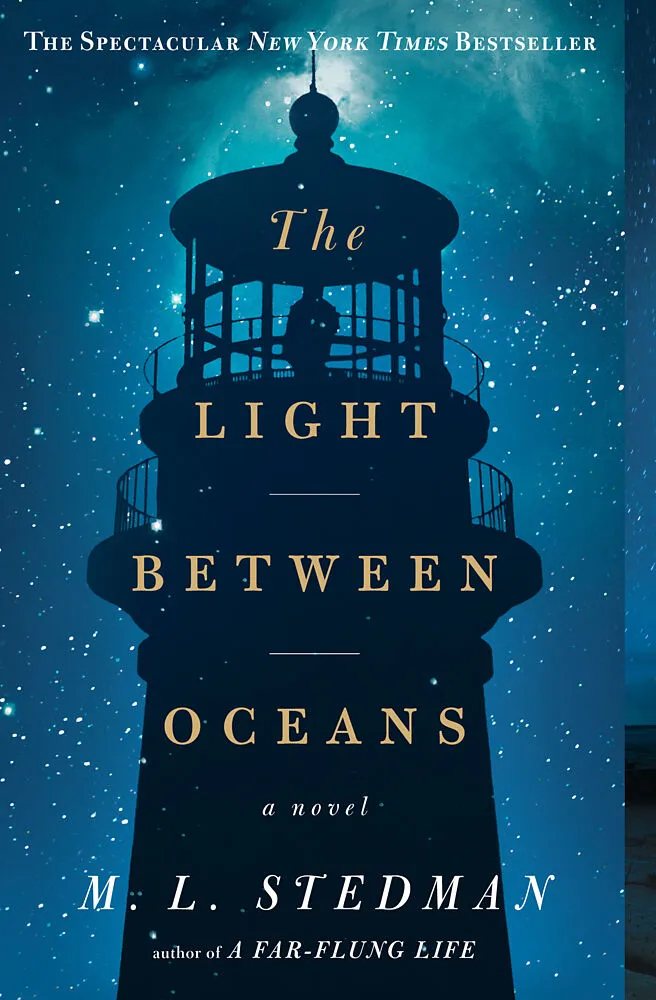
The Light Between Oceans
Beschreibung
Zusatztext Sublimely written! poetic in its intensity and frailtyThis is a simply beautiful story that deserves the praise and wide audience it's receiving. A stunning debut from a new voice that I can't wait to hear again. Informationen zum Autor M.L. Stedman...Format auswählen
- Kartonierter EinbandCHF 24.00

Beschreibung
Zusatztext Sublimely written! poetic in its intensity and frailtyThis is a simply beautiful story that deserves the praise and wide audience it's receiving. A stunning debut from a new voice that I can't wait to hear again. Informationen zum Autor M.L. Stedman was born and raised in Western Australia and now lives in London. The Light Between Oceans was her first novel. A Far-flung Life is her second novel. Klappentext This months-long "New York Times"-bestseller is "irresistible . . . seductive . . . with a high concept plot that keeps you riveted from the first page" ("O, The Oprah Magazine"). After four harrowing years on the Western Front, Tom Sherbourne returns to Australia and takes a job as the lighthouse keeper. After not having a child of her own, his wife Isabel hears a baby's cries in the wind. Leseprobe Light Between Oceans CHAPTER 1 16th December 1918 Yes, I realize that, Tom Sherbourne said. He was sitting in a spartan room, barely cooler than the sultry day outside. The Sydney summer rain pelted the window, and sent the people on the pavement scurrying for shelter. I mean very tough. The man across the desk leaned forward for emphasis. It's no picnic. Not that Byron Bay's the worst posting on the Lights, but I want to make sure you know what you're in for. He tamped down the tobacco with his thumb and lit his pipe. Tom's letter of application had told the same story as many a fellow's around that time: born 28 September 1893; war spent in the Army; experience with the International Code and Morse; physically fit and well; honorable discharge. The rules stipulated that preference should be given to ex-servicemen. It can't Tom stopped, and began again. All due respect, Mr. Coughlan, it's not likely to be tougher than the Western Front. The man looked again at the details on the discharge papers, then at Tom, searching for something in his eyes, in his face. No, son. You're probably right on that score. He rattled off some rules: You pay your own passage to every posting. You're relief, so you don't get holidays. Permanent staff get a month's leave at the end of each three-year contract. He took up his fat pen and signed the form in front of him. As he rolled the stamp back and forth across the inkpad he said, Welcomehe thumped it down in three places on the paperto the Commonwealth Lighthouse Service. On the form, 16th December 1918 glistened in wet ink. The six months' relief posting at Byron Bay, up on the New South Wales coast, with two other keepers and their families, taught Tom the basics of life on the Lights. He followed that with a stint down on Maatsuyker, the wild island south of Tasmania where it rained most days of the year and the chickens blew into the sea during storms. On the Lights, Tom Sherbourne has plenty of time to think about the war. About the faces, the voices of the blokes who had stood beside him, who saved his life one way or another; the ones whose dying words he heard, and those whose muttered jumbles he couldn't make out, but who he nodded to anyway. Tom isn't one of the men whose legs trailed by a hank of sinews, or whose guts cascaded from their casing like slithering eels. Nor were his lungs turned to glue or his brains to stodge by the gas. But he's scarred all the same, having to live in the same skin as the man who did the things that needed to be done back then. He carries that other shadow, which is cast inward. He tries not to dwell on it: he's seen plenty of men turned worse than useless that way. So he gets on with life around the edges of this thing he's got no name for. When he dreams...
#8220;Sublimely written, poetic in its intensity and frailty…This is a simply beautiful story that deserves the praise and wide audience it’s receiving. A stunning debut from a new voice that I can’t wait to hear again.”
Autorentext
M.L. Stedman was born and raised in Western Australia and now lives in London. The Light Between Oceans was her first novel. A Far-flung Life is her second novel.
Klappentext
This months-long "New York Times"-bestseller is "irresistible . . . seductive . . . with a high concept plot that keeps you riveted from the first page" ("O, The Oprah Magazine"). After four harrowing years on the Western Front, Tom Sherbourne returns to Australia and takes a job as the lighthouse keeper. After not having a child of her own, his wife Isabel hears a baby's cries in the wind.
Zusammenfassung
The years-long New York Times bestseller and major motion picture from Spielberg’s Dreamworks is “irresistible…seductive…with a high concept plot that keeps you riveted from the first page” (O, The Oprah Magazine).
After four harrowing years on the Western Front, Tom Sherbourne returns to Australia and takes a job as the lighthouse keeper on Janus Rock, nearly half a day’s journey from the coast. To this isolated island, where the supply boat comes once a season, Tom brings a young, bold, and loving wife, Isabel. Years later, after two miscarriages and one stillbirth, the grieving Isabel hears a baby’s cries on the wind. A boat has washed up onshore carrying a dead man and a living baby.
Tom, who keeps meticulous records and whose moral principles have withstood a horrific war, wants to report the man and infant immediately. But Isabel insists the baby is a “gift from God,” and against Tom’s judgment, they claim her as their own and name her Lucy. When she is two, Tom and Isabel return to the mainland and are reminded that there are other people in the world. Their choice has devastated one of them.
Leseprobe
Light Between Oceans
CHAPTER 1
16th December 1918
Yes, I realize that,” Tom Sherbourne said. He was sitting in a spartan room, barely cooler than the sultry day outside. The Sydney summer rain pelted the window, and sent the people on the pavement scurrying for shelter.
“I mean very tough.” The man across the desk leaned forward for emphasis. “It’s no picnic. Not that Byron Bay’s the worst posting on the Lights, but I want to make sure you know what you’re in for.” He tamped down the tobacco with his thumb and lit his pipe. Tom’s letter of application had told the same story as many a fellow’s around that time: born 28 September 1893; war spent in the Army; experience with the International Code and Morse; physically fit and well; honorable discharge. The rules stipulated that preference should be given to ex-servicemen.
“It can’t—” Tom stopped, and began again. “All due respect, Mr. Coughlan, it’s not likely to be tougher than the Western Front.”
The man looked again at the details on the discharge papers, then at Tom, searching for something in his eyes, in his face. “No, son. You’re probably right on that score.” He rattled off some rules: “You pay your own passage to every posting. You’re relief, so you don’t get holidays. Permanent staff get a month’s leave at the end of each three-year contract.” He took up his fat pen and signed the form in front of him. As he rolled the stamp back and forth across the inkpad he said, “Welcome”—he thumped it down in three places on the paper—“to the Commonwealth Lighthouse Service.” On the form, “16th December 1918” glistened in wet ink.

The six months’ relief posting at Byron Bay, up on the New South Wales coast, with two other keepers and their families, taught Tom the basics of life on the Lights. He followed that with a stint down on Maatsuyker, the wild island south of Tasmania where it rained most days of the year and the chickens blew into the sea during storms.
On the Lights, Tom Sherbourne has plent…