Haben Sie noch nichts passendes gefunden? Stöbern Sie durch unser komplettes Sortiment.
Oder melden Sie sich an bzw. registrieren Sie sich.


Beschreibung
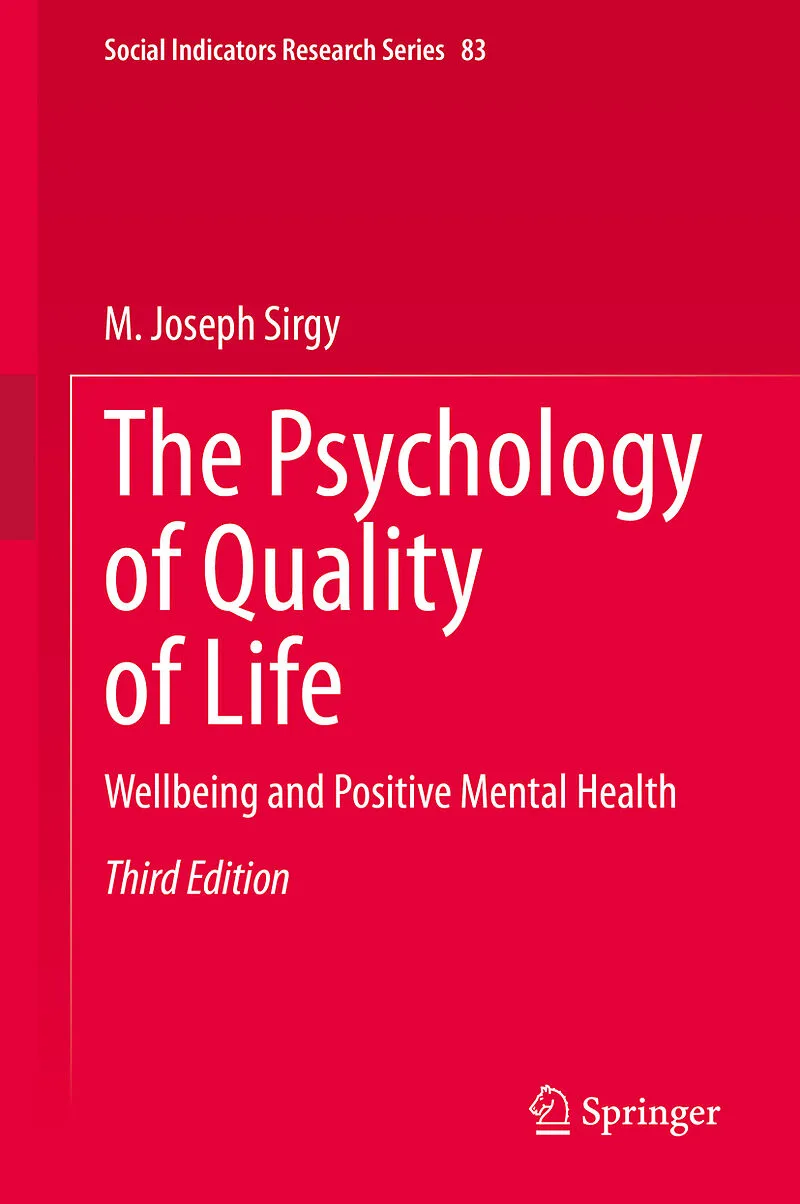
The third, thoroughly revised and enhanced edition of this bestselling book analyses and discusses the most up-to-date research on the psychology of quality of life. The book is divided into six parts. The introductory part lays the philosophical and academic...
The third, thoroughly revised and enhanced edition of this bestselling book analyses and discusses the most up-to-date research on the psychology of quality of life. The book is divided into six parts. The introductory part lays the philosophical and academic foundation of much of the research on wellbeing and positive mental health, showing the beneficial effects of happy people at work, health, and to society at large. Part 2 (effects of objective reality) describes how sociocultural factors, income factors, other demographic factors, and biological and health conditions affect wellbeing and positive mental health. Part 3 focuses on subjective reality and discusses how individuals process information from their objective environment, and how they manipulate this information that affects wellbeing and positive mental health. Part 4 focuses on the psychology of quality of life specific to life domains, while Part 5 reviews the research on special populations: children, women, the elderly, but also the disabled, drug addicts, prostitutes, emergency personnel, immigrants, teachers, and caregivers. The final part of the book focuses on theories and models of wellbeing and positive mental health that integrate and unify disparate concepts and programs of research. The book addresses the importance of the psychology of quality of life in the context of public policy and calls for a broadening of the approach in happiness research to incorporate other aspects of quality of life at the group, community, and societal levels. It is of topical interest to academics, students and researchers of quality of life, well-being research, happiness studies, psychotherapy, and social policy.
Is the third, thoroughly revised, edition of a bestselling title Includes the most comprehensive and up-to-date research on the psychology of quality of life Points to the importance of quality of life research in public policy-making
Autorentext
M. Joseph Sirgy is a management psychologist (Ph.D., U. Massachusetts, 1979) and Virginia Tech Real Estate Professor at Virginia Polytechnic Institute and State University (Virginia Tech). He has published extensively in the area of well-being and quality of life (QOL). He is the author/editor of many books related to quality of life. He co-founded the International Society for Quality-of-Life Studies (ISQOLS) in 1995, served as its Executive Director/Treasurer from 1995 to 2011 and as Development Director (2011-17). In 1998, he received the Distinguished Fellow Award from ISQOLS. In 2003, ISQOLS honored him as the Distinguished QOL Researcher for research excellence and a record of lifetime achievement in QOL research. In 2010, ISQOLS honored him for excellence and lifetime service to the society. In 2012 he was awarded the EuroMed Management Research Award for outstanding achievements and groundbreaking contributions to well-being and quality-of-life research. Richard J. Estes, Professor of Social Work and Social Policy, University of Pennsylvania School of Social Policy & Practice, Philadelphia, A.B., La Salle University (Philadelphia); Master of Social Work, University of Pennsylvania; Doctor of Social Welfare, University of California at Berkeley; and post-master's Certificate in Psychiatric Social Work, the Menninger Foundation, Topeka, Kansas. Dr. Estes specializes in international and comparative social welfare, social policy, and social development. His books include The Social Progress of Nations, 1984; Trends in World Social Development, 1988; Health Care and the Social Services,1984; Towards a Social Development Strategy for the Asia and Pacific Region (with Edward Van Roy), 1992; Social Development in Hong Kong: The Unfinished Agenda, 2005; The Medical, Legal and Social Science Aspects of Child Sexual Exploitation (with Sharon Cooper and others), 2005, 2007; Advancing Quality of Life in a Turbulent World, 2007; and, Islamic Social Progress: Social, Political, Economic, and Ideological Challenges (with Habib Tiliouine, University of Oran, Algeria), Dordrecht NL: Springer, in preparation 2015; The Pursuit of Human Well-Being: The Untold Global History (with M. Joseph Sirgy, Virginia Tech), Dordrecht NL: Springer(2015); and Advances in Well-Being: Towards a Better World (London: Rowman & Littlefield International (with M. Joseph Sirgy)). Don R. Rahtz (Ph.D., Virginia Tech 1984) is the J. S. Professor of Marketing, Raymond A. Mason School of Business, William and Mary (USA). His expertise is in integrated marketing communication programs, marketing research, survey methodology, analysis, and market assessment. He has had a particular interest in environmental issues, economic sustainable development, transitional economies, business/community interface evaluation, and health systems. He has traveled and worked extensively in the South Asia and Southeast Asian areas with a particular focus on Bangladesh, Cambodia, Indonesia, Thailand, and Vietnam. Professor Rahtz has conducted a variety of workshops and seminars, and acted as a consultant to businesses in both the public and private sectors concerning the above topics, both in the United States and abroad. In addition, he has produced a number of publications regarding these topics that have appeared books, academic journals, and the popular press. He has been active in promoting the Quality of Life (QOL) field of study in a variety of disciplines and is a founding member of the International Society for Quality of Life Studies (ISQOLS). El-Sayed El-Aswad is currently professor of anthropology at United Arab Emirates University (UAEU). He served as Chairperson of Sociology Department (2012-2014) at the UAEU. He received his doctorate degree from the University of Michigan, Ann Arbor. Research interest: Cultural and Social Anthropology, Muslim Thought & Worldview, Religion & Cosmology, Sufisim, Symbolism, Social & cultural
Inhalt
Part I: Introduction .- Philosophical Foundations, Definitions, and Measures of Wellbeing.- Further Distinctions among Major Concepts of Wellbeing.- Positive Outcomes of Wellbeing.- Part II: Objective Reality and Effects on Wellbeing .- **** Effects of Technological, Economic, Political, and Socio-Cultural Factors on Wellbeing.- Effects of Resources (Time, Money, Income, and Wealth) on Wellbeing.- Effects of Demographic Factors on Wellbeing.- Effects of Personal and Consumption Activities on Wellbeing.- Effects of Biology, Drugs, Life Events, and the Environment on Wellbeing.- Part III: Subjective Reality and Effects on Wellbeing .- Effects of Personality on Wellbeing.- Effects of Affect and Cognition on Wellbeing.- Effects of Beliefs and Values on Wellbeing.- Effects of Needs and Need Satisfaction on Wellbeing.- Effects of Goals on Wellbeing.- Effects of Self-Concept on Wellbeing.- Effects of Social Comparisons on Wellbeing.- Part IV: Life Domains and Effects on Wellbeing .- Effects of Domain Dynamics on Wellbeing.- Work Wellbeing.- Residential Wellbeing.- Material Wellbeing.- Social, Family, and Marital Wellbeing.- Health Wellbeing.- Leisure Wellbeing.- Wellbeing in Other Life Domains.- Part V: Population Segments and Wellbeing .- The Wellbeing of Children and Youth.- The Wellbeing of Older Adults.- The Wellbeing of Women.- The Wellbeing of Geographic Population Segments.- The Wellbeing of Specialty Population Segments.- Part VI: Epilogue .- Integrative Models of Wellbeing.- Philosophy and Public Policy Issues Related to Wellbeing.