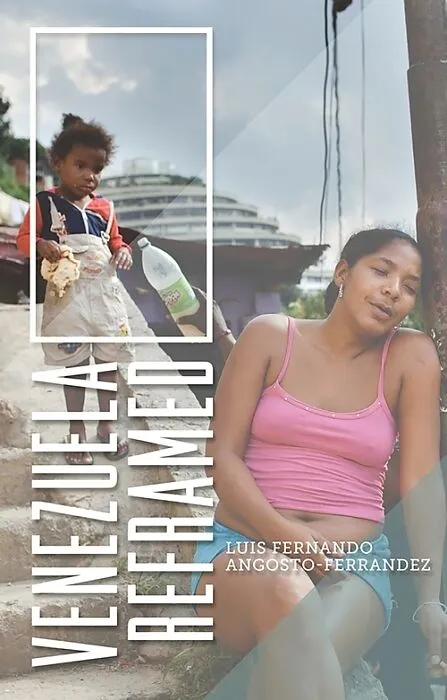
Beschreibung
Zusatztext This vital works offers a nuanced assessment of the often-contradictory relationship between the new indigenous movement and the Bolivarian political process. This book is essential to fully grasp the complex Bolivarian process underway in Venezuela...Zusatztext This vital works offers a nuanced assessment of the often-contradictory relationship between the new indigenous movement and the Bolivarian political process. This book is essential to fully grasp the complex Bolivarian process underway in Venezuela. Informationen zum Autor Luis Fernando Angosto-Ferrández teaches Anthropology and Latin American studies at the University of Sydney. He has extensive fieldwork experience in Latin America and Spain and has lived, worked and researched in Venezuela for nearly a decade. Recent academic publications include The politics of identity in Latin American censuses (2015) and Democracy, revolution and geopolitics in Latin America: Venezuela and the international politics of discontent (2014). He has also been a contributor to various media outlets such as Aporrea.org, Rebelion.org or Theconversation.com. Klappentext The role of the indigenous population in the formation of the Bolivarian constitution is one of Latin America's most important untold stories.Considered a beacon of twenty-first century socialism by many, Venezuela is witnessing the paradoxical emergence of 'indigenous capitalisms' as the government and various indigenous actors are driven by notions of development and enfranchisement grounded in the ideology of multiculturalism. Venezuela Reframed shows that a considerable part of indigenous activism, aligned with the Bolivarian governments, has paved the way for development in classical, social-democratic terms. It looks at how, in opposition to sectors of the indigenous population fighting for effective autonomy, many legitimate claims are being usurped to consolidate capitalist relations.Boldly arguing that romanticized notions of cultural indigeneity hide growing class struggle, this book is essential reading not just for those interested in Venezuela, but all those interested in the prospects of democracy, contemporary states and alternatives to capitalism worldwide. Vorwort Bolivarian governments, it would seem, have enfranchised the indigenous population in Venezuela like nowhere before. This book, however, shows that these governments are still falling short of materializing constitutional ideals of indigenous free-determination, and it explains why. Zusammenfassung Bolivarian governments, it would seem, have enfranchised the indigenous population in Venezuela like nowhere before. This book, however, shows that these governments are still falling short of materializing constitutional ideals of indigenous free-determination, and it explains why. Inhaltsverzeichnis Preface Introduction 1. Historical overview 2. Into the people 3. Balance of enfranchisement 4. Collective action through the electoral sphere 5. The state-supporting and state-sponsored indigenous movement 6. Contentious collective action in the margins of and outside the chavista bloc 7. Indigenous peoples, capitalism and the political economy of the socialisms of the twenty-first century in Latin America 8. Closing remarks Appendix: Extraordinary Assembly ...
Vorwort
Bolivarian governments, it would seem, have enfranchised the indigenous population in Venezuela like nowhere before. This book, however, shows that these governments are still falling short of materializing constitutional ideals of indigenous free-determination, and it explains why.
Autorentext
Luis Fernando Angosto-Ferrández teaches Anthropology and Latin American studies at the University of Sydney. He has extensive fieldwork experience in Latin America and Spain and has lived, worked and researched in Venezuela for nearly a decade. Recent academic publications include The politics of identity in Latin American censuses (2015) and Democracy, revolution and geopolitics in Latin America: Venezuela and the international politics of discontent (2014). He has also been a contributor to various media outlets such as Aporrea.org, Rebelion.org or Theconversation.com.
Klappentext
The role of the indigenous population in the formation of the Bolivarian constitution is one of Latin America's most important untold stories. Considered a beacon of twenty-first century socialism by many, Venezuela is witnessing the paradoxical emergence of 'indigenous capitalisms' as the government and various indigenous actors are driven by notions of development and enfranchisement grounded in the ideology of multiculturalism. Venezuela Reframed shows that a considerable part of indigenous activism, aligned with the Bolivarian governments, has paved the way for development in classical, social-democratic terms. It looks at how, in opposition to sectors of the indigenous population fighting for effective autonomy, many legitimate claims are being usurped to consolidate capitalist relations. Boldly arguing that romanticized notions of cultural indigeneity hide growing class struggle, this book is essential reading not just for those interested in Venezuela, but all those interested in the prospects of democracy, contemporary states and alternatives to capitalism worldwide.
Inhalt
Preface
Introduction