
IHR WARENKORB IST AKTUELL LEER.
Haben Sie noch nichts passendes gefunden? Stöbern Sie durch unser komplettes Sortiment.
Oder melden Sie sich an bzw. registrieren Sie sich.
- Kostenlose Lieferung
- Kauf auf Rechnung
- Ex Libris Tiefpreis
- Filiallieferung und 650+ Abholorte
- Rabatt-Bons als Club-Mitglied
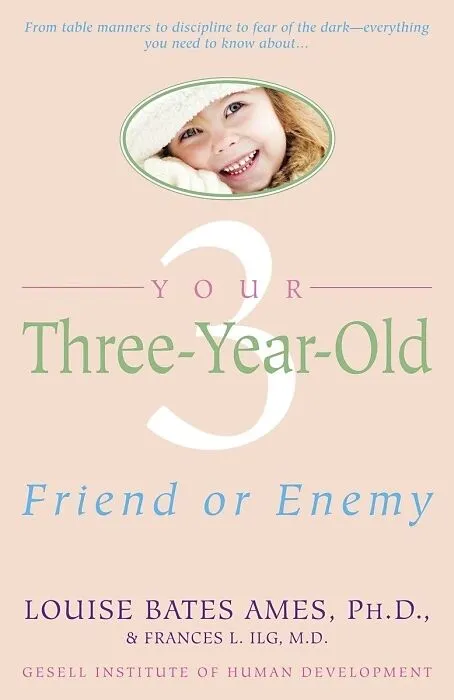
Your Three-Year-Old
Beschreibung
Informationen zum Autor Louise Bates Ames, Ph.D and Frances L. Ilg, MD. Klappentext A three-year-old is a real puzzle to parents, sometimes anxious to please and befriend, sometimes strong-willed and difficult to get along with. At the heart of the three-year-...Format auswählen
- Kartonierter Einband (Kt)CHF 25.60
Wird oft zusammen gekauft
Andere Kunden kauften auch
Beschreibung
Informationen zum Autor Louise Bates Ames, Ph.D and Frances L. Ilg, MD. Klappentext A three-year-old is a real puzzle to parents, sometimes anxious to please and befriend, sometimes strong-willed and difficult to get along with. At the heart of the three-year-old's personality is often an emotional insecurity-and this causes a host of problems for parents! Drs. Ames and Ilg, recognized authorities on child behavior and development, help parents understand what's going on inside that three-year-old head, what problems children have, and how to cope with the toddler who is sometimes friend, sometimes enemy. Included in this book: • Jealousy of a new sibling • Toilet training • How to improve a child's eating habits • Friendships with peers • Common fears • Developing language skills • Nursery school • Books for parents and three-year-olds "Louise Bates Ames and her colleagues synthesize a lifetime of observation of children, consultation, and discussion with parents. These books will help parents to better understand their children and will guide them through the fascinating and sometimes trying experiences of modern parenthood."-Donald J. Cohen, M.D., Director, Yale Child Study Center, Irving B. Harris Professor of Child Psychiatry, Pediatrics, and Psychology, Yale School of Medicinechapter one CHARACTERISTICS OF THE AGE Just as the tides have their rhythms, so does human behavior have its own predictable rhythms. As the child grows older, good ages alternate with bad; times of equilibrium alternate with times of disequilibrium; and periods when behavior tends to be expansive and outgoing alternate with periods when everything seems to be pulled in. It should come as no surprise, then, to the mother or father of a rambunctious Two-and-a-half-year-old, that sometime around the age of Three their son or daughter does seem to calm down conspicuously. He says yes instead of no; will instead of won't. He smiles instead of frowns, laughs instead of cries, gives in comfortably to your requests instead of resisting them. Around thirty-three months of age, many children go through a stage of reliving their babyhood, of thinking about themselves in terms of their own past. The child may pretend that he is a baby, even going back to the use of baby talk, though some are loath to give up their glorious acquisition of speech. So, a child may say, I'm a little baby. I can't walk, I have no teeth, I drink from a bottle. But I can talk. However, by Three, most have caught up with themselves chronologically and are now in a state of equilibrium and of no longer looking back. In fact, by Three, many children seem to be developing a rather good self-concept, seem to have a solid set of feelings about themselves. There is little question that this sense of self is influenced by the way others treat them. At thirty months the opposition of I and you was so strong that there seemed to be a chasm between them, with the opposition of Me do it myself when he really could not, and You do it when he actually could do a thing himself. But at Three years of age the chasm seems to be bridged by that delightfully cooperative word we. In fact, Three is a highly we age. The child likes to say let's, as Let's go for a walk, shall we? The sense of togetherness or we-ness seems to make him depend on the adult and makes him lean on him or her, though he also enjoys the sense of sharing. The very child who has been so independent earlier may now ask his mother: Help me, Show me. But even though the increased maturity of Three allows him sometimes to share or even lean instead of resisting, as earlier, Three is also aware of and proud of his increasing maturity and increasing ability. He frequently asks, after some particular display of prowess, Could a baby do this?
Autorentext
Louise Bates Ames, Ph.D and Frances L. Ilg, MD.
Klappentext
A three-year-old is a real puzzle to parents, sometimes anxious to please and befriend, sometimes strong-willed and difficult to get along with. At the heart of the three-year-old's personality is often an emotional insecurity-and this causes a host of problems for parents! Drs. Ames and Ilg, recognized authorities on child behavior and development, help parents understand what's going on inside that three-year-old head, what problems children have, and how to cope with the toddler who is sometimes friend, sometimes enemy.
Included in this book:
• Jealousy of a new sibling
• Toilet training
• How to improve a child's eating habits
• Friendships with peers
• Common fears
• Developing language skills
• Nursery school
• Books for parents and three-year-olds
"Louise Bates Ames and her colleagues synthesize a lifetime of observation of children, consultation, and discussion with parents. These books will help parents to better understand their children and will guide them through the fascinating and sometimes trying experiences of modern parenthood."-Donald J. Cohen, M.D., Director, Yale Child Study Center, Irving B. Harris Professor of Child Psychiatry, Pediatrics, and Psychology, Yale School of Medicine
Leseprobe
chapter one
CHARACTERISTICS OF THE AGE
Just as the tides have their rhythms, so does human behavior have its own predictable rhythms. As the child grows older, “good” ages alternate with “bad”; times of equilibrium alternate with times of disequilibrium; and periods when behavior tends to be expansive and outgoing alternate with periods when everything seems to be pulled in.
It should come as no surprise, then, to the mother or father of a rambunctious Two-and-a-half-year-old, that sometime around the age of Three their son or daughter does seem to calm down conspicuously. He says “yes” instead of “no”; “will” instead of “won’t.” He smiles instead of frowns, laughs instead of cries, gives in comfortably to your requests instead of resisting them.
Around thirty-three months of age, many children go through a stage of reliving their babyhood, of thinking about themselves in terms of their own past. The child may pretend that he is a baby, even going back to the use of baby talk, though some are loath to give up their glorious acquisition of speech. So, a child may say, “I’m a little baby. I can’t walk, I have no teeth, I drink from a bottle. But I can talk.”
However, by Three, most have caught up with themselves chronologically and are now in a state of equilibrium and of no longer looking back. In fact, by Three, many children seem to be developing a rather good self-concept, seem to have a solid set of feelings about themselves. There is little question that this sense of self is influenced by the way others treat them.
At thirty months the opposition of “I” and “you” was so strong that there seemed to be a chasm between them, with the opposition of “Me do it myself when he really could not, and “You do it” when he actually could do a thing himself. But at Three years of age the chasm seems to be bridged by that delightfully cooperative word “we.”
In fact, Three is a highly “we” age. The child likes to say “let’s,” as “Let’s go for a walk, shall we?” The sense of togetherness or “we-ness” seems to make him depend on the adult and makes him lean on him or her, though he also enjoys the sense of sharing. The very child who has been so independent earlier may now ask his mother: “Help me,” “Show me.”
But even though the increased maturity of Three allows him sometimes to share or even lean instead of resisting, as earlier, Three is also aware of and proud of his increa…