
IHR WARENKORB IST AKTUELL LEER.
Haben Sie noch nichts passendes gefunden? Stöbern Sie durch unser komplettes Sortiment.
Oder melden Sie sich an bzw. registrieren Sie sich.
- Kostenlose Lieferung
- Kauf auf Rechnung
- Ex Libris Tiefpreis
- Filiallieferung und 650+ Abholorte
- Rabatt-Bons als Club-Mitglied
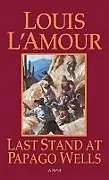
Last Stand at Papago Wells
Beschreibung
Informationen zum Autor Our foremost storyteller of the American West, Louis L'Amour has thrilled a nation by chronicling the adventures of the brave men and woman who settled the frontier. There are more than three hundred million copies of his books in print...Format auswählen
- TaschenbuchCHF 12.50

Wird oft zusammen gekauft
Andere Kunden kauften auch
Beschreibung
Informationen zum Autor Our foremost storyteller of the American West, Louis L'Amour has thrilled a nation by chronicling the adventures of the brave men and woman who settled the frontier. There are more than three hundred million copies of his books in print around the world. Klappentext It was the only water for miles in a vast, sun-blasted desert where water meant survival. So Logan Cates naturally headed for Papago Wells. But he wasn't the only one. Fleeing the fierce Churupati and his Apache warriors, other travelers had come there too. And when the Apaches found them, they began a siege as relentless and unforgiving as the barren landand just as inescapable. The last thing Cates wanted was to be responsible for the lives of thirteen desperate strangers and a shipment of gold. But he knew that if they were to survive, he was their last chance. He also knew that some in the party were willing to die-or kill-to get their hands on the money. If he couldn't get them to work together, it wouldn't be the desert or even the Apaches that would do them in-it would be the greed of the very people he was trying to save. Leseprobe Chapter One HE HAD STOPPED last night in the Gunsight Hills, making dry camp because others had reached the water hole before him and he preferred to avoid other travelers. At daybreak he came down out of the hills and made a little dust as he struck westward with Yuma Crossing in his mind. Logan Cates had the look of the desert about him, a brown, seasoned man with straight black hair above a triangular face that was all bone and tight-drawn, sun-browned hide. His eyes, narrow from squinting into sun and wind, were a cold green that made a man stop and think before he looked into them a second time. He was a tall man, wide in the shoulder and lean in waist and hips, an easy-moving man with none of the horseman's awkwardness in walking. He moved like a hunter when on his own feet, and had been a hunter of many things, men not least among them. His hat was black and flat-crowned and flat-brimmed, held beneath his jaw by a loose thong. His shirt, once red, had faded to an indeterminate rose. His vest was of black cowhide, worn and scratched, and over his black jeans he wore fringed shotgun chaps. He wore a tied-down Smith & Wesson Russian .44 six-shooter, and the Winchester in his saddle-scabbard was the vintage of '73. The horse he rode, a long-legged zebra dun, had a wicked eye that hinted at the tough, resilient and often vicious nature within. A horse of many brands, he had the speed of a frightened coyote and an ability to go without water equal to any camel or longhorn steer. Logan Cates was a man without illusions, without wealth, place, or destination. In the eighteen years since his parents died of cholera when he was fourteen he had driven a freight wagon, punched cows, hunted buffalo, twice gone over the trail from Texas to Kansas with cattle, scouted for the Army and had ridden shotgun on many stages. Twice, also, he had been marshal of boomtowns for brief periods. He had lived without plan, following his horse's ears and coping with each day's problems as they arose. Not an hour out of the Gunsight Hills he drew rein in the bottom of a dry wash and crawled to the lip of the wash to survey the desert. Lifting his head among some small boulders to keep from skylining it, he studied the situation with care, having long ago learned that vigilance was the price of life in Indian country. Far away toward the line that divided Mexico from Arizona was a dust cloud. "Ten," he judged, "maybe twelve riders." The knowledge was disturbing, for when so many men came together in this country it spelled trouble, and no news had come his way since riding out of Tucson almost...
Autorentext
Our foremost storyteller of the American West, Louis L’Amour has thrilled a nation by chronicling the adventures of the brave men and woman who settled the frontier. There are more than three hundred million copies of his books in print around the world.
Klappentext
It was the only water for miles in a vast, sun-blasted desert where water meant survival. So Logan Cates naturally headed for Papago Wells. But he wasn't the only one. Fleeing the fierce Churupati and his Apache warriors, other travelers had come there too. And when the Apaches found them, they began a siege as relentless and unforgiving as the barren land…and just as inescapable.
The last thing Cates wanted was to be responsible for the lives of thirteen desperate strangers and a shipment of gold. But he knew that if they were to survive, he was their last chance. He also knew that some in the party were willing to die-or kill-to get their hands on the money. If he couldn't get them to work together, it wouldn't be the desert or even the Apaches that would do them in-it would be the greed of the very people he was trying to save.
Leseprobe
*Chapter One
*
HE HAD STOPPED last night in the Gunsight Hills, making dry camp because others had reached the water hole before him and he preferred to avoid other travelers. At daybreak he came down out of the hills and made a little dust as he struck westward with Yuma Crossing in his mind.
Logan Cates had the look of the desert about him, a brown, seasoned man with straight black hair above a triangular face that was all bone and tight-drawn, sun-browned hide. His eyes, narrow from squinting into sun and wind, were a cold green that made a man stop and think before he looked into them a second time.
He was a tall man, wide in the shoulder and lean in waist and hips, an easy-moving man with none of the horseman's awkwardness in walking. He moved like a hunter when on his own feet, and had been a hunter of many things, men not least among them.
His hat was black and flat-crowned and flat-brimmed, held beneath his jaw by a loose thong. His shirt, once red, had faded to an indeterminate rose. His vest was of black cowhide, worn and scratched, and over his black jeans he wore fringed shotgun chaps. He wore a tied-down Smith & Wesson Russian .44 six-shooter, and the Winchester in his saddle-scabbard was the vintage of '73.
The horse he rode, a long-legged zebra dun, had a wicked eye that hinted at the tough, resilient and often vicious nature within. A horse of many brands, he had the speed of a frightened coyote and an ability to go without water equal to any camel or longhorn steer.
Logan Cates was a man without illusions, without wealth, place, or destination. In the eighteen years since his parents died of cholera when he was fourteen he had driven a freight wagon, punched cows, hunted buffalo, twice gone over the trail from Texas to Kansas with cattle, scouted for the Army and had ridden shotgun on many stages. Twice, also, he had been marshal of boomtowns for brief periods. He had lived without plan, following his horse's ears and coping with each day's problems as they arose.
Not an hour out of the Gunsight Hills he drew rein in the bottom of a dry wash and crawled to the lip of the wash to survey the desert. Lifting his head among some small boulders to keep from skylining it, he studied the situation with care, having long ago learned that vigilance was the price of life in Indian country. Far away toward the line that divided Mexico from Arizona was a dust cloud.
"Ten," he judged, "maybe twelve riders."
The knowledge was disturbing, for when so many men came together in this country it spelled trouble, and no news had come his way since riding out of Tucson almost four days before. And he knew enough of the desert to the south to realize no man would ride there without desperate reason.
A dozen men could mean a posse, a band of outlaws, Indians, or an Army patrol out of Fort Yuma. The latter was highly improbable as there had been no trouble in the area for some time, and the Apaches rarely came so far west.
Yet, w…