
IHR WARENKORB IST AKTUELL LEER.
Haben Sie noch nichts passendes gefunden? Stöbern Sie durch unser komplettes Sortiment.
Oder melden Sie sich an bzw. registrieren Sie sich.
- Kostenlose Lieferung
- Kauf auf Rechnung
- Ex Libris Tiefpreis
- Filiallieferung und 650+ Abholorte
- Rabatt-Bons als Club-Mitglied
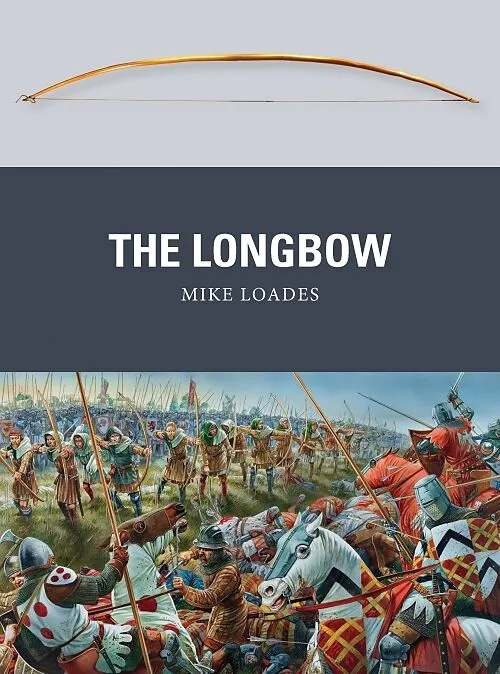
The Longbow
Beschreibung
Informationen zum Autor Mike Loades is a respected author, broadcaster, director and action arranger who has made well over 100 television appearances as a historical weapons expert and military historian and been a presenter for such shows as Time Commanders ...Format auswählen
- Kartonierter EinbandCHF 25.60

Wird oft zusammen gekauft
Andere Kunden kauften auch
Beschreibung
Informationen zum Autor Mike Loades is a respected author, broadcaster, director and action arranger who has made well over 100 television appearances as a historical weapons expert and military historian and been a presenter for such shows as Time Commanders (BBC), Weapons That Made Britain (Channel 4), Weapon Masters (Discovery Networks) and Going Medieval (History Channel). A lifelong archery enthusiast, he is also experienced in horse-archery and chariot archery and is co-founder of the California Centaurs horse-archery club. He lives in California. He is the author of Swords and Swordsmen (2010), The Longbow (2013), The Composite Bow (2016), and The Crossbow (2018). Klappentext Boasting a rate of shooting not seen again in English hands until the late 19th century, the longbow was the weapon at the heart of the English military ascendancy in the century after 1340. Capable of subjecting the enemy to a hail of deadly projectiles, the longbow in the hands of massed archers made possible the extraordinary victories enjoyed by English forces over superior numbers at Crécy and Poitiers, and remained an important battlefield weapon throughout the Wars of the Roses and beyond; it also played a leading role in raiding, siege and naval warfare. Its influence and use spread to the armies of Burgundy, Scotland and other powers, and its reputation as a cost-effective and easily produced weapon led to calls for its widespread adoption in the nascent armies of the American Republic as late as the 1770s. Wielded by Englishmen, Welshmen and others, the longbow fulfilled the requirements of all infantry missile weapons throughout history - it was a well-made weapon suitable for production in quantity that projected a man-stopping missile over a suitable distance at a sustainable, relatively rapid rate of shooting. The longbow was a ''self-bow'' - that is to say, it was made from one piece of wood, normally yew, with the ''belly'' of the bow being ''heartwood'' and a thinner layer of ''sapwood'' being the ''back'' of the bow. Its arrows were normally made of aspen, a light and strong wood - although ash and other woods were also used - with a variety of metal heads available, depending on the intended use. A sophisticated piece of ammunition requiring many resources and skill to manufacture, the longbow arrow could penetrate plate armour if the conditions were right; this study argues, however, that the ''blunt trauma'' inflicted on the target, however well armoured, resulted in debilitating injuries and was far more significant on the field of battle. Featuring specially commissioned full-colour artwork and informed by the latest research into this intriguing weapon, this lively study debunks lingering myths and casts new light on the battle-winning longbow, the lethal missile weapon that enabled English victories against the odds in a series of famous battles of the 14th and 15th centuries. With its formidable rate of shooting and crushing impact, the longbow in the hands of massed archers made possible the extraordinary victories enjoyed by English forces over superior numbers at Crécy, Poitiers and Agincourt, and remained a key battlefield weapon throughout the Wars of the Roses and beyond. Featuring specially commissioned full-colour artwork and written by a leading expert on medieval weapons and fighting practices, this engaging study casts new light on the development, battlefield use and lasting influence of the longbow. Zusammenfassung Featuring specially commissioned full-colour artwork and written by an expert on medieval weapons, an engaging study on the development, battlefield use and lasting influence of the longbow. Inhaltsverzeichnis Introduction Development Use Impact Conclusion Select Bibliography Index ...
Vorwort
With its formidable rate of shooting and crushing impact, the longbow in the hands of massed archers made possible the extraordinary victories enjoyed by English forces over superior numbers at Crécy, Poitiers and Agincourt, and remained a key battlefield weapon throughout the Wars of the Roses and beyond. Featuring specially commissioned full-colour artwork and written by a leading expert on medieval weapons and fighting practices, this engaging study casts new light on the development, battlefield use and lasting influence of the longbow.
Klappentext
Boasting a rate of shooting not seen again in English hands until the late 19th century, the longbow was the weapon at the heart of the English military ascendancy in the century after 1340. Capable of subjecting the enemy to a hail of deadly projectiles, the longbow in the hands of massed archers made possible the extraordinary victories enjoyed by English forces over superior numbers at Crécy and Poitiers, and remained an important battlefield weapon throughout the Wars of the Roses and beyond; it also played a leading role in raiding, siege and naval warfare. Its influence and use spread to the armies of Burgundy, Scotland and other powers, and its reputation as a cost-effective and easily produced weapon led to calls for its widespread adoption in the nascent armies of the American Republic as late as the 1770s.
Wielded by Englishmen, Welshmen and others, the longbow fulfilled the requirements of all infantry missile weapons throughout history - it was a well-made weapon suitable for production in quantity that projected a man-stopping missile over a suitable distance at a sustainable, relatively rapid rate of shooting. The longbow was a ''self-bow'' - that is to say, it was made from one piece of wood, normally yew, with the ''belly'' of the bow being ''heartwood'' and a thinner layer of ''sapwood'' being the ''back'' of the bow. Its arrows were normally made of aspen, a light and strong wood - although ash and other woods were also used - with a variety of metal heads available, depending on the intended use. A sophisticated piece of ammunition requiring many resources and skill to manufacture, the longbow arrow could penetrate plate armour if the conditions were right; this study argues, however, that the ''blunt trauma'' inflicted on the target, however well armoured, resulted in debilitating injuries and was far more significant on the field of battle.
Featuring specially commissioned full-colour artwork and informed by the latest research into this intriguing weapon, this lively study debunks lingering myths and casts new light on the battle-winning longbow, the lethal missile weapon that enabled English victories against the odds in a series of famous battles of the 14th and 15th centuries.
Zusammenfassung
Featuring specially commissioned full-colour artwork and written by an expert on medieval weapons, an engaging study on the development, battlefield use and lasting influence of the longbow.
Inhalt
Introduction
Development
Use
Impact
Conclusion
Select Bibliography
Index