WIG Craft and Ekranoplan
Beschreibung
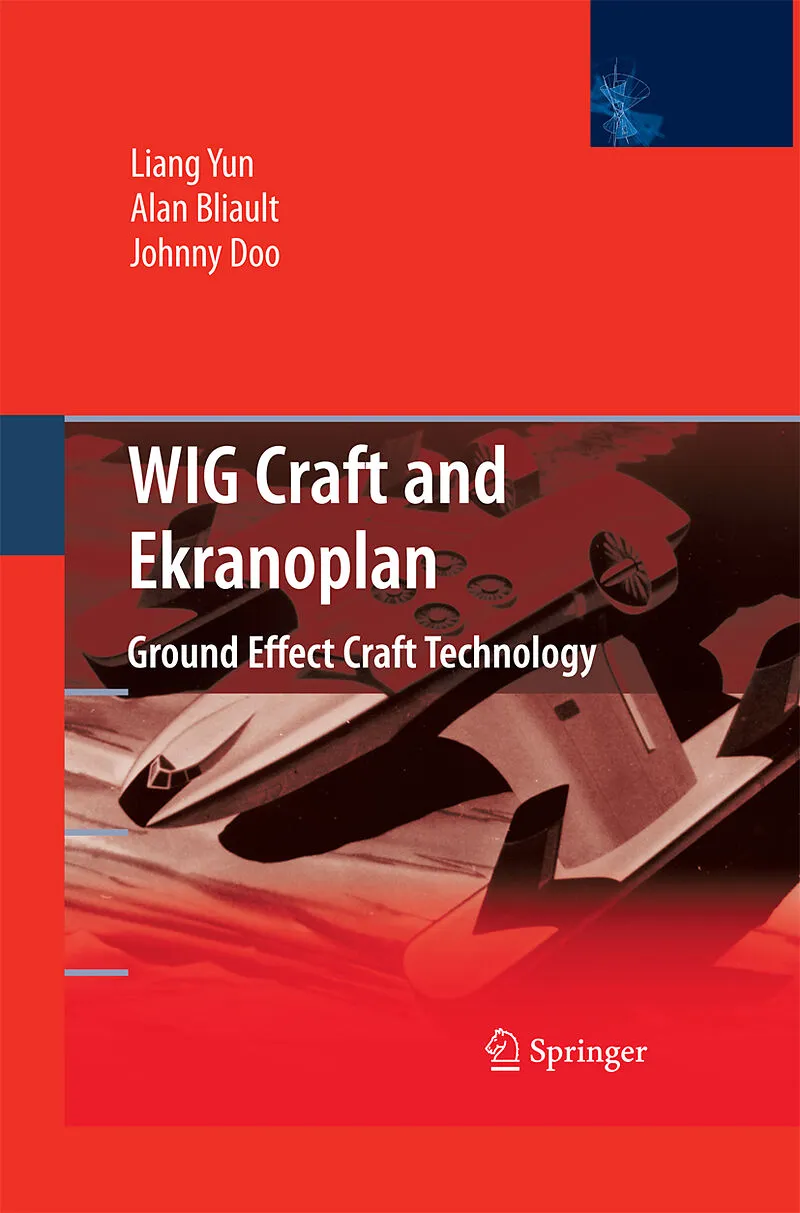
WIGs (Wing in Ground) are advanced hybrid air cushion crafts that offer a combination of speed, fuel efficiency, and ride smoothness. This book provides a comprehensive overview of the design, development and building of these vessels. In the last half-century...Format auswählen
- Kartonierter EinbandCHF 287.20
- Fester EinbandCHF 320.00
- E-Book (pdf)CHF 330.50

Wird oft zusammen gekauft
Andere Kunden kauften auch
Beschreibung
WIGs (Wing in Ground) are advanced hybrid air cushion crafts that offer a combination of speed, fuel efficiency, and ride smoothness. This book provides a comprehensive overview of the design, development and building of these vessels.
In the last half-century, high-speed water transportation has developed rapidly. Novel high-performance marine vehicles, such as the air cushion vehicle (ACV), surface effect ship (SES), high-speed monohull craft (MHC), catamaran (CAT), hydrofoil craft (HYC), wave-piercing craft (WPC) and small water area twin hull craft (SWATH) have all developed as concepts, achieving varying degrees of commercial and military success. Prototype ACV and SES have achieved speeds of 100 knots in at calm con- tions; however, the normal cruising speed for commercial operations has remained around 3550 knots. This is partly due to increased drag in an average coastal s- way where such craft operate services and partly due to limitations of the propulsion systems for such craft. Water jets and water propellers face limitations due to c- itation at high speed, for example. SWATH are designed for reduced motions in a seaway, but the hull form is not a low drag form suitable for high-speed operation. So that seems to lead to a problem maintain water contact and either water propulsion systems run out of power or craft motions and speed loss are a problem in higher seastates. The only way to higher speed would appear to be to disconnect completely from the water surface. You, the reader, might respond with a question about racing hydroplanes, which manage speeds of above 200 kph. Yes, true, but the power-to-weight ratio is extremely high on such racing machines and not economic if translated into a useful commercial vessel.
Discusses the basic principles of WIG craft technology Provides a state of the art overview of WIG craft technology in the United States, Russia, Germany, China and Australia Discusses the material and structural design of WIG craft Discusses the lift and propulsion systems of WIG craft Includes supplementary material: sn.pub/extras
Autorentext
Professor Liang Yun has more than 40 years' experience at the Marine Design & Research Institute of China, Shanghai (MARIC). He graduated from the Shipbuilding Engineering Faculty of Da-Lian Polytechnic University in 1953 and completed a postgraduate diploma at the Military Engineering Academy of China in 1955. He has been involved in ACV development in China since the first prototypes were constructed in Harbin in the 1950s. He was involved in the design and prototype construction of WIG craft in the 1990s and the development of high-speed catamarans and air cavity vessels through the millennium. He was director of the HPMV division, MARIC, from 1983 to 1987 and Deputy Chief Naval Architect of MARIC from 1980 to 1997. He has been a Guest Professor supporting HPMV postgraduate students at Harbin Engineering University and Wu Han Water Transportation University in the early 1990s. Prof. Yun has been Chairman of HPMV Design subcommittee of the China Society of Naval Architecture and Marine Engineering, CSNAME, over the last 20 years and vice chairman of the organizing committee of the annual International HPMV Conference, Shanghai, China, since 1996. He continued to play an active role in promoting and developing HPMV technology in China through his association with the industry and Chinese Universities. Professor Yun has partnered with Alan Bliault on five textbooks covering ACV, WIG, and HPMV technology before the current volume on monohull and hydrofoil vessels. Liang Yun died in Shanghai on 26th December 2020. Prof. Zu-shun Dong graduated from Naval Engineering University (NEU), Peoples Liberation Army (PLA), China, in 1959. After graduation, he was appointed as an assistant professor, associate professor, and professor in the NEU, working on the teaching, research, and design of hydrodynamics of High-Performance Marine Vessels (HPMV), such as high-speed monohull craft, hydrofoils, air cushion craft, wing in ground effect craft, hydroplanes, catamarans, and multihulls. He was appointed as a member of the Hydrodynamics Committee of the General Armament Department (GAD), PLA, from 1987 to 2007 and the first specialist on hydrodynamics of the HPMV Committee of GAD, PLA. He was a professor at Harbin Industrial University from 2011-2014 and Qian-Dao Science & Technology University from 2010-2015. He was a technical consultant to the Special Airplane Research Institute from 1995-1996; a member of the Academic Committee on Key Hydrodynamics Laboratory of National Defense Technology from 2001-2009; and a member of the Academic Committee of National Key Laboratory on Multihull in Harbin Engineering University, from 2009-2012. He has also been the editor of China Shipbuilding and deputy chief director of the Yacht Design & Production Academic Committee of the China Society of Naval Architects and Marine Engineers. Raju Datla is a Research Associate Professor in Naval and Ocean Engineering at Stevens Institute of Technology. He manages the experimental marine hydrodynamics research at the Davidson Laboratory. His expertise is in the areas of high-speed craft hydrodynamics and ocean engineering, in which he has so far prepared more than 50 technical articles. He teaches courses to undergraduate and graduate students in naval engineering and ocean engineering at Stevens. He has served as principal advisor to six Ph.D. dissertations and more than 50 master's and undergraduate theses and design projects so far. He received his Ph.D. in Ocean Engineering from Stevens Institute of Technology. He is a fellow of the Society of Naval Architects and Marine Engineers. Dr. Datla has previously participated in editing a compendium of the first 20 years of papers presented to the International HPMV Conference held regularly in Shanghai by CSNAME, which the RINA also supports. During the 2000s, he worked on hydrodynamic planing research together with Daniel Savitsky at the Davidson Laboratory, publishing original pape
Klappentext
WIGs (Wing in Ground) are advanced hybrid air cushion crafts and they offer the combination of speed, fuel efficiency, and ride smoothness. WIG rides above the surface like an airplane on a dynamic air cushion that is produced by the vessel's forward motion. The adoption of WIG has been slow due to the complicated technology issues surrounding the vessel; it is a hybrid vehicle that combines marine and aviation theory, wing theory and air cushion theory, aerodynamic and hydrodynamic theory. "WIG Craft and Ekranoplan: Ground Effect Craft Technology" provides a comprehensive overview of the design, development and building of WIG vessels. Drawing upon years of practical experience and using numerous examples and illustrative applications, Liang Yun, Alan Bliault and Johnny Doo discuss: Basic principles of WIG craft technology State of the art overview of WIG craft technology in the United States, Russia, Germany, China and Australia Material and structural design of WIG craft Lift and propulsion systems of WIG craft WIG Craft and Ekranoplan: Ground Effect Craft Technology will be of interest to naval engineers, aviation engineers, naval architects, and mechanical engineers interested in the development and research of wing in ground (WIG) and high performance marine vehicles.
Inhalt
Wings in Ground Effect.- WIG Craft Development.- Longitudinal Force Balance and Trim.- Hovering and Slow-Speed Performance.- Aerodynamics in steady Flight.- Longitudinal and Transverse Stability.- Calm Water Drag and Power.- Seakeeping and Manoeuvrability.- Model Tests and Aero-hydrodynamic Simulation.- Structural Design and Materials.- Power plant and Transmission.- Lift and Propulsion Systems.- Concept Design.