
IHR WARENKORB IST AKTUELL LEER.
Haben Sie noch nichts passendes gefunden? Stöbern Sie durch unser komplettes Sortiment.
Oder melden Sie sich an bzw. registrieren Sie sich.
- Kostenlose Lieferung
- Kauf auf Rechnung
- Ex Libris Tiefpreis
- Filiallieferung und 650+ Abholorte
- Rabatt-Bons als Club-Mitglied
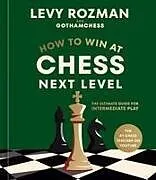
How to Win at Chess, Next Level
Beschreibung
Take your chess game to the next level with this exciting and approachable guide for intermediate players from YouTube’s top chess teacher Levy Rozman (aka GothamChess). Unlock the secrets to mastering chess and moving beyond the basics to dominate your ...Format auswählen
- Fester EinbandCHF 33.50

Wird oft zusammen gekauft
Andere Kunden kauften auch
Beschreibung
Take your chess game to the next level with this exciting and approachable guide for intermediate players from YouTube’s top chess teacher Levy Rozman (aka GothamChess). Unlock the secrets to mastering chess and moving beyond the basics to dominate your matches with Whether you’re aiming to defeat your friends or become a Grandmaster, <How to Win at Chess, Next Level <is guaranteed to enrich your understanding of the game and elevate your skills!
Autorentext
Levy Rozman, more popularly known as GothamChess, is an online chess streamer who earned the International Master title in 2018. A former scholastic chess coach, he is passionate about chess accessibility, and has helped fund scholarships for chess programs in education. He currently boasts the biggest chess channel on YouTube, where he focuses on creating fun and educational content.
Klappentext
NEW YORK TIMES BESTSELLER • Take your chess game to the next level with this exciting and approachable guide for intermediate players from YouTube’s top chess teacher Levy Rozman (aka GothamChess).
Unlock the secrets to mastering chess and moving beyond the basics to dominate your matches with How to Win at Chess, Next Level. This comprehensive guide for midlevel players (1000–1600 Elo rating) teaches you everything you need to know to transform your approach to chess and elevate your gameplay as you face more challenging opponents.
How to Win at Chess, Next Level takes a deep dive into the crucial aspects of evolving into an advanced player: pawn play, piece play, tactics, attacking, defending, converting winning positions, endgames, and—most important—how to make a winning plan. Including over 500 instructional gameplay illustrations and exclusive bonus content on Chessly, Rozman’s online teaching platform, this book is packed with practical advice and strategies. Rozman also shares best practices for how to leverage powerful tools like chess engines, game analysis, chess bots, and training puzzles, to help broaden your knowledge and secure more victories.
Whether you’re aiming to defeat your friends or become a Grandmaster, How to Win at Chess, Next Level is guaranteed to enrich your understanding of the game and elevate your skills!
Leseprobe
Introduction
Hello and welcome! My name is Levy. I’m an International Master, a former semiprofessional player, and now I primarily teach chess online. Fun fact: I plagiarized those first three sentences from the introduction to my first book! Not much has changed since then. I’m still an International Master, still teaching chess online, and still writing books. Before we get into the specifics of how to evolve your game from the intermediate to the advanced level, I’d like to give you some background about myself and what you can expect to find in the coming chapters.
I learned how to play chess when I was six and played my first tournament when I was seven, in January 2003. I spent most of my childhood as the slightly weird kid who was good at the board game nobody else at school cared much about. But in 2010—my sophomore year of high school—I had a classmate named Ed. Ed was much smarter than me in basically every academic subject, but I had the upper hand in chess. One day, Ed’s mother asked if I would teach chess to Ed once a week. She even offered to pay me for it! I was beyond ecstatic at the opportunity to share my love of chess and pick up a little extra cash.
Over the next ten years, I taught chess to people of all ages and levels across New York City. My students won city and state championships, and I was having the time of my life. My passion for a board game had grown into a sustainable career.
Then, the global pandemic in 2020 changed everything. I turned my focus from offline chess lessons to livestreaming and YouTube videos. And since 2020, I have made a video about chess nearly every single day of my life. At the time of writing this introduction, my chess videos have accumulated nearly five billion views across the globe. In 2023, I published my first book—a guide to beginner and intermediate play—which was a New York Times bestseller. Words cannot describe how grateful I am to fans who’ve given chess a shot these past few years.
Now, let’s talk about this book, which covers intermediate and advanced play. More specifically: the goal of the book, the structure of the book, how to practice, and lastly how to not win at chess.
**The Goal of This Book
**
Chess is intimidating. Getting into it as a beginner is fun and exhilarating, but sticking to it and methodically improving can be challenging. That’s why I wrote this book. How to Win at Chess, Next Level will transform the way you think while playing a game of chess. I will help explain some of the most common patterns that you’ll face at the intermediate level and provide guidance for when to do (and not do) certain things in a position.
Hopefully, by the end of the book, you can use what you’ve learned to make good moves more consistently than your opponents, leading to more victories. One important note: we won’t cover openings in this book. The goal of this book is to teach you how to think about chess more broadly. There’s no opening you can play that’s going to lead to you winning every single game. Choosing an opening is like choosing an avatar at the start of a video game. They’re down to personal choice and are ultimately cosmetic. Even understanding an opening in great depth won’t count for much if you can’t implement the other things we’re going to cover, related to the middlegame and endgame. If you’re looking for advice on openings that will lead to winning all your games, neither this book nor any other will help you.
**The Structure of This Book
**
The book is split into nine chapters, each one taking a deep dive into an important aspect of improving your chess game. We’re going to look at pawn play and piece play, tactics,
attacking, defending, converting winning positions, and endgames. You can read the chapters in whatever order you like, except for the first and last chapters: “How to Make a Plan, Part One” and “How to Make a Plan, Part Two.” I recommend reading those two in order, since they are like the before and after chapters of the book, introducing how to make a plan at the start and then circling back at the end with everything you’ve hopefully learned along the way. By the end of the book, everything we’ve explored will connect together and build toward the positions we’ll be solving in the final chapter. At the end of each chapter, you’ll find a link that will take you to additional online learning material based on what we covered in that chapter.
**Practicing Chess
**
A lot of tips, tricks, and useful ideas will be introduced in this book, but you will never improve at chess without lots of practice. This goes for openings, tactics, checkmates, and everything in between. But how do you actually practice chess? The chess learning ecosystem has a few components you should get familiar with.
**Chess Engines
**
A chess engine (sometimes called a chess computer) is a program built to calculate the best move in any given position. Using chess engines can be very instructive. The best computer programs have far surpassed the best human players, so using them to explore the best lines out of the opening you play can be very useful. However, the engine can only show you the best moves; to capitalize on this knowledge, you need to be able to memorize and implement them in games against humans. Using an engine during a game, whether online or over the board, is cheating.
The best …