
IHR WARENKORB IST AKTUELL LEER.
Haben Sie noch nichts passendes gefunden? Stöbern Sie durch unser komplettes Sortiment.
Oder melden Sie sich an bzw. registrieren Sie sich.
- Kostenlose Lieferung
- Kauf auf Rechnung
- Ex Libris Tiefpreis
- Filiallieferung und 650+ Abholorte
- Rabatt-Bons als Club-Mitglied
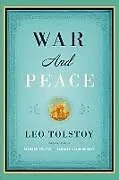
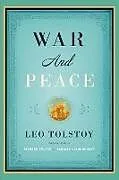
War and Peace
Beschreibung
Zusatztext Shimmering. . . . [It] offers an opportunity to see this great classic afresh! to approach it not as a monument but rather as a deeply touching story about our contradictory human hearts. Michael Dirda! The Washington Post Book World A major new tra...Format auswählen
- Kartonierter EinbandCHF 29.10

Wird oft zusammen gekauft
Andere Kunden kauften auch
Beschreibung
Zusatztext Shimmering. . . . [It] offers an opportunity to see this great classic afresh! to approach it not as a monument but rather as a deeply touching story about our contradictory human hearts. Michael Dirda! The Washington Post Book World A major new translation . . . [which] brings us the palpability [of Tolstoy's characters] as perhaps never before. . . . Pevear and Volokhonsky's new translation gives us new access to the spirit and order of the book. James Wood! The New Yorker Excellent. . . . An extraordinary achievement. . . . Wonderfully fresh and readable. . . . The English-speaking world is indebted to these two magnificent translators for revealing more of its hidden riches than any who have tried to translated the book before. Orlando Figes! The New York Review of Books "Tolstoy's War and Peace has often been put in a league with Homer's epic poems; it seems to me that the same might be said for Pevear and Volokhonsky's translation of his great novel. . . . Their efforts convey a much closer equivalent in English to the experience of reading the original." Michael Katz! New England Review Full review here: http://www.nereview.com/29-4/29-4Katz.htm Informationen zum Autor Leo Tolstoy A New Translation by Richard Pevear and Larissa Volokhonsky Klappentext From Richard Pevear and Larissa Volokhonsky, the best-selling, award-winning translators of Anna Karenina and The Brothers Karamazov, comes a brilliant, engaging, and eminently readable translation of Leo Tolstoy's master epic. • Nominated as one of America's best-loved novels by PBS's The Great American Read War and Peace centers broadly on Napoleon's invasion of Russia in 1812 and follows three of the best-known characters in literature: Pierre Bezukhov, the illegitimate son of a count who is fighting for his inheritance and yearning for spiritual fulfillment; Prince Andrei Bolkonsky, who leaves behind his family to fight in the war against Napoleon; and Natasha Rostov, the beautiful young daughter of a nobleman, who intrigues both men. As Napoleon's army invades, Tolstoy vividly follows characters from diverse backgroundspeasants and nobility, civilians and soldiersas they struggle with the problems unique to their era, their history, and their culture. And as the novel progresses, these characters transcend their specificity, becoming some of the most movingand humanfigures in world literature. Pevear and Volokhonsky have brought us this classic novel in a translation remarkable for its fidelity to Tolstoy's style and cadence and for its energetic, accessible prose.Translated by Richard Pevear and Larissa Volokhonsky Part Three, XV At eight o'clock Kutuzov rode to Pratz at the head of Miloradovich's fourth column, the one which was to take the place of the columns of Przebyszewski and Langeron, which had already gone down. He greeted the men of the head regiment and gave the order to move, thus showing that he intended to lead the column himself. Having ridden to the village of Pratz, he halted. Prince Andrei, one of the enormous number of persons constituting the commander in chief's suite, stood behind him. Prince Andrei felt excited, irritated, and at the same time restrainedly calm, as a man usually is when a long-desired moment comes. He was firmly convinced that this was the day of his Toulon or his bridge of Arcole.[1] How it would happen, he did not know, but he was firmly convinced that it would be so. The locality and position of our troops were known to him, as far as they could be known to anyone in our army. His own strategic plan, which there obviously could be no thought of carrying out now, was forgotten. Now, entering into Weyrother's plan, Prince Andrei pondered the possible happenstances and came up with new considerations, such as might call for his ...
Autorentext
Leo Tolstoy A New Translation by Richard Pevear and Larissa Volokhonsky
Klappentext
From Richard Pevear and Larissa Volokhonsky, the best-selling, award-winning translators of Anna Karenina and The Brothers Karamazov, comes a brilliant, engaging, and eminently readable translation of Leo Tolstoy’s master epic. • Nominated as one of America’s best-loved novels by PBS’s The Great American Read
War and Peace centers broadly on Napoleon’s invasion of Russia in 1812 and follows three of the best-known characters in literature: Pierre Bezukhov, the illegitimate son of a count who is fighting for his inheritance and yearning for spiritual fulfillment; Prince Andrei Bolkonsky, who leaves behind his family to fight in the war against Napoleon; and Natasha Rostov, the beautiful young daughter of a nobleman, who intrigues both men. As Napoleon’s army invades, Tolstoy vividly follows characters from diverse backgrounds—peasants and nobility, civilians and soldiers—as they struggle with the problems unique to their era, their history, and their culture. And as the novel progresses, these characters transcend their specificity, becoming some of the most moving—and human—figures in world literature.
Pevear and Volokhonsky have brought us this classic novel in a translation remarkable for its fidelity to Tolstoy’s style and cadence and for its energetic, accessible prose.
Leseprobe
Translated by Richard Pevear and Larissa VolokhonskyPart Three, XVAt eight o’clock Kutuzov rode to Pratz at the head of Miloradovich’s fourth column, the one which was to take the place of the columns of Przebyszewski and Langeron, which had already gone down. He greeted the men of the head regiment and gave the order to move, thus showing that he intended to lead the column himself. Having ridden to the village of Pratz, he halted. Prince Andrei, one of the enormous number of persons constituting the commander in chief’s suite, stood behind him. Prince Andrei felt excited, irritated, and at the same time restrainedly calm, as a man usually is when a long-desired moment comes. He was firmly convinced that this was the day of his Toulon or his bridge of Arcole.[1] How it would happen, he did not know, but he was firmly convinced that it would be so. The locality and position of our troops were known to him, as far as they could be known to anyone in our army. His own strategic plan, which there obviously could be no thought of carrying out now, was forgotten. Now, entering into Weyrother’s plan, Prince Andrei pondered the possible happenstances and came up with new considerations, such as might call for his swiftness of reflection and decisiveness.To the left below, in the fog, exchanges of fire between unseen troops could be heard. There, it seemed to Prince Andrei, the battle would concentrate, there an obstacle would be encountered, and “it’s there that I’ll be sent with a brigade or division, and there, with a standard in my hand, I’ll go forward and crush everything ahead of me.”Prince Andrei could not look with indifference at the standards of the battalions going past him. Looking at a standard, he thought: maybe it is that very standard with which I’ll have to march at the head of the troops.By morning the night’s fog had left only hoarfrost turning into dew on the heights, but in the hollows the fog still spread its milk-white sea. Nothing could be seen in that hollow to the left, into which our troops had descended and from which came the sounds of gunfire. Over the heights was a dark, clear sky, and to the right–the enormous ball of the sun. Far ahead, on the other shore of the sea of fog, one could make out the jutting, wooded hills on which the enemy army was supposed to be, and something was discernible. To the right the guards were entering the region of the fog, with a sound of tramping and wheels and an occasional gleam of bayonets; to the left, beyond the village, similar masses of cavalry approached a…