
IHR WARENKORB IST AKTUELL LEER.
Haben Sie noch nichts passendes gefunden? Stöbern Sie durch unser komplettes Sortiment.
Oder melden Sie sich an bzw. registrieren Sie sich.
- Kostenlose Lieferung
- Kauf auf Rechnung
- Ex Libris Tiefpreis
- Filiallieferung und 650+ Abholorte
- Rabatt-Bons als Club-Mitglied
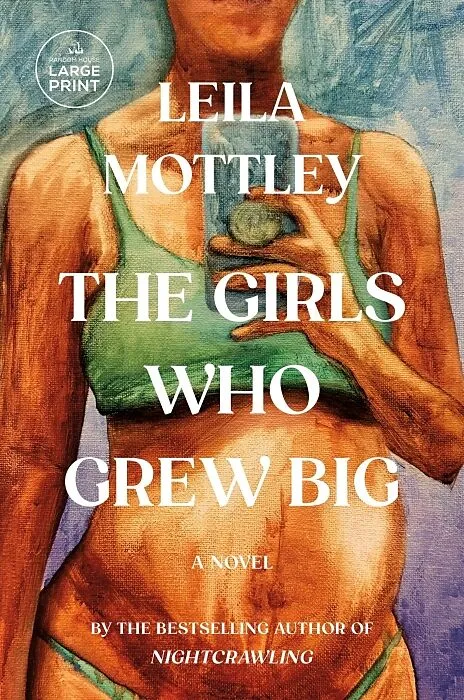
The Girls Who Grew Big
Beschreibung
From the author of Oprah''s Book Club pick and <New York Times< best seller <Nightcrawling, <here is an astonishing new novel about the joys and entanglements of a fierce group of teenage mothers in a small town on the Florida panhandle. Adel...Format auswählen
- Kartonierter EinbandCHF 33.20

Wird oft zusammen gekauft
Andere Kunden kauften auch
Beschreibung
From the author of Oprah''s Book Club pick and <New York Times< best seller <Nightcrawling, <here is an astonishing new novel about the joys and entanglements of a fierce group of teenage mothers in a small town on the Florida panhandle.
Adela is sixteen years old. When she tells her parents she''s pregnant, they send her from their home in Indiana to her grandmother’s in Padua Beach, Florida, "a town built on <y’all bein'' good now?< and <babies havin'' babies<, said in the rasp of a loud whisper and one polite little shake of the head." There, Adela meets Emory, who has a baby of her own she brings to high school, strapped to her chest; and Simone, ringleader of “the Girls,” young moms who hang out with their growing brood in the back of her red truck—dancing defiantly, breastfeeding, watching each other’s backs. The town thinks they’ve lost their way, but really they are finding it: looking for love, making and breaking friendships, navigating the miracle of motherhood and the paradox of girlhood. Before long they will find themselves on a collision course with one another.
An uplifting novel, full of heart and life and hope, set against the shifting sands of these friends’ secrets and betrayals,< The Girls Who Grew Big< confirms Leila Mottley''s promise and offers an explosive new perspective on what it means to be a young woman.
Autorentext
LEILA MOTTLEY is the author of the novel Nightcrawling, an Oprah’s Book Club pick and New York Times best seller, and the poetry collection woke up no light. She is also the 2018 Oakland Youth Poet Laureate. She was born and raised in Oakland, where she continues to live.
Klappentext
From the author of Oprah's Book Club pick and New York Times best seller Nightcrawling, here is an astonishing new novel about the joys and entanglements of a fierce group of teenage mothers in a small town on the Florida panhandle.
Adela is sixteen years old. When she tells her parents she's pregnant, they send her from their home in Indiana to her grandmother’s in Padua Beach, Florida, "a town built on y’all bein' good now? and babies havin' babies, said in the rasp of a loud whisper and one polite little shake of the head." There, Adela meets Emory, who has a baby of her own she brings to high school, strapped to her chest; and Simone, ringleader of “the Girls,” young moms who hang out with their growing brood in the back of her red truck—dancing defiantly, breastfeeding, watching each other’s backs. The town thinks they’ve lost their way, but really they are finding it: looking for love, making and breaking friendships, navigating the miracle of motherhood and the paradox of girlhood. Before long they will find themselves on a collision course with one another.
An uplifting novel, full of heart and life and hope, set against the shifting sands of these friends’ secrets and betrayals, The Girls Who Grew Big confirms Leila Mottley's promise and offers an explosive new perspective on what it means to be a young woman.
Leseprobe
Simone
Nobody ever warns you about the placenta. Like, you spend days seizing and stretching open to get some shoulders out your coochie and then the baby, or babies in my case, are writhing in your arms, and you realize it’s not even over. You’ve still gotta push out this pulsing purple heart bigger than your man’s head—and my man had a big-ass head—and find a way to cut the cords.
I guess if you’re in the hospital, then maybe somebody hands you a fancy pair of scissors to cut them or mentions the placenta in between the choke of contractions to get that second baby out, but I gave birth set up in the bed of my boyfriend’s red pickup truck, so I wouldn’t know. I’d tell you I did it that way ’cause I couldn’t afford the hospital without no insurance, which was true, but really I just didn’t want people looking at me funny like, girl what are you doing having a baby with this gangly man who keeps telling us to call him Tooth? I knew how it looked. I was sixteen. He was twenty-two.
But really, at the time, I didn’t think it mattered any more than the birthmark on my ankle and so I didn’t wanna have to explain to some nurse as I chewed ice that I love him, have to say, They my babies, I wanted them, I want them, even though at that point I don’t think I knew what I wanted or who I loved or how I ended up in the back of a pickup truck in Florida giving birth at thirty-six weeks.
At least in the truck, no questions was asked. Except, why didn’t nobody tell me about the placenta? I thought it would come out with the rest of that fluid, but nope, I had to do all the work while Tooth just stared at me, repulsed.
The twins was still attached to the fleshy heat of my body, slippery and smaller than one of his shoes, and I’d passed them to Tooth when I felt the faint cramps begin and knew I had to push one more time, maybe twice ’cause I’d been told there was two placentas up in there. But now Tooth was tryna give the babies back like they wasn’t half him, holding them out to me like grocery bags with the handles torn off.
“Should we go to the hospital?” Tooth asked, trying not to look between my thighs even though I saw his eyes drift there and shoot back up, his lashes fluttering in disgust.
I didn’t respond, mid-push, and then one soft big placenta slipped right out, two cords dangling from it, and I glared up at Tooth. “You think after all that, I’m about to go to the hospital now? No.”
I didn’t care none about the mess or the fact we ain’t known what we was doing, ’cause all those months of torment—when I’d been stretched out like an old sock by a big foot, expelled from the only family I’d known, whispered about among the throngs of a town high on contempt—was suddenly worth something. My babies.
I was exhausted, but I knew I couldn’t rest yet. “We have to cut the cords.”
“I think I got my pocketknife,” Tooth said.
He reached into his back pocket and pulled out the dirtiest pocketknife you’d ever seen, popped the blade and it was all crusted in dried brown blood, shed fur from some long-dead animal, and Lord knows how many fishes’ yellowed intestines.
“Where do I cut it?” he asked.
I looked at him. He stared back.
“Are you fucking with me? You can’t cut ’em with that,” I said.
“Why?”
I gawked. “It’s dirty.”
“So is that thing,” he said, nodding to my placenta.
“That thing fed your children for nine months. I’m not cuttin’ nothing with that.”
“Then what you gonna do?”
I looked around again, like I was gonna find some spare scissors among the pooling fluid, and then I looked back at the placenta, and I knew. This was the moment I became a mother, when I was the only person in the world that knew what needed to be done to keep my babies safe, to excavate myself just to feed them.
“I’ll bite it,” I said.
Tooth’s face twisted up like I’d just said I was gonna eat my own shit. “The fuck you talkin’ ’bout? I’ll go find another knife, just stay here and—”
Before he could do nothing, I had one cord in my mouth and I was gnawing. It didn’t take much work before my teeth found each other and then I tied it and moved to the next cord and my teeth ripped through that too. I expected them to be chewy, dense, but they felt like …