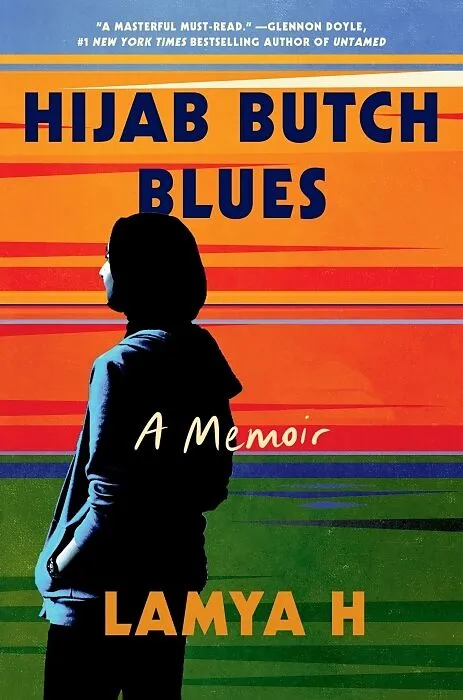
Hijab Butch Blues
Beschreibung
Informationen zum Autor Lamya H Klappentext "Fourteen years old and growing up in the Middle East, Lamya is an overachiever and a class clown, qualities that help her hide in plain sight when she realizes she has a crush on her teacher-her female teacher. She'...Format auswählen
- Fester EinbandCHF 29.60

Wird oft zusammen gekauft
Andere Kunden kauften auch
Beschreibung
Informationen zum Autor Lamya H Klappentext "Fourteen years old and growing up in the Middle East, Lamya is an overachiever and a class clown, qualities that help her hide in plain sight when she realizes she has a crush on her teacher-her female teacher. She's also fourteen when she reads a passage in Quran class about Maryam, known as the Virgin Mary in the Christian Bible, that changes everything. Lamya learns that Maryam was untempted by an angelically handsome man, and later, when told she is pregnant, insists no man has touched her. Could Maryam be... like Lamya? Spanning childhood to an elite college in the US and early adult life in New York City, each essay places Lamya's struggles and triumphs in the context of some of the most famous stories in the Quran. She juxtaposes her coming out with Musa liberating his people from the Pharoah; asks if Allah, who is neither male nor female, might instead be nonbinary; and, drawing strength from the faith and hope of Nuh building his ark, begins to build a life of her own-all the while discovering that her identity as a queer, immigrant devout Muslim is, in fact, the answer to her quest for safety and belonging"-- Leseprobe Maryam I am fourteen the year I read Surah Maryam. It's not like I haven't read this chapter of the Quran before, I haveI've read the entire Quran multiple times, all 114 chapters from start to finish. But I've only read it in Arabic, a language that I don't speak, that I can vocalize but not understand, that I've been taught for the purpose of reading the Quran. So I've read Surah Maryam before: sounded out the letters, rattled off words I don't know the meaning of, translated patterns of print into movements of tongue and lips. Read as an act of worship, an act of learning, an act of obedience to my father, under whose supervision I speed-read two pages of Quran aloud every evening. I've heard the surah read, toorecited on the verge of song during Taraweeh prayer in Ramadan; on the Quran tapes we listen to in the car during traffic jams; on the Islamic radio station that blares in the background while my mother cooks. This surah is beautiful, and one that I'm intimately familiar with. The cadence of its internal rhyme, the five elongated letters that comprise the first verse, the short, hard consonants repeated in intervals. But although I've read Surah Maryam before, my appreciation for it has been limited to the ritual and the aesthetic. I've never read read it. I am fourteen the year we read Surah Maryam in Quran class. We, as in the twenty-odd students in my grade, in the girls' section of the Islamic school that I attend in this rich Arab country that my family has moved to. It's not a fancy international school, but my classmates and I are from all over the worldBangladesh, Nigeria, Egypt, Germanyand our parents are always telling us to be grateful for our opportunities. Mine are always reminding me why we left the country I was born in a decade agoa country where we lived next door to my grandmother and a few streets down from my cousins, where I remember being surrounded by loveto this country where we don't know anyone and don't know the language and my mother can't drive. My parents are always listing reasons we've stayed: better jobs, more stability, a Muslim upbringing. Which includes an Islamic education in school. Twice a week, my classmates and I have Quran class. We line up in the windowless hallway outside the room where we have most of our other lessonsa room we've decorated and claimed desks in and settled into. From there, we begrudgingly make our way to a drab room in the annex called the language lab. The name is deceptive; it's just a regular classroom outfitted with headphones and tape players, recently appropriated from the boys' section in an attempt at a more equal distribution of the school's resources. But gross boy smellssweat and farts ...
Autorentext
Lamya H
Klappentext
"A masterful, must-read contribution to conversations on power, justice, healing, and devotion from a singular voice I now trust with my whole heart."-GLENNON DOYLE, author of Untamed
A daring, witty, and moving memoir about a queer hijabi Muslim immigrant's coming of age in a world that only accepts one piece of her identity at a time.
Fourteen years old and growing up in the Middle East, Lamya is an overachiever and a class clown, qualities that help her hide in plain sight when she realizes she has a crush on her teacher-her female teacher. She's also fourteen when she reads a passage in Quran class about Maryam, known as the Virgin Mary in the Christian Bible, that changes everything. Lamya learns that Maryam was untempted by an angelically handsome man, and later, when told she is pregnant, Maryam insists no man has touched her. Could Maryam be… like Lamya?
Spanning childhood to an elite college in the US and early adult life in New York City, each essay places Lamya's struggles and triumphs in the context of some of the most famous stories in the Quran. She juxtaposes her coming out with Musa liberating his people from the Pharoah; asks if Allah, who is neither male nor female, might instead be nonbinary; and, drawing strength from the faith and hope of Nuh building his ark, begins to build a life of her own-all the while discovering that her identity as a queer, immigrant devout Muslim is, in fact, the answer to her quest for safety and belonging.
This searingly intimate memoir in essays tells a universal story of courage and love, reinventing and validating what it means to be a seeker and an architect of your own life.
Zusammenfassung
******A queer hijabi Muslim immigrant survives her coming-of-age by drawing strength and hope from stories in the Quran in this “raw and relatable memoir that challenges societal norms and expectations” (Linah Mohammad, NPR).
“A masterful, must-read contribution to conversations on power, justice, healing, and devotion from a singular voice I now trust with my whole heart.”—Glennon Doyle, #1 New York Times bestselling author of Untamed**
WINNER OF THE BROOKLYN PUBLIC LIBRARY BOOK PRIZE • AN AUDACIOUS BOOK CLUB PICK • A BEST BOOK OF THE YEAR: NPR, BOOK RIOT, BOOKPAGE, HARPER’S BAZAAR, ELECTRIC LIT, SHE READS
When fourteen-year-old Lamya H realizes she has a crush on her teacher—her female teacher—she covers up her attraction, an attraction she can’t yet name, by playing up her roles as overachiever and class clown. Born in South Asia, she moved to the Middle East at a young age and has spent years feeling out of place, like her own desires and dreams don’t matter, and it’s easier to hide in plain sight. To disappear. But one day in Quran class, she reads a passage about Maryam that changes everything: When Maryam learned that she was pregnant, she insisted no man had touched her. Could Maryam, uninterested in men, be . . . like Lamya?
From that moment on, Lamya makes sense of her struggles and triumphs by comparing her experiences with some of the most famous stories in the Quran. She juxtaposes her coming out with Musa liberating his people from the pharoah; asks if Allah, who is neither male nor female, might instead be nonbinary; and, drawing on the faith and hope Nuh needed to construct his ark, begins to build a life of her own—ultimately finding that the answer to her lifelong quest for community and belonging lies in owning her identity as a queer, devout Muslim immigrant.
This searingly intimate memoir in essays, spanning Lamya’s childhood to her arrival in the United States for college through early-adult life in New York City, tells a universal story of courage, trust, and love, celebrating what it means to be a seeker and an architect of one’s own life.