
IHR WARENKORB IST AKTUELL LEER.
Haben Sie noch nichts passendes gefunden? Stöbern Sie durch unser komplettes Sortiment.
Oder melden Sie sich an bzw. registrieren Sie sich.
- Kostenlose Lieferung
- Kauf auf Rechnung
- Ex Libris Tiefpreis
- Filiallieferung und 650+ Abholorte
- Rabatt-Bons als Club-Mitglied
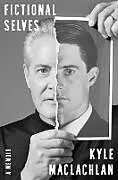
Fictional Selves
Beschreibung
An upcoming book to be published by Penguin Random House. Autorentext Kyle MacLachlan is an Emmy-nominated and Golden Globe–winning actor who has been a star of television and film for forty years. He has starred in projects such as Dune, Blue Velvet, Fa...Format auswählen
- Fester EinbandCHF 36.40

Wird oft zusammen gekauft
Andere Kunden kauften auch
Beschreibung
An upcoming book to be published by Penguin Random House.
Autorentext
Kyle MacLachlan is an Emmy-nominated and Golden Globe–winning actor who has been a star of television and film for forty years. He has starred in projects such as Dune, Blue Velvet, Fallout, and the groundbreaking television show Twin Peaks. Kyle is heavily active on social media where he promotes his wine label, Pursued by Bear*,* his chart-topping true-crime podcast Varnamtown, and engages extensively with fans. Kyle lives in Los Angeles with his wife, Desiree, and his son.
Klappentext
In this highly anticipated memoir, the beloved actor and star of Twin Peaks, Blue Velvet, Sex and the City, Fallout, and more shares his utterly original account of his offbeat journey in Hollywood, his battles with fear and fame, and the projects that shaped him—and created a cult icon.
Everywhere I go I am followed by a mystery man. He looks like me but—not quite. On talk shows, I sip coffee on couches and pretend to be him; on social media, I put on his mask to engage in suburban silliness. And of course, we work together. But for him, the movies and TV shows never end. Where does this guy—this Kyle MacLachlan—end and where do I begin? And is he even real? And, holy mackerel . . . am I?
To be in the black suit, or not to be? Kyle MacLachlan’s funny, moving, and playfully self-aware memoir charts a career that could belong to no other. Plucked from obscurity to star in David Lynch’s Dune, the Hollywood blockbuster that never was, MacLachlan rebounded with a startling performance in Lynch’s provocative masterpiece Blue Velvet, which would mark him as a master of the unusual and ultimately lead to his career-defining role as Agent Dale Cooper on the TV sensation Twin Peaks.
Fictional Selves is a book of doppelgangers, with MacLachlan mirrored by his own prodding ego (“Other Kyle”), the iconic characters he inhabited, and the ones that eluded his grasp but gave him a profound and surprising lens onto himself as a person and a performer. Taking us from the heights of critical success for Blue Velvet to the depths of the backyard pool in his infamous (and delightful) Showgirls love scene, MacLachlan brings us into the mind of one of the most distinctive actors of his generation, offering profound insights on collaborators like David Lynch, Laura Dern, Dennis Hopper, Anthony Hopkins, and more. Featuring lessons learned the hard way about ambition, love, and fatherhood, this memoir is an honest look into the remarkable—and often unpredictable—life of an enduring and endearing Hollywood icon.
Leseprobe
1
The One
I must not fear. Fear is the mind-killer. Fear is the little-death that brings total obliteration.
I will face my fear. I will permit it to pass over me and through me.
—Frank Herbert, Dune
Chihuahua, Mexico
1983
In another place, in another time, a sheltered and naïve young man is given a great responsibility. A large number of people have put their faith in him, believing he has the power to lead them into the future. Though he has an air of confidence, he carries a secret: He’s unsure that he’s up to the task. If he is actually the one.
This is true for Paul Atreides, the protagonist of Frank Herbert’s Dune, but it is also true for me. At twenty-four years old and carrying a grand total of zero films under my belt, I am cast as the lead in a $40 million film that is supposed to be far more than a single feature. The hope is that it will be the launch of the next big thing: the Duniverse. (The Duneverse?) It doesn’t happen—not then—so that’s why that word looks so clumsy.
In the distance, across the Samalayuca Dune Fields, men are burning old tires to get the right color and intensity of black smoke. As a key point of the plot, the planet Arrakis, aka Dune, doesn’t have water; thus, it has no blue sky. But of course, Mexico does. Can’t get around that. So, our intrepid director, the thirty-seven-year-old former Eagle Scout from Montana, the Oscar-nominated visionary behind Eraserhead and The Elephant Man, David Lynch, has taken on the not-inconsiderable task of blotting out the sky.
You’d think that would be ambitious enough. But on top of having to, I repeat, hide the sky, he must also completely clear the desert. I can see crew members out there in the crushing midday heat yanking plants out of the ground and hauling critters—snakes and anything else that moves—out of the shot. And because this is a film of epic scope—like if David Lean went to space—the crew has to cover a vast landscape. I don’t envy them. Though, I’m sure they’re looking back at me thinking the exact same thing.
The costume department is dressing up a long line of extras in full vinyl suits, sheaths of plastic and rubber with headpieces and faceplates. Out in the heat, fainting is not uncommon. Once in a while, someone will just drop. The extras, playing the emperor’s fighters, known as the Sardaukar, are actual members of the Mexican Army.
I think this is all normal.
It is early in the shoot, and I am young enough to enjoy my time on set like it’s summer camp, green enough not to worry about how (or if) it will all come together onscreen. I marvel at the scope of this thing and eagerly make notes in my script, which I carry around in a woolen pouch I bought at a Coyoacán flea market. I constantly reread my dog-eared paperback copy of Dune, the pages covered in the red dust that is indiscriminately blowing around.
It is a blessing, this ignorance. Not apathy—of course I want to do well—but optimism. The confidence is a survival technique. If I acknowledged the sheer size and stakes of this thing, I’d probably be too afraid to get out of bed each morning.
Here’s what I know: This isn’t my previous job at the Empty Space theater in Seattle, performing for a ninety-nine-seat house, taking home $185 a week. No, this is something far different. And with nothing else to compare it to, I just accept it. Well, this is the movies, I guess.
It all started out innocuously enough.
Six months earlier, in December 1982, I am a working theater actor in Seattle when a message is left on my answering machine by a Hollywood casting agent. She invites me to a room at the plush Four Seasons downtown to audition for the role of Paul Atreides, a call that I’m sure is a prank. But I call back, and sure enough, it’s real. Then I’m in between two beds reading lines—called “sides”—for Elisabeth Leustig, a kind-faced woman with cascading waves of light brown hair and a thick French accent. I stand in front of a small video camera set up on a flimsy stand. She is casting for the lead in a big-budget film of Dune, a book I loved as a teenager, a character who defined me as a teenager. They might as well be choosing astronauts for Mars.
Only half a year out of the University of Washington’s Professional Actor Training Program, I am currently “on the boards,” co-starring as the hothead Damis in a production of Molière’s Tartuffe. Working with a cast I know well from the previous summer’s Oregon Shakespeare Festival, I am living the local actor’s life in Seattle. The Empty Space is a tiny theater up in the hip Capitol Hill area, near the Comet Tavern, where we go out drinking after rehearsal. It is a communal, tightly knit circle I’m happy to be a part of.
Film is nothing that I’m even considering, even as a lark.
Apart from taping an audition for a local insurance company and being an extra in a movie filmed at UW, I have never been in…