
IHR WARENKORB IST AKTUELL LEER.
Haben Sie noch nichts passendes gefunden? Stöbern Sie durch unser komplettes Sortiment.
Oder melden Sie sich an bzw. registrieren Sie sich.
- Kostenlose Lieferung
- Kauf auf Rechnung
- Ex Libris Tiefpreis
- Filiallieferung und 650+ Abholorte
- Rabatt-Bons als Club-Mitglied
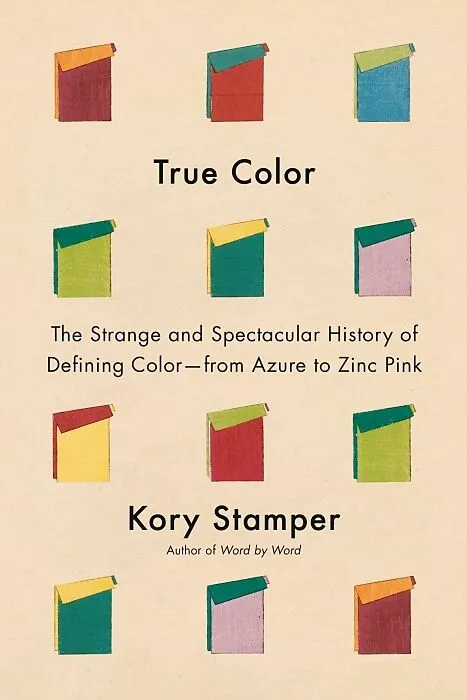
True Color
Beschreibung
A kaleidoscopic journey through the secret history of hues--and;the story of the obsessive genius behind the definitions of colors we use today, from the beloved author of begonia (n.): 3 -s : ;a deep pink that is bluer, lighter, and stronger than average cora...Format auswählen
- Fester EinbandCHF 35.90

Wird oft zusammen gekauft
Andere Kunden kauften auch
Beschreibung
A kaleidoscopic journey through the secret history of hues--and;the story of the obsessive genius behind the definitions of colors we use today, from the beloved author of begonia (n.): 3 -s : ;a deep pink that is bluer, lighter, and stronger than average coral (see coral 3b), bluer than fiesta, and bluer and stronger than sweet william -- called also gaiety ;;;;What could “bluer than fiesta” possibly mean? While editing dictionaries for Merriam-Webster, Kory Stamper found herself drawn again and again to the whimsical color definitions in ;;;;;;;;;;; Meet I. H. Godlove, an erratic but brilliant up-and-coming scientist who was one of the experts Merriam-Webster hired in 1930 to help them revise the dictionary to reflect a rapidly modernizing world. His fascinating life mirrors the wild and winding journey that color science, color psychology, and color production took through the twentieth century. Stamper tracks these industries as they move into the atomic age and intertwine in strange and surprising ways, spanning two world wars and involving chemical explosions, an unexpected suicide, dramatic office politics, and an extraordinary love story. ;;;;;;;;;;; Filled with captivating facts about color words and colors themselves--did you know that the word “puke” used to be a highly fashionable color before it was associated with vomit?--and fueled by Stamper’s inexhaustible curiosity, <True Color< will transform the way you see the world, from black-and-white to Technicolor.
Autorentext
KORY STAMPER is a lexicographer who has written dictionaries for nearly thirty years at Merriam-Webster, Cambridge Dictionaries, and Dictionary.com. She is the author of Word by Word. Her writing has appeared in The Guardian, The New York Times, New York magazine*,* and The Washington Post, and she blogs regularly on language and lexicography at www.korystamper.com.
Klappentext
**A kaleidoscopic journey through the secret history of hues—and the story of the obsessive genius behind the definitions of colors we use today, from the beloved author of *Word by Word
*"Wildly entertaining and bountifully informative; I couldn't have enjoyed myself more." —Benjamin Dreyer, New York Times bestselling author of *Dreyer's English
begonia (n.): 3 -s : a deep pink that is bluer, lighter, and stronger than average coral (see coral 3b), bluer than fiesta, and bluer and stronger than sweet william — called also gaiety
What could "bluer than fiesta" possibly mean? While editing dictionaries for Merriam-Webster, Kory Stamper found herself drawn again and again to the whimsical color definitions in Webster’s Third New International Dictionary—especially when compared to the dry and impersonal entries that filled the rest of the volume. Stamper couldn’t help but wonder: Who was the voice behind these peculiar definitions?
Meet I. H. Godlove, an erratic but brilliant up-and-coming scientist who was one of the experts Merriam-Webster hired in 1930 to help revise the dictionary to reflect a rapidly modernizing world. His fascinating life mirrors the wild and winding journey that color science, color psychology, and color production took through the twentieth century. Stamper tracks these industries as they move into the atomic age and intertwine in strange and surprising ways, spanning two world wars and involving chemical explosions, an unexpected suicide, dramatic office politics, and an extraordinary love story.
Filled with captivating facts about color words and colors themselves—did you know that the word “puke” used to refer to a fashionable shade of reddish-brown before it was associated with vomit?—and fueled by Stamper’s inexhaustible curiosity, True Color will transform the way you see the world, from black-and-white to Technicolor.
Leseprobe
The plain facts of English usage are that, by sheer volume, our main vocabularic interaction with color is through color names, not terms of color science or optics or chemistry. How often do you go into a paint store and ask for them to mix up samples by handing them a sheet of paper with trichromatic measurements and diffuse spectral reflectance ratios? “Never” is the correct answer, though I will also accept “what are you talking about?” No: Just as Priest and his nerds have their own vocabulary of color, we, too, have a general vocabulary of color. We tell the person behind the counter that we’re looking for neutrals (which are not colorimetrically neutral at all), or jewel tones (which include the colors of only some jewels and not others, like diamonds), or pastels (colors named after a type of fine-art crayon that can and does come in colors that are not pastel, sense 2); warm colors, cool colors, strong colors, soft colors. Or we go straight to the wall of paint chips and begin to collect a poker hand of Dark Evergreen, Muted Graphite, Negroni, Plantain Chip, Firecracker, Swiss Coffee, Secret.
Priest’s whine that color names are “weird and fanciful” is only half true. Many common color names do have a logic to them, but it’s a logic built on human experience and not some scientific nomenclature. There are four main types of color names. We’ve got the basic color categories—the first colors that we learn as toddlers, the main color buckets into which all other colors get dumped. Generally speaking, that’s red, orange, yellow, green, blue, purple, brown, pink, gray, white, and black. Beyond the basic color terms, there are color names that some scholars call intrinsic. These are color names based on something in real life—plants, foods, gems, animals, earth. “Lime” is (supposedly) the color of limes; “daffodil” is the color of daffodil flowers; “burnt umber” is the color of a type of earth from Umbria (baked), and “raw sienna” is the color of a type of earth from Siena (raw); “cardinal” is the red of the bird; “mummy” is the brown of the pyramid denizen. “Based on” is loosely used here: Rarely do intrinsic color names exactly match every specimen of the thing they take their name from. Limes (neither rind nor flesh) are “lime”; daffodils span a range of yellows, whites, oranges, but only one of those colors is “daffodil.” Still, intrinsic color names are amazing: a testament to the observational powers of humankind, universal enough that the vast majority of a language’s speakers have a general idea of what broad color category an intrinsic color name sits inside, but specific to individual groups, places, times. Paul Green-Armytage, a color researcher from Australia, ran an experiment where he gave a number of English speakers (mostly students) from Australia, England, and the United States five minutes to write down all the single-word color names they could think of (so “blue” was fine, but “baby blue” was not). He got about 270 responses, tallied them, and ended up with a list of about 203 color names, which he sorted by different variables. You can cross-section an entire language’s speakers depending on their color names. Green- Armytage found, for instance, that only Americans listed “cranberry” as a color name, and only Australians listed “mulberry.” Your field of study or work plays a part: Architecture students named colors derived from built environments and materials (copper, granite, lead, oak); design students listed “magenta” and “cyan,” two colors used in printing; painters named “ocher,” “sienna,” “umber,” “vermilion,” all of which are the names of fine-art colors or pigments; the members of the West Australian Q…