Beschreibung
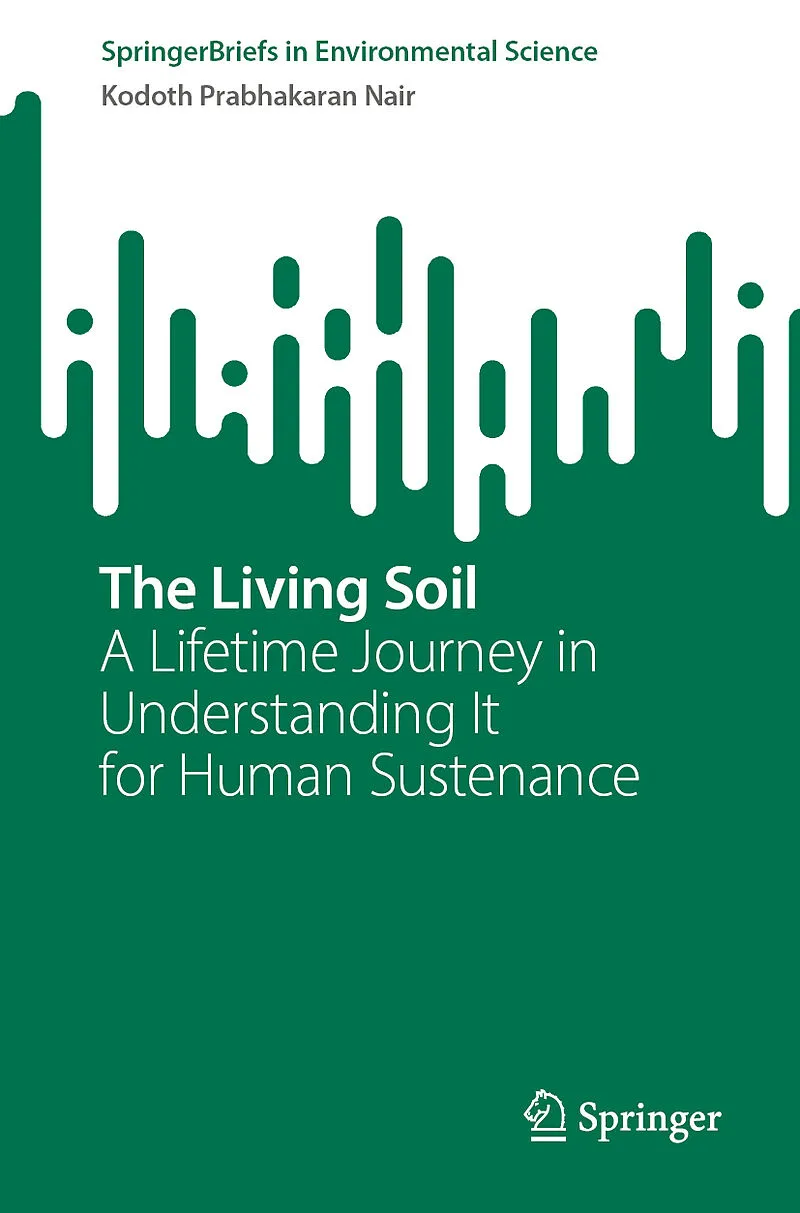
This book will address the importance of the soil management concept, vis-à-vis chemical fertilizer use on soil. Historically, soil testing has been used to quantify bio availability of plant nutrients to field grown crops. However, contemporary soil tests ar...This book will address the importance of the soil management concept, vis-à-vis chemical fertilizer use on soil. Historically, soil testing has been used to quantify bio availability of plant nutrients to field grown crops. However, contemporary soil tests are based on philosophies and procedures developed several decades ago without significant changes in their general approach. For a soil test to be accurate, one needs to clearly understand the physico-chemico-physiologic processes at the soil-plant root interface, and, an understanding of soils and plant root systems as polycationic systems is essential. It is this knowledge that leads to sound prescriptive soil management practices inasmuch as nutrient bioavailability vis-à-vis chemical fertilizers application is concerned, because, of all the factors that govern sustainability of crop production, the nutrient factor is the most important, yet, it is also the least resilient to effective management. The author's research spanning over three decades in Europe, Africa and Asia, establishes the fact that precise quantification of the nutrient's buffer power holds the key to a clear understanding of the plant bioavailability of some of the most important plant nutrients in crop production, such as, phosphorus, potassium and zinc. The Nutrient Buffer Power Concept attempts to clearly explain the bio availability of the three plant nutrients named above on the basis of the diffusion model, as that is the process by which these three important principal plant nutrients are absorbed from the soil by the plant root. Possibly, other plant nutrients which are taken up by the plant roots by the same diffusive model, would also conform to the principles of the concept. A thorough knowledge of thermodynamic principles on the part of the researcher is an absolute pre requisite for this.
The book chronicles more than three decades of the professional journey of the author in Europe, Africa and Asia, understanding soil for human sustenance, and developing the revolutionary soil management concept, now globally known as, " The Nutrient Buffer Power Concept " , which has brought the author a string of international recognitions, including the nomination for the " Alternative Nobel Prize " (The Right Livelihood Award),of Sweden, and succour to millions to poor and marginal farmers across Africa, Asia and Latin America.
Unfolding a unique soil management concept Continental field experience Soil centric, cutting edge research
Autorentext
Kodoth Prabhakaran Nair is a highly respected international agricultural scientist with over three decades of experience working in Europe, Africa and Asia. During his illustrious career, he has held numerous esteemed academic positions, including the National Chair of the Science Foundation at the Royal Society in Belgium, Professor and Head of the Department of Agriculture, Soil Sciences and Basic Sciences at the University Center in the Republic of Cameroon, and Senior Professor at the University of Fort Hare in the Republic of South Africa - the alma mater of the late Nelson Mandela and where he began his fight against apartheid. Professor Nair is globally renowned for his groundbreaking work in developing "The Nutrient Buffer Power Concept", a revolutionary soil management technique that is transforming the face of modern farming in the developing world. He has been honored with several national and international awards for developing this concept andwas nominated for the 2021 Volvo Environment Prize. He is also the author of ten books, including "Issues in National and International Agriculture", which was launched by India's great President, the late Dr. A.P.J. Abdul Kalam in Raj Bhavan, Chennai, India. He has received seven invitations to contribute invitational chapters to Advances in Agronomy, the magnum opus of agricultural science, a world record. He is also a Senior Fellow of the world renowned Alexander von Humboldt Research Foundation, the Federal Republic of Germany and was recently elected a Fellow of the National Academy of Agricultural Sciences, India. Currently, he is pursuing global agricultural research and resides in Calicut, Kerala, India with his wife, Dr. Pankajam Nair, a nematologist trained in Europe.
Klappentext
This book will address the importance of the soil management concept, vis-à-vis chemical fertilizer use on soil. Historically, soil testing has been used to quantify bio availability of plant nutrients to field grown crops. However, contemporary soil tests are based on philosophies and procedures developed several decades ago without significant changes in their general approach. For a soil test to be accurate, one needs to clearly understand the physico-chemico-physiologic processes at the soil-plant root interface, and, an understanding of soils and plant root systems as polycationic systems is essential. It is this knowledge that leads to sound prescriptive soil management practices inasmuch as nutrient bioavailability vis-à-vis chemical fertilizers application is concerned, because, of all the factors that govern sustainability of crop production, the nutrient factor is the most important, yet, it is also the least resilient to effective management. The author's research spanning over three decades in Europe, Africa and Asia, establishes the fact that precise quantification of the nutrient's "buffer power" holds the key to a clear understanding of the plant bioavailability of some of the most important plant nutrients in crop production, such as, phosphorus, potassium and zinc. "The Nutrient Buffer Power Concept" attempts to clearly explain the bio availability of the three plant nutrients named above on the basis of the diffusion model, as that is the process by which these three important principal plant nutrients are absorbed from the soil by the plant root. Possibly, other plant nutrients which are taken up by the plant roots by the same diffusive model, would also conform to the principles of the concept. A thorough knowledge of thermodynamic principles on the part of the researcher is an absolute pre requisite for this. The book chronicles more than three decades of the professional journey of the author in Europe, Africa and Asia, understanding soil for human sustenance, and developing the revolutionary soil management concept, now globally known as, "The Nutrient Buffer Power Concept" , which has brought the author a string of international recognitions, including the nomination for the "Alternative Nobel Prize" (The Right Livelihood Award),of Sweden, and succour to millions to poor and marginal farmers across Africa, Asia and Latin America.
Inhalt
Chapter 1:The concept of soil health.- Chapter 2:The establishment of The Nutrient Buffer Power Concept Ground breaking research in Germany and Belgium.- Chapter 3:Outreach in Africa- Central Africa.- Chapter 4:Outreach in Asia Central Asia and South Asia.- Chapter 5: Future Imperatives.
Tief- preis