
IHR WARENKORB IST AKTUELL LEER.
Haben Sie noch nichts passendes gefunden? Stöbern Sie durch unser komplettes Sortiment.
Oder melden Sie sich an bzw. registrieren Sie sich.
- Kostenlose Lieferung
- Kauf auf Rechnung
- Ex Libris Tiefpreis
- Filiallieferung und 650+ Abholorte
- Rabatt-Bons als Club-Mitglied
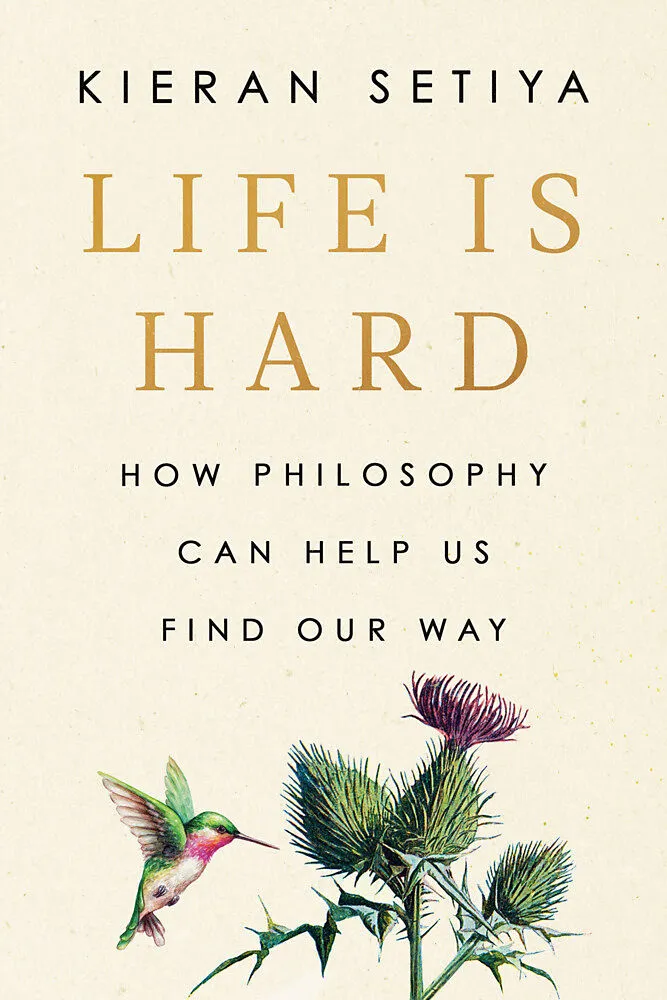
Life Is Hard
Beschreibung
Informationen zum Autor Kieran Setiya is a professor of philosophy at the Massachusetts Institute of Technology and the author of Midlife: A Philosophical Guide . His writing has appeared in the Los Angeles Review of Books , The New York Times , the Boston Rev...Format auswählen
- Fester EinbandCHF 25.50

Wird oft zusammen gekauft
Andere Kunden kauften auch
Beschreibung
Informationen zum Autor Kieran Setiya is a professor of philosophy at the Massachusetts Institute of Technology and the author of Midlife: A Philosophical Guide . His writing has appeared in the Los Angeles Review of Books , The New York Times , the Boston Review , the London Review of Books , The Atlantic , and The Yale Review. Klappentext NAMED A BEST BOOK OF THE YEAR BY THE NEW YORKER AND THE ECONOMIST Life Is Hard is a humane consolation for challenging times. Reading it is like speaking with a thoughtful friend who never tells you to cheer up, but, by offering gentle companionship and a change of perspective, makes you feel better anyway. The New York Times Book Review There is no cure for the human condition: life is hard. But Kieran Setiya believes philosophy can help. He offers us a map for navigating rough terrain, from personal trauma to the injustice and absurdity of the world. In this profound and personal book, Setiya shows how the tools of philosophy can help us find our way. Drawing on ancient and modern philosophy as well as fiction, history, memoir, film, comedy, social science, and stories from Setiya's own experience, Life Is Hard is a book for this momenta work of solace and compassion. Warm, accessible, and good-humored, this book is about making the best of a bad lot. It offers guidance for coping with pain and making new friends, for grieving the lost and failing with grace, for confronting injustice and searching for meaning in life. Countering pop psychologists and online influencers who admonish us to find our bliss and live our best lives, Setiya acknowledges that the best is often out of reach. Instead, he asks how we can weather life's adversities, finding hope and living well when life is hard. Leseprobe Chapter One: Infirmity You never forget the first time a doctor gives up: when they tell you that they don't know what to do-they have no further tests to run, no treatments to offer-and that you're on your own. It happened to me at the age of twenty-seven, with chronic pain, but it will happen to many of us at some point, with conditions that may be disabling or eventually fatal. The vulnerability of bodies belongs to the human condition. I don't remember what movie we had gone to see, but I know we were at The Oaks, an old arts cinema on the outskirts of Pittsburgh, when pain stabbed me in the side, followed by an urgent need to urinate. After bolting for the bathroom, I felt better, but with a band of tension running through my groin. As the hours went by, the pain resolved into a need to pee, again, which woke me up at one or two a.m. I went to the bathroom-but as if in some bad dream, urinating made no difference. The band of sensation remained, insusceptible to feedback from my body. I spent a night of hallucinatory sleeplessness sprawled on the bathroom floor, peeing from time to time in a vain attempt to snooze the somatic alarm. The next day started sensibly, with a trip to my primary care doctor, who guessed that I had a urinary tract infection and prescribed a course of antibiotics. But the test came back negative, as did tests for more abstruse conditions. The pain did not abate. From that point on, the time line is hazy. My memory is poor and medical bureaucracy defeated any attempt to have my records transferred from Pittsburgh to MIT when I moved eleven years later. But I won't forget the principal episodes. First, a urodynamic study in which I was catheterized, asked to drink a vat of fluids, and made to piss into a machine that measured rate and flow and function. Normal. Second, a cystoscopy in which an apparently teenage urologist projected an old-fashioned cystoscope through my urethra in agonizing increments, like a telescopic radio antenna. It certainly felt li...
Autorentext
Kieran Setiya is a professor of philosophy at the Massachusetts Institute of Technology and the author of Midlife: A Philosophical Guide. His writing has appeared in the Los Angeles Review of Books, The New York Times, **the Boston Review, **the London Review of Books, The Atlantic, and The Yale Review.
Klappentext
**NAMED A BEST BOOK OF THE YEAR BY THE NEW YORKER AND *THE ECONOMIST
*“Life Is Hard is a humane consolation for challenging times. Reading it is like speaking with a thoughtful friend who never tells you to cheer up, but, by offering gentle companionship and a change of perspective, makes you feel better anyway.” —The New York Times Book Review
**
There is no cure for the human condition: life is hard. But Kieran Setiya believes philosophy can help. He offers us a map for navigating rough terrain, from personal trauma to the injustice and absurdity of the world.
In this profound and personal book, Setiya shows how the tools of philosophy can help us find our way. Drawing on ancient and modern philosophy as well as fiction, history, memoir, film, comedy, social science, and stories from Setiya’s own experience, Life Is Hard is a book for this moment—a work of solace and compassion.
Warm, accessible, and good-humored, this book is about making the best of a bad lot. It offers guidance for coping with pain and making new friends, for grieving the lost and failing with grace, for confronting injustice and searching for meaning in life. Countering pop psychologists and online influencers who admonish us to “find our bliss” and “live our best lives,” Setiya acknowledges that the best is often out of reach. Instead, he asks how we can weather life’s adversities, finding hope and living well when life is hard.
Leseprobe
Chapter One: Infirmity
You never forget the first time a doctor gives up: when they tell you that they don't know what to do-they have no further tests to run, no treatments to offer-and that you're on your own. It happened to me at the age of twenty-seven, with chronic pain, but it will happen to many of us at some point, with conditions that may be disabling or eventually fatal. The vulnerability of bodies belongs to the human condition.
I don't remember what movie we had gone to see, but I know we were at The Oaks, an old arts cinema on the outskirts of Pittsburgh, when pain stabbed me in the side, followed by an urgent need to urinate. After bolting for the bathroom, I felt better, but with a band of tension running through my groin. As the hours went by, the pain resolved into a need to pee, again, which woke me up at one or two a.m. I went to the bathroom-but as if in some bad dream, urinating made no difference. The band of sensation remained, insusceptible to feedback from my body. I spent a night of hallucinatory sleeplessness sprawled on the bathroom floor, peeing from time to time in a vain attempt to snooze the somatic alarm.
The next day started sensibly, with a trip to my primary care doctor, who guessed that I had a urinary tract infection and prescribed a course of antibiotics. But the test came back negative, as did tests for more abstruse conditions. The pain did not abate. From that point on, the time line is hazy. My memory is poor and medical bureaucracy defeated any attempt to have my records transferred from Pittsburgh to MIT when I moved eleven years later.
But I won't forget the principal episodes. First, a urodynamic study in which I was catheterized, asked to drink a vat of fluids, and made to piss into a machine that measured rate and flow and function. Normal. Second, a cystoscopy in which an apparently teenage urologist projected an old-fashioned cystoscope through my urethra in agonizing increments, like a telescopic radio antenna. It certainly felt like something was wrong, but the report again was negative: nothing of clinical interest; no visible lesion or infection in the bladder or along the way. It must have been a busy morning in the clinic, because the do…