
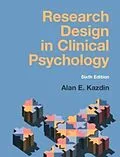
Research Design in Clinical Psychology
Beschreibung
Informationen zum Autor Alan E. Kazdin is Sterling Professor of Psychology and Child Psychiatry (Emeritus) at Yale University. Kazdin's research has focused on treatment development and assessment of clinical dysfunction. His 850+ publications include 50 books...Format auswählen
- Fester EinbandCHF 189.10
Wird oft zusammen gekauft
Andere Kunden kauften auch
Beschreibung
Informationen zum Autor Alan E. Kazdin is Sterling Professor of Psychology and Child Psychiatry (Emeritus) at Yale University. Kazdin's research has focused on treatment development and assessment of clinical dysfunction. His 850+ publications include 50 books that focus on methodology and research design, interventions for children and adolescents, behavioral and cognitive-behavioral treatment, parenting and child rearing, and interpersonal violence. He has received several awards, including Outstanding Lifetime Contributions to Psychology and a Distinguished Scientific Award for the Applications of Psychology (American Psychological Association) and the Gold Medal Award for Life Achievement in the Science of Psychology (American Psychological Foundation). In 2008, he was President of the American Psychological Association. Klappentext "The go-to guide for graduate students and professionals in research methods and research design in clinical psychology. Comprehensive, and with examples drawn from topics of general interest and various disciplines, this fully revised and updated edition presents the latest principles and practices of how to conduct scientific research"-- Zusammenfassung The go-to guide for graduate students and professionals in research methods and research design in clinical psychology. Comprehensive, and with examples drawn from topics of general interest and various disciplines, this fully revised and updated edition presents the latest principles and practices of how to conduct scientific research. Inhaltsverzeichnis Preface; About the author; 1. Introduction; 2. Drawing valid inferences I: internal and external validity; 3. Drawing valid inferences II: construct and data-evaluation validity; 4. Ideas that begin the research process: sources and guiding concepts; 5. Experimental research: group designs; 6. Control and comparison groups in experiments; 7. Observational research: case-control and cohort designs; 8. Single-case experimental research designs; 9. Qualitative and mixed methods research; 10. Assessment: selecting measures for research; 11. Assessment: types of measures and their use; 12. Special topics of assessment; 13. Data evaluation: null hypothesis significance testing; 14. Data evaluation: presenting and analyzing the data; 15. Data interpretation: cautions, 'negative results' and replication; 16. Ethical issues and guidelines for research; 17. Scientific integrity; 18. Communication of research findings; 19. Closing comments: guidelines for a well (and quickly) designed study; Glossary; References; Name index; Subject index....
Autorentext
Alan E. Kazdin is Sterling Professor of Psychology and Child Psychiatry (Emeritus) at Yale University. Kazdin's research has focused on treatment development and assessment of clinical dysfunction. His 850+ publications include 50 books that focus on methodology and research design, interventions for children and adolescents, behavioral and cognitive-behavioral treatment, parenting and child rearing, and interpersonal violence. He has received several awards, including Outstanding Lifetime Contributions to Psychology and a Distinguished Scientific Award for the Applications of Psychology (American Psychological Association) and the Gold Medal Award for Life Achievement in the Science of Psychology (American Psychological Foundation). In 2008, he was President of the American Psychological Association.
Zusammenfassung
The go-to guide for graduate students and professionals in research methods and research design in clinical psychology. Comprehensive, and with examples drawn from topics of general interest and various disciplines, this fully revised and updated edition presents the latest principles and practices of how to conduct scientific research.
Inhalt
Preface; About the author; 1. Introduction; 2. Drawing valid inferences I: internal and external validity; 3. Drawing valid inferences II: construct and data-evaluation validity; 4. Ideas that begin the research process: sources and guiding concepts; 5. Experimental research: group designs; 6. Control and comparison groups in experiments; 7. Observational research: case-control and cohort designs; 8. Single-case experimental research designs; 9. Qualitative and mixed methods research; 10. Assessment: selecting measures for research; 11. Assessment: types of measures and their use; 12. Special topics of assessment; 13. Data evaluation: null hypothesis significance testing; 14. Data evaluation: presenting and analyzing the data; 15. Data interpretation: cautions, 'negative results' and replication; 16. Ethical issues and guidelines for research; 17. Scientific integrity; 18. Communication of research findings; 19. Closing comments: guidelines for a well (and quickly) designed study; Glossary; References; Name index; Subject index.