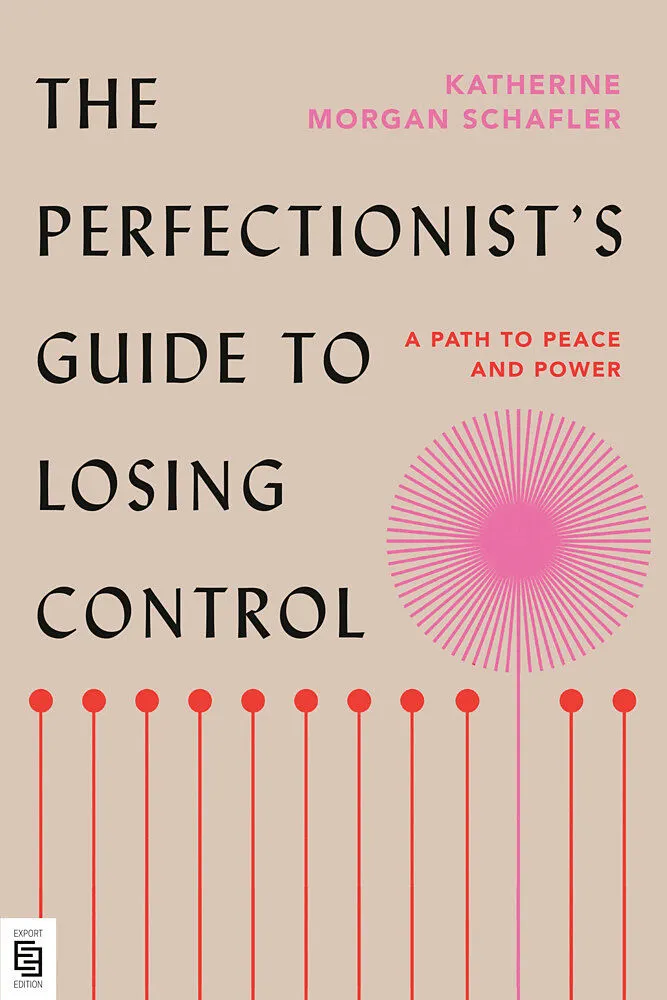
The Perfectionist's Guide to Losing Control
Beschreibung
Informationen zum Autor Katherine Morgan Schafler Klappentext If you've ever: 1. Been told that you're too intense" 2. Felt dissatisfied with your accomplishments, no matter the significance 3. Been asked to relax or take it easy 4. Felt like your personality ...Format auswählen
- Kartonierter EinbandCHF 21.10

Wird oft zusammen gekauft
Andere Kunden kauften auch
Beschreibung
Informationen zum Autor Katherine Morgan Schafler Klappentext If you've ever: 1. Been told that you're too intense" 2. Felt dissatisfied with your accomplishments, no matter the significance 3. Been asked to relax or take it easy 4. Felt like your personality is the problem ....this book is for you. Psychotherapist and former on-site therapist at Google Katherine Schafler wants to get one thing straight: your perfectionism isn't a problem, it's a gift. It's what makes you so brilliant and successful in the first place. And like any power, it just needs to be harnessed. In The Perfectionist's Guide to Losing Control , Schafler outlines the five types of perfectionists the classic perfectionist, the angry perfectionist, the Parisian perfectionist, the procrastinator perfectionist, and the messy perfectionist and shows you how to manage each form of perfectionism by combatting self-punishment and embracing self-compassion. You'll learn: Why society makes women feel guilty about their perfectionism, unless it conforms to gender rolesWhat we should appreciate about each type of perfectionist, as well as how to heal yourself from toxic self-talkHow to achieve adaptive perfectionism, rather than maladaptive perfectionism, and why the discourse around perfectionism is so negative Managing your perfectionism doesn't mean eradicating it, but rather, becoming aware of the core impulses you experience, and then consciously responding to those impulses. With Schafler's advice, you'll be able to finally tap into your power without letting it rule your life. Remember, your perfectionism will never go away and that's a good thing. Leseprobe 1 Expect to Be Graded on This The Five Types of Perfectionists When an inner situation is not made conscious, it happens outside as fate. C. G. Jung A procrastinator perfectionist would experience immense difficulty writing this sentence because it comes at the beginning of a book about perfectionism and, accordingly, needs to be perfect (and there's no better first sentence than the one a procrastinator perfectionist imagines in her head but never actually writes down). A classic perfectionist writes the first sentence, hates it, tries her best to forget it ever existed, but is inevitably haunted by it for a minimum of eight years. An intense perfectionist writes it, hates it, and then channels her frustration into aggression about something entirely unrelated. A Parisian perfectionist pretends not to notice she wrote a first sentence, affecting an air of, "Oh yeah, I guess I did. Huh." Then she secretly, desperately hopes everyone loves it and, as a result, loves her. Who wrote that first sentence? I must be friends with her immediately! A messy perfectionist writes the first sentence, loves it, and then writes seventeen other, very different versions of the first sentence and loves each one of those and couldn't possibly pick just one because you can't have a favorite child, and those are all her sentence babies. One thing they all have in common: they might not even know they're perfectionists, nor appreciate all the ways perfectionism can hold them back or allow them to soar, depending on how it's managed. In the most basic sense, managing your perfectionism looks like becoming aware of the core impulse all perfectionists reflexively experience: noticing room for improvement-Hmm, this could be better-and then consciously responding to that reflex instead of unconsciously reacting to it. Perfectionists are people who consistently notice the difference between an ideal and a reality, and who strive to maintain a high degree of personal accountability. This results in the perfectionist experiencing, more often than not, a compulsion to bridge the gulf between reality ...
Autorentext
Katherine Morgan Schafler
Klappentext
If you’ve ever:
1. Been told that you’re “too intense"
2. Felt dissatisfied with your accomplishments, no matter the significance
3. Been asked to relax or take it easy
4. Felt like your personality is the problem
....this book is for you.
Psychotherapist and former on-site therapist at Google Katherine Schafler wants to get one thing straight: your perfectionism isn’t a problem, it’s a gift. It’s what makes you so brilliant and successful in the first place. And like any power, it just needs to be harnessed.
In The Perfectionist’s Guide to Losing Control, Schafler outlines the five types of perfectionists – the classic perfectionist, the angry perfectionist, the Parisian perfectionist, the procrastinator perfectionist, and the messy perfectionist – and shows you how to manage each form of perfectionism by combatting self-punishment and embracing self-compassion. You’ll learn:
Why society makes women feel guilty about their perfectionism, unless it conforms to gender rolesWhat we should appreciate about each type of perfectionist, as well as how to heal yourself from toxic self-talkHow to achieve adaptive perfectionism, rather than maladaptive perfectionism, and why the discourse around perfectionism is so negative
Managing your perfectionism doesn’t mean eradicating it, but rather, becoming aware of the core impulses you experience, and then consciously responding to those impulses. With Schafler’s advice, you’ll be able to finally tap into your power without letting it rule your life.
Remember, your perfectionism will never go away – and that’s a good thing.
Leseprobe
1
Expect to Be Graded on This
The Five Types of Perfectionists
When an inner situation is not made
conscious, it happens outside as fate.
C. G. Jung
A procrastinator perfectionist would experience immense difficulty writing this sentence because it comes at the beginning of a book about perfectionism and, accordingly, needs to be perfect (and there's no better first sentence than the one a procrastinator perfectionist imagines in her head but never actually writes down).
A classic perfectionist writes the first sentence, hates it, tries her best to forget it ever existed, but is inevitably haunted by it for a minimum of eight years.
An intense perfectionist writes it, hates it, and then channels her frustration into aggression about something entirely unrelated.
A Parisian perfectionist pretends not to notice she wrote a first sentence, affecting an air of, "Oh yeah, I guess I did. Huh." Then she secretly, desperately hopes everyone loves it and, as a result, loves her. Who wrote that first sentence? I must be friends with her immediately!
A messy perfectionist writes the first sentence, loves it, and then writes seventeen other, very different versions of the first sentence and loves each one of those and couldn't possibly pick just one because you can't have a favorite child, and those are all her sentence babies.
One thing they all have in common: they might not even know they're perfectionists, nor appreciate all the ways perfectionism can hold them back or allow them to soar, depending on how it's managed.
In the most basic sense, managing your perfectionism looks like becoming aware of the core impulse all perfectionists reflexively experience: noticing room for improvement-Hmm, this could be better-and then consciously responding to that reflex instead of unconsciously reacting to it. Perfectionists are people who consistently notice the difference between an ideal and a reality, and who strive to maintain a high degree of personal accountability. This results in the perfectionist experiencing, more often than not, a compulsion to bridge the gulf between reality and an ideal themselves.
When left unchallenged, the perfectionist mindset hooks itself on the motive to perfect (as opposed to improve upon or accept) that which could be made better. This impulse to enhance e…