
IHR WARENKORB IST AKTUELL LEER.
Haben Sie noch nichts passendes gefunden? Stöbern Sie durch unser komplettes Sortiment.
Oder melden Sie sich an bzw. registrieren Sie sich.
- Kostenlose Lieferung
- Kauf auf Rechnung
- Ex Libris Tiefpreis
- Filiallieferung und 650+ Abholorte
- Rabatt-Bons als Club-Mitglied
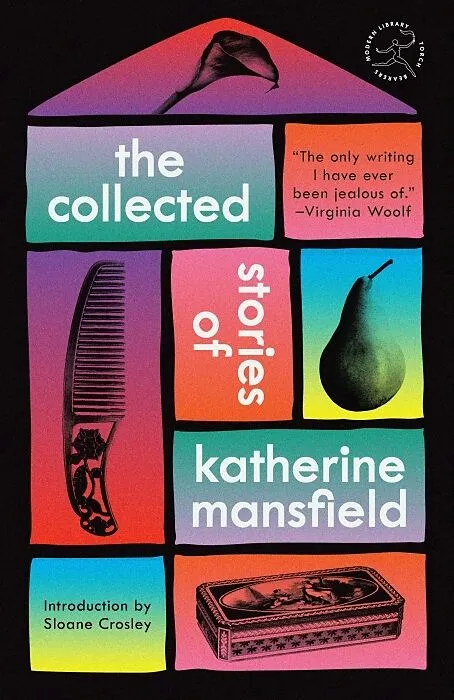
The Collected Stories of Katherine Mansfield
Beschreibung
A definitive, exquisite collection of stories exploring class, relationships, and the beauty and banality of ordinary life by an underappreciated master of the form, with an introduction by bestselling novelist and essayist Sloane Crosley. <"I was jealous of h...Format auswählen
- Kartonierter Einband (Kt)CHF 21.90
Wird oft zusammen gekauft
Andere Kunden kauften auch
Beschreibung
A definitive, exquisite collection of stories exploring class, relationships, and the beauty and banality of ordinary life by an underappreciated master of the form, with an introduction by bestselling novelist and essayist Sloane Crosley.
<"I was jealous of her writing. The only writing I have ever been jealous of." —Virginia Woolf<
In New Zealand–born writer Katherine Mansfield''s brief yet blazing literary career, she became a pillar of early-twentieth-century modernism, and left behind her own dazzling body of work. <The Collected Stories of Katherine Mansfield<—which includes her two major collections of short stories, <Bliss< and <The Garden Party<, in their entirety—presents, in one volume, the oeuvre of a singular talent.
In these stories, Mansfield explores themes of class and social dynamics, sexuality, and family and domestic dramas, all captured in crystalline, slyly humorous vignettes. In "Miss Brill," a young woman dons her finest fur to stroll through the stately Jardins Publiques, only to be cut down by a stray remark. In "A Cup of Tea," a rich woman is moved to help someone less fortunate than herself, and finds that her charity comes at a cost. Mansfield (who married twice and was romantically involved with both men and women) often turns her discerning eye to romantic relationships: in "A Dill Pickle," former lovers meet by chance; in "Bliss," the exuberant hostess of a dinner party discovers a shocking truth about her own relationships.
Yet as Sloane Crosley writes in her introduction, Mansfield was also a brilliant writer of children, as in the classic coming-of-age tale "The Garden Party," and her masterful triptych of New Zealand stories, "Prelude," "At the Bay," and "The Doll''s House." It is ultimately through the eyes of her youngest characters, their disappointments as well as their sense of wonder and openness, that we see the possibilities in our ordinary world....
Autorentext
Katherine Mansfield (1888–1923) was born and raised in New Zealand. She moved to England at nineteen and spent much of her life thereafter in London, where she became a prominent modernist author and moved in the same circles as D. H. Lawrence, Virginia Woolf, and other members of the Bloomsbury Group. She published three collections of short stories in her lifetime, including Bliss and The Garden Party. After she died of tuberculosis at age thirty-four, her husband published two additional volumes of her short fiction as well as posthumous collections of her poetry, letters, and journals.
Sloane Crosley is the author of the memoir Grief Is for People, the novels Cult Classic and The Clasp, and the essay collections Look Alive Out There, How Did You Get This Number, and I Was Told There’d Be Cake. She lives in New York City.
Leseprobe
1
There was not an inch of room for Lottie and Kezia in the buggy. When Pat swung them on top of the luggage they wobbled; the grandmother’s lap was full and Linda Burnell could not possibly have held a lump of a child on hers for any distance. Isabel, very superior, was perched beside the new handy-man on the driver’s seat. Hold-alls, bags and boxes were piled upon the floor. “These are absolute necessities that I will not let out of my sight for one instant,” said Linda Burnell, her voice trembling with fatigue and excitement.
Lottie and Kezia stood on the patch of lawn just inside the gate all ready for the fray in their coats with brass anchor buttons and little round caps with battleship ribbons. Hand in hand, they stared with round solemn eyes first at the absolute necessities and then at their mother.
“We shall simply have to leave them. That is all. We shall simply have to cast them off,” said Linda Burnell. A strange little laugh flew from her lips; she leaned back against the buttoned leather cushions and shut her eyes, her lips trembling with laughter. Happily at that moment Mrs. Samuel Josephs, who had been watching the scene from behind her drawing-room blind, waddled down the garden path.
“Why nod leave the chudren with be for the afterdoon, Brs. Burnell? They could go on the dray with the storeban when he comes in the eveding. Those thigs on the path have to go, dod’t they?”
“Yes, everything outside the house is supposed to go,” said Linda Burnell, and she waved a white hand at the tables and chairs standing on their heads on the front lawn. How absurd they looked! Either they ought to be the other way up, or Lottie and Kezia ought to stand on their heads, too. And she longed to say: “Stand on your heads, children, and wait for the store-man.” It seemed to her that would be so exquisitely funny that she could not attend to Mrs. Samuel Josephs.
The fat creaking body leaned across the gate, and the big jelly of a face smiled. “Dod’t you worry, Brs. Burnell. Loddie and Kezia can have tea with by chudren in the dursery, and I’ll see theb on the dray afterwards.”
The grandmother considered. “Yes, it really is quite the best plan. We are very obliged to you, Mrs. Samuel Josephs. Children, say ‘thank you’ to Mrs. Samuel Josephs.”
Two subdued chirrups: “Thank you, Mrs. Samuel Josephs.”
“And be good little girls, and—come closer—” they advanced, “don’t forget to tell Mrs. Samuel Josephs when you want to . . .”
“No, granma.”
“Dod’t worry, Brs. Burnell.”
At the last moment Kezia let go Lottie’s hand and darted towards the buggy.
“I want to kiss my granma good-bye again.”
But she was too late. The buggy rolled off up the road, Isabel bursting with pride, her nose turned up at all the world, Linda Burnell prostrated, and the grandmother rummaging among the very curious oddments she had had put in her black silk reticule at the last moment, for something to give her daughter. The buggy twinkled away in the sunlight and fine golden dust up the hill and over. Kezia bit her lip, but Lottie, carefully finding her handkerchief first, set up a wail.
“Mother! Granma!”
Mrs. Samuel Josephs, like a huge warm black silk tea cosy, enveloped her.
“It’s all right, by dear. Be a brave child. You come and blay in the dursery!”
She put her arm round weeping Lottie and led her away. Kezia followed, making a face at Mrs. Samuel Josephs’ placket, which was undone as usual, with two long pink corset laces hanging out of it. . . .
Lottie’s weeping died down as she mounted the stairs, but the sight of her at the nursery door with swollen eyes and a blob of a nose gave great satisfaction to the S. J.’s, who sat on two benches before a long table covered with American cloth and set out with immense plates of bread and dripping and two brown jugs that faintly steamed.
“Hullo! You’ve been crying!”
“Ooh! Your eyes have gone right in.”
“Doesn’t her nose look funny.”
“You’re all red-and-patchy.”
Lottie was quite a success. She felt it and swelled, smiling timidly.
“Go and sit by Zaidee, ducky,” said Mrs. Samuel Josephs, “and Kezia, you sid ad the end by Boses.”
Moses grinned and gave her a nip as she sat down; but she pretended not to notice. She did hate boys.
“Which will you have?” asked Stanley, leaning across the table very politely, and smiling at her. “Which will you have to begin with—strawberries and cream or bread and dripping?”
“Strawberries and cream, please,” said she.
“Ah-h-h-h.&rdquo…