
IHR WARENKORB IST AKTUELL LEER.
Haben Sie noch nichts passendes gefunden? Stöbern Sie durch unser komplettes Sortiment.
Oder melden Sie sich an bzw. registrieren Sie sich.
- Kostenlose Lieferung
- Kauf auf Rechnung
- Ex Libris Tiefpreis
- Filiallieferung und 650+ Abholorte
- Rabatt-Bons als Club-Mitglied
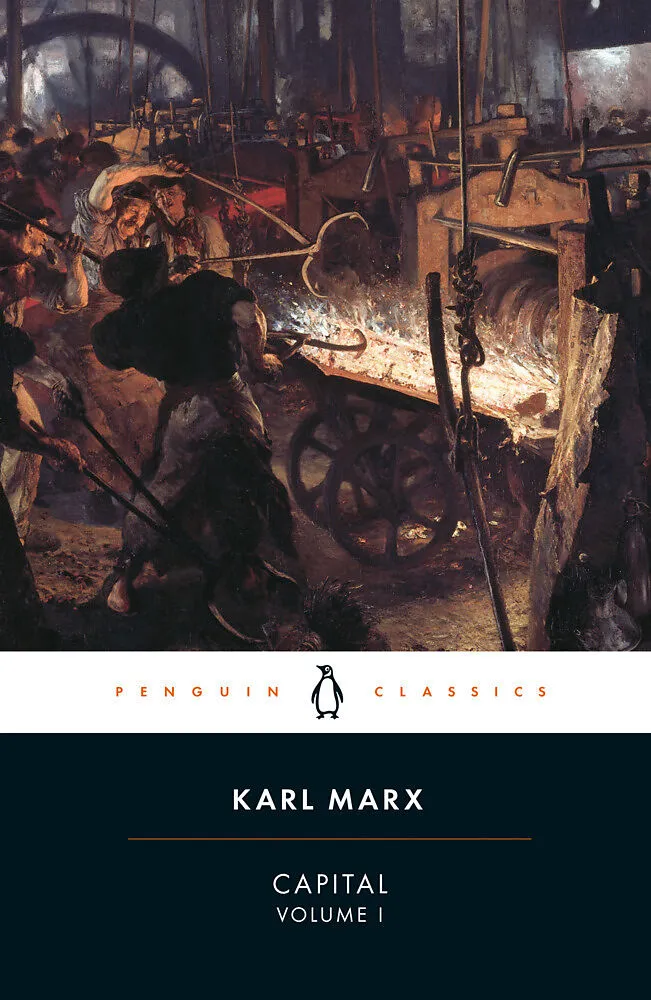
Capital
Beschreibung
Informationen zum Autor Karl Marx was born in 1818 in Trier, Germany and studied in Bonn and Berlin. Influenced by Hegel, he later reacted against idealist philosophy and began to develop his own theory of historical materialism. He related the state of societ...Format auswählen
- Kartonierter EinbandCHF 30.80
Wird oft zusammen gekauft
Andere Kunden kauften auch
Beschreibung
Informationen zum Autor Karl Marx was born in 1818 in Trier, Germany and studied in Bonn and Berlin. Influenced by Hegel, he later reacted against idealist philosophy and began to develop his own theory of historical materialism. He related the state of society to its economic foundations and mode of production, and recommended armed revolution on the part of the proletariat. Together with Engels, who he met in Paris, he wrote the Manifesto of the Communist Party. He lived in England as a refugee until his death in 1888, after participating in an unsuccessful revolution in Germany. Ernst Mandel was a member of the Belgian TUV from 1954 to 1963 and was chosen for the annual Alfred Marshall Lectures by Cambridge University in 1978. He died in 1995 and the Guardian described him as 'one of the most creative and independent-minded revolutionary Marxist thinkers of the post-war world.' Klappentext 'A groundbreaking work of economic analysis. It is also a literary masterpice' Francis Wheen, Guardian One of the most notorious and influential works of modern times, Capital is an incisive critique of private property and the social relations it generates. Living in exile in England, where this work was largely written, Marx drew on a wide-ranging knowledge of its society to support his analysis. Arguing that capitalism would cause an ever-increasing division in wealth and welfare, he predicted its abolition and replacement by a system with common ownership of the means of production. Capital rapidly acquired readership throughout the world, to become a work described by Marx's collaborator Friedrich Engels as 'the Bible of the working class'. Translated by BEN FOWKES with an Introduction by ERNEST MANDEL Zusammenfassung Presents a critique of private property and the social relations it generates. This book argues that capitalism would create an ever-increasing division in wealth and welfare, predicting its abolition and replacement by a system with common ownership of the means of production. Inhaltsverzeichnis Capital Introduction by Ernest Mandel Translator's Preface Preface to the First Edition Postface to the Second Edition Preface to the French Edition Postface to the French Edition Preface to the Third Edition (by Engels) Preface to the English Edition (by Engels) Preface to the Fourth Edition (by Engels) BOOK I: THE PROCESS OF PRODUCTION OF CAPITAL Part One: Commodities and Money Chapter 1: The Commodity 1. The Two Factors of the Commodity: Use-Value and Value (Substance of VAlue, Magnitude of Value) 2. The Dual Character of the Labour Embodied in Commodities 3. The Value-Form, or Exchange-Value (a) The Simple, Isolated, or Accidental Form of Value (1) The two poles of the expression of value: the relative form of value and the equivalent form (2) The relative form of value (i) The content of the relative form of value (ii) The quantitative determinacy of the relative form of value (iii) The equivalent form (iv) The simple form of value considered as a whole (b) The Total or Expanded Form of Value (1) The expanded relative form of value (2) The particular equivalent form (3) Defects of the total or expanded form of value (c) The General Form of Value (1) The changed character of the form of value (2) The development of the relative and equivalent forms of value: their interdependence (3) The transition from the general form of value to the money form (d) The Money Form 4. The Fetishism of the Commodity and Its Secret Chapter 2: The Process of Exchange Chapter 3: Money, or the Circulation of Commodities 1. The Measure of Values 2. The Means of Circulation (a) The Metamorphosis of Commodities (b) The Circulation of Money (c) Coin. The Symbol of Value 3. Mon...
Autorentext
Karl Marx; Translated by Ben Fowkes; Introduction by Ernest Mandel
Klappentext
The first volume of a political treatise that changed the world
One of the most notorious works of modern times, as well as one of the most influential, Capital is an incisive critique of private property and the social relations it generates. Living in exile in England, where this work was largely written, Marx drew on a wide-ranging knowledge of its society to support his analysis and create fresh insights. Arguing that capitalism would cause an ever-increasing division in wealth and welfare, he predicted its abolition and replacement by a system with common ownership of the means of production. Capital rapidly acquired readership among the leaders of social democratic parties, particularly in Russia in Germany, and ultimately throughout the world, to become a work described by Marx friend and collaborator Friedrich Engels as "the Bible of the working class."
For more than seventy years, Penguin has been the leading publisher of classic literature in the English-speaking world. With more than 1,700 titles, Penguin Classics represents a global bookshelf of the best works throughout history and across genres and disciplines. Readers trust the series to provide authoritative texts enhanced by introductions and notes by distinguished scholars and contemporary authors, as well as up-to-date translations by award-winning translators.
Zusammenfassung
Presents a critique of private property and the social relations it generates. This book argues that capitalism would create an ever-increasing division in wealth and welfare, predicting its abolition and replacement by a system with common ownership of the means of production.
Inhalt
Capital Introduction by Ernest Mandel
Translator's Preface
Preface to the First Edition
Postface to the Second Edition
Preface to the French Edition
Postface to the French Edition
Preface to the Third Edition (by Engels)
Preface to the English Edition (by Engels)
Preface to the Fourth Edition (by Engels)
BOOK I: THE PROCESS OF PRODUCTION OF CAPITAL
Part One: Commodities and Money
Chapter 1: The Commodity
The Two Factors of the Commodity: Use-Value and Value (Substance of VAlue, Magnitude of Value)
The Dual Character of the Labour Embodied in Commodities
The Value-Form, or Exchange-Value
(a) The Simple, Isolated, or Accidental Form of Value
(1) The two poles of the expression of value: the relative form of value and the equivalent form
(2) The relative form of value
(i) The content of the relative form of value
(ii) The quantitative determinacy of the relative form of value
(iii) The equivalent form
(iv) The simple form of value considered as a whole
(b) The Total or Expanded Form of Value
(1) The expanded relative form of value
(2) The particular equivalent form
(3) Defects of the total or expanded form of value
(c) The General Form of Value
(1) The changed character of the form of value
(2) The development of the relative and equivalent forms of value: their interdependence
(3) The transition from the general form of value to the money form
(d) The Money FormThe Fetishism of the Commodity and Its SecretChapter 2: The Process of Exchange
Chapter 3: Money, or the Circulation of CommoditiesThe Measure of Values
The Means of Circulation
(a) The Metamorphosis of Commodities
(b) The Circulation of Money
(c) Coin. The Symbol of ValueMoney
(a) Hoarding
(b) Means of Payment
(c) World MoneyPART TWO: THE TRANSFORMATION OF MONEY INTO CAPITAL
Chapter 4: The General Formula for Capital
Chapter 5: Contradictions in the General Formula
Chapter 6: The Sale and Purchase of Labour-Power
PART THREE: THE PRODUCTION OF ABSOLUTE SURPLUS-VALUE
Chapter 7: The Labour Process and the Valorization ProcessThe Labour Process
The Valorization ProcessChapter 8: Constant Capital and Variable Capital
Chapter 9: The Rate of Surplus-ValueThe Degree of Exploitation of Labour-Power
The Representation of the Value of the Product by Corresponding Proportional Parts of…