
IHR WARENKORB IST AKTUELL LEER.
Haben Sie noch nichts passendes gefunden? Stöbern Sie durch unser komplettes Sortiment.
Oder melden Sie sich an bzw. registrieren Sie sich.
- Kostenlose Lieferung
- Kauf auf Rechnung
- Ex Libris Tiefpreis
- Filiallieferung und 650+ Abholorte
- Rabatt-Bons als Club-Mitglied
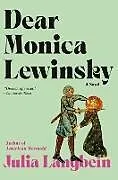
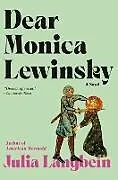
Dear Monica Lewinsky
Beschreibung
From the acclaimed author of ;;;;Forty-five-year old Jean Dornan cannot escape the shadow of something she did several decades ago. On a study abroad program to France in the summer of 1998, she embarked on a deeply inappropriate relationship with her professo...Format auswählen
- Livre ReliéCHF 31.60

Wird oft zusammen gekauft
Andere Kunden kauften auch
Beschreibung
From the acclaimed author of ;;;;Forty-five-year old Jean Dornan cannot escape the shadow of something she did several decades ago. On a study abroad program to France in the summer of 1998, she embarked on a deeply inappropriate relationship with her professor. When the professor contacts her out of the blue to invite her to his retirement ceremony, she is jolted out of her malaise and filled with the need to understand why the affair derailed her life. ;;;;Rereading her old diaries, she is shocked to realize her;relationship with the professor occurred during the summer of the Lewinsky scandal, yet she never saw the parallels. In a frenzy of guilt and regret, she finds herself ;;;;Told in flashbacks of those sun-lit six weeks that changed Jean''s life, interspersed with irreverent accounts of real female martyrs and visitations from Saint Monica offering insight about Jean’s younger self, <Dear Monica Lewinsky< is a tender, hilarious, and thought-provoking examination of desire and how it shapes us. It is also a timely examination of what grace and forgiveness look like, in our lives and throughout history.
Autorentext
Julia Langbein
Klappentext
**From the acclaimed author of American Mermaid (“Sublime”—NYTBR) comes a wise, funny, and wildly original examination of female desire and the price women pay for giving in to their appetites.
A LIT HUB MOST ANTICIPATED BOOK OF THE YEAR
“A wild, wonderful essential novel.” —Claire Lombardo, author of The Most Fun We Ever Had
“Truly funny.”—Kevin Wilson, author of Nothing to See Here**
Forty-year-old Jean Dornan cannot escape the summer of 1998, when, as a college student studying abroad in France, she embarked on an inappropriate relationship with her professor. Now, decades later, when that professor contacts her out of the blue with an invitation to his retirement ceremony, Jean’s long-standing malaise becomes an emotional crisis. Desperate to understand why this relationship derailed her life so completely, she begins rereading her old diaries and is shocked to realize that her own disastrous affair occurred during the summer of the Lewinsky scandal, yet she never saw the parallels.
In a frenzy of guilt and regret, Jean finds herself praying to Monica Lewinsky for forgiveness as if she were a secular saint, a figure of both suffering and sympathy. To Jean’s shock, Saint Monica appears—powerful, radiant, wise, and witty—and guides Jean like the Ghost of Christmas Past back to the summer of 1998. Had Jean merely been naive and stupid, as she has told herself for so long? Was it sheer weakness that led her into the affair? Or will Jean, with Saint Monica by her side, see past blame to the beauty of her younger self’s search for pleasure, connection, and transcendence?
Told in flashbacks of those sunlit six weeks in France, replete with Saint Monica’s flinty, fiery insights and interspersed with retellings of the lives of real historical martyrs, Dear Monica Lewinsky is a tender, hilarious, and wholly original examination of desire and its costs, of appetite and its denial, and of certain defeat and surprise renewal. It asks what grace and forgiveness might look like both in our own individual lives and as a society.
Leseprobe
Chapter 1
THURSDAY, APRIL 18, 2019
JEAN RECEIVES A MESSAGE
The day that Jean Dornan first prayed to me began for her like any other—with a coffee and a soft-boiled egg and an unspeakable sense of dread. Well, unspeakable in that she never speaks about it, but she could describe its texture in detail: She might be doing something normal, washing her face or spacing out on the train, and suddenly her stomach drops and she thinks, I have to get back. But back where? To some juncture where she went wrong.
Mornings, she feels most acutely the pressure to stuff her dead day like a taxidermist into a convincing position.
“Bye, Jeannie,” her husband called up from the front door.
“Bye, Michael,” she responded sweetly, imagined divorcing him, and felt fine about it.
See, none of your choices make any sense to you. I know this rot, have lived it—this deepening suspicion that your existence is a remnant of an event long since concluded. Maybe you foolishly wandered away from your path. Or maybe—maybe you were tricked.
So on this Thursday, Jean sat at the kitchen table and idly looked at her phone. And suddenly, she saw an email that gave her a shock. She had to put the phone down and peer into it as if it were a well. She read the whole email. A racy heat swirled in her sternum and flooded her cheeks; a feeling of doing something wrong, getting caught. The past had been swung into her body like the dull end of a big tree. She murmured his name aloud in disbelief, and his name, voiced, poured out of her with the alarming materiality of blood, of a substance usually withheld.
“David.”
Stunned, she drifted into the guest room, which was cluttered with empty suitcases and storage bins. She found her old chef’s kit, slipped out the boning knife, and slit open boxes, sliced tape. Her fingers moved quickly. She knew what she was looking for. She shoved aside the wedding album, dug past the tax forms, went further and further back in time. Finally she reached the right sedimentary depth, the right era: She found some photographs, flicked through them, and brought one—a group shot—up close to her face. A dozen or so people, smiling into the bright sun in front of the ivy-covered stone façade of a castle in France. He stood to one side of the group, his public self, affable, enthused. She opened a spiral notebook, filled with flowing script that sometimes gave way to doodles—of people, of shapes; a thick cross drawn in wobbly black pen, dotted with markings.
She thought she knew the story, roughly, its essential beats: the silly girl, the greedy man, the setting so lush and seductive that all of life after had seemed like the hallway outside a theater. But then she settled down to read. And after some time, she encountered something surprising, a figure she had forgotten, lurking in the archive of her notes: me.
This morning I found everyone in the salon watching yesterday’s news from home. Clinton admitted on TV to an affair in the White House with a skanky intern, and everyone was saying how stupid they were.
Putting down the diary, eyes closed, Jean made a noise that started as a low moan, like a choir girl holding the bass line, and ended in a high scream that she strained to stifle in her throat.
Then, in a weak pile, she whimpered, “You idiot.”
This time she meant herself, not me.
Chapter 2
Jean’s day went on in a braid: She tried to read a book, but the memories of that summer cut before her eyes and she had to return to the photos. She put on sneakers and ran, literally ran out of the house as if she could escape her mind like some folk fool, like Jonah, who thought almighty God couldn’t track him to Spain. She came back from running clapping her hands as if she were a new person named Trudy from Wichita who only smiles—it was honestly adorable. But the weaving wouldn’t stop and in came the thick thread of the past and soon she was crying on the floor or else sitting at her desk, looking nowhere with eyes that were opaque, that saw only inward, like the chalky orbs of an ancient bust.
Michael marveled at her thirst for wine later that night. She brushed it off:
“This Sangiovese goes so well with pizza.”
When he talked about the hospital—he’s a nurse—she pretended to listen, dispensing ready-made…