
IHR WARENKORB IST AKTUELL LEER.
Haben Sie noch nichts passendes gefunden? Stöbern Sie durch unser komplettes Sortiment.
Oder melden Sie sich an bzw. registrieren Sie sich.
- Kostenlose Lieferung
- Kauf auf Rechnung
- Ex Libris Tiefpreis
- Filiallieferung und 650+ Abholorte
- Rabatt-Bons als Club-Mitglied
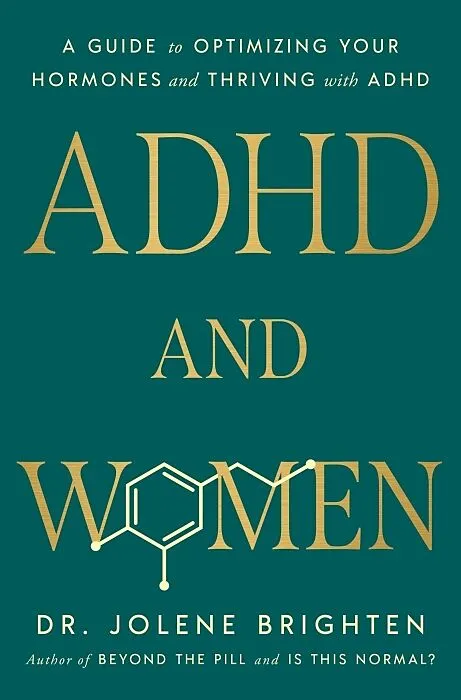
ADHD and Women
Beschreibung
A revolutionary guide to understanding the hormone-ADHD connection, with practical guidance on optimizing your hormones, navigating menopause, and thriving with ADHD in all phases of life, from the bestselling author of Many women unknowingly live their entire...Format auswählen
- Fester EinbandCHF 31.60

Wird oft zusammen gekauft
Andere Kunden kauften auch
Beschreibung
A revolutionary guide to understanding the hormone-ADHD connection, with practical guidance on optimizing your hormones, navigating menopause, and thriving with ADHD in all phases of life, from the bestselling author of Many women unknowingly live their entire life with ADHD (often highly masked and quietly overwhelmed) until hormonal shifts in their late 30s and 40s make symptoms impossible to manage. In this transformative guide, board-certified naturopathic endocrinologist and leading voice in women’s medicine Dr. Jolene Brighten uncovers the real reason ADHD symptoms often get worse during transitions like perimenopause, pregnancy, or even the pre-menstrual phase of your cycle: hormones. Drawing on clinical research, patient experience, and her own lived journey as a neurodivergent woman, Rather than offering one-size-fits-all solutions, Dr. Brighten’s program is tailored to each reader’s unique ADHD-Hormone profile, a groundbreaking framework that helps readers pinpoint which hormonal systems are driving their symptoms. With this clarity women can finally understand why they’re dysregulated and follow Dr. Brighten’s clear, realistic steps to regain focus and end the overwhelm. Inside, readers will find: <ADHD and Women <is your guide to learning how your brain and hormones work together, so you can finally make them work for you--not against you....
Autorentext
Dr. Jolene Brighten is an internationally recognized expert in hormones, women’s health, and ADHD across the female lifespan. A board-certified naturopathic endocrinologist, nutrition scientist, certified menopause specialist, and sex counselor, she is widely known for translating complex hormonal science into clear, clinically relevant care for patients and the doctors who treat them. The bestselling author of Beyond the Pill and Is This Normal, Dr. Brighten is the host of The Dr. Brighten Show, a top-rated women’s health podcast.
Leseprobe
Chapter 1
Meet Your ADHD Brain
How Hormones Make Female ADHD Different
“One month I feel on top of the world. I’m kicking ass at work. I have energy, I feel strong, and my marriage is the best it’s ever been,” my patient Jess explained. “Don’t get me wrong, I still struggle with managing my time, staying motivated, and not coming across as the odd one at work. But overall, I feel good.”
“Then, out of nowhere,” she continued, “I’m muttering to myself about how much I hate my life, I can’t hold a thought in my head, let alone form complete sentences, and the rage—oh God, the rage. Everything feels like it’s too much—even the texture of my clothes. No amount of melatonin or deep breathing can calm my mind so I can actually sleep.”
“Have you had any of these symptoms before?” I asked.
“Yes,” Jess explained. She’d always been described as a “space cadet,” always wrestling with time anxiety, striving to stay focused in school, and struggling to follow through. But she’d compensated for years, until perimenopause showed up and every self-built coping tool started failing all at once.
If you’re reading this and thinking, That’s me, I need you to hear this first: You’re not lazy. This isn’t a willpower problem. It never was. And you’re not imagining how hard this all feels. Before you reach the end of this book, you’ll know why this happens, when it happens, and what actually works on those days when your brain won’t cooperate.
For women, ADHD isn’t the same every day; instead, it rides the hormone roller coaster of our lives—sometimes making us feel like we can manage it all and other times bottoming out and leaving us feeling like we never stood a chance. And here’s the part medicine keeps conveniently forgetting: The female brain isn’t just a smaller male brain with better eyelashes. And our hormones aren’t some cute, disposable accessory—they’re essential to our operating system. Still, medicine built the ADHD model on male bodies and then acted shocked when women didn’t fit it. That’s on them, but, sad to say, it has hurt us. Which is why it’s important to understand the full-body impact of ADHD on women and how to improve more than just your brain.
Listen, this isn’t some new, trendy phenomenon of women deciding they have ADHD because someone on TikTok said so. It’s women finally getting a language for a lifelong disability that was missed, minimized, or misdiagnosed. And it matters because women with ADHD don’t just struggle more—we die younger. On average, we lose nearly a decade of life compared to women without ADHD. Untreated ADHD carries the risk of accidents, substance abuse, cardiovascular disease, metabolic dysfunction, and chronic stress. And let’s be real—for most of us, medicine has acted like we never even existed and that our struggles were just our own moral failings.
Jess’s experience is incredibly common for women in their mid-thirties and forties—perimenopause hits, symptoms intensify, and suddenly a woman who’s been “managing just fine” starts falling apart. But this isn’t because ADHD magically appears at forty-two; rather, it’s because hormone shifts have unmasked what you’ve been compensating for since childhood.
Here’s the wild part: Fewer than 20 percent of adults with ADHD are diagnosed and treated appropriately, with women getting the short end of that stick. More than 50–75 percent of women with ADHD reach adulthood without realizing they’re neurodivergent, with the perimenopausal years being one of the most common times for a diagnosis to happen. The reason? Hormones.
And by the way, this isn’t just a perimenopause book. This is your guide through the full hormonal arc: puberty, the years in which you have a menstrual cycle, the years in which you might take birth control, perimenopause, and menopause. Because if your brain is hormone sensitive (and ADHD brains often are), your symptoms will change when your hormones change.
In this chapter, I’m going to help you:
• Get to know your ADHD brain
• Understand how ADHD is different in women
• Make sense of the executive function struggle
• Help you identify how ADHD is impacting your life so we can get you on the path to solutions
What Does ADHD Look Like in Women?
Like Jess, many women notice that their focus, mood, sense of overwhelm, difficulty making decisions, and time blindness (difficulty estimating time or shifting attention) change across the month—especially seven to ten days leading up to their period. You see, levels of the hormone estrogen are associated with levels of serotonin and dopamine, two neurotransmitters that are responsible for mood, motivation, and reward. During the follicular phase of the menstrual cycle (the first part of the cycle, beginning with the first day of your period and ending with ovulation, when an egg is released from the ovary), when estrogen is up, these neurotransmitters rise too. After ovulation, estrogen takes a backseat to the rise in the hormone progesterone, and our brain produces less serotonin and less dopamine.
ADHDers already have trouble with dopamine signaling (the process in which dopamine, a neurotransmitter and hormone, is released by a nerve cell to communicate with another cell). Dopamine is a chemical most often associated with pleasure, but it’s also crucial for executive function (see the table on page 14 for more on executive function). The ups and downs of es…