
IHR WARENKORB IST AKTUELL LEER.
Haben Sie noch nichts passendes gefunden? Stöbern Sie durch unser komplettes Sortiment.
Oder melden Sie sich an bzw. registrieren Sie sich.
- Kostenlose Lieferung
- Kauf auf Rechnung
- Ex Libris Tiefpreis
- Filiallieferung und 650+ Abholorte
- Rabatt-Bons als Club-Mitglied
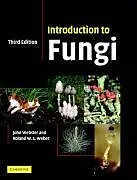
Introduction to Fungi
Beschreibung
Informationen zum Autor John Webster is Professor Emeritus of the School of Biosciences at the University of Exeter, UK. Dr Roland W. S. Weber (B.Sc., Ph.D., University of Exeter, UK) has an exceptionally broad university-based research and teaching experience...Format auswählen
- Kartonierter EinbandCHF 109.20

Wird oft zusammen gekauft
Andere Kunden kauften auch
Beschreibung
Informationen zum Autor John Webster is Professor Emeritus of the School of Biosciences at the University of Exeter, UK. Dr Roland W. S. Weber (B.Sc., Ph.D., University of Exeter, UK) has an exceptionally broad university-based research and teaching experience spanning all areas of mycology as well as most groups of fungi. He is currently working at the Fruit Experiment Station (OVB) in Jork, Northern Germany, where he is establishing a mycology laboratory and research group. Current research activities include the biology of new and uncommon fungal pathogens, notably Fusarium avenaceum cane blight of raspberries, sooty-blotch disease and Gloeosporium-type storage rots of apples. He is also concerned with the effects of climate change on apple pests and diseases. From July 1999 until November 2006 Dr Weber was a lecturer in fungal biotechnology at the University of Kaiserslautern, Germany. As a research fellow at the University of Exeter (19961999), Dr Weber worked with Professor John Webster on the ecology of coprophilous fungi and on the rust fungus Puccinia distincta, a new arrival in Europe which has now established itself across the Continent. The extensive collaboration between both mycologists has culminated in their recently published textbook Introduction to Fungi (third edition, Cambridge University Press, 2007). Dr Weber has authored some 90 scientific publications in a wide range of journals, as well as several book chapters. He is a current editorial board member of Mycological Research and a member of the British Mycological Society, Royal Horticultural Society and German Mycological Society. Klappentext This new edition of the universally acclaimed and widely-used textbook on fungal biology has been completely re-written, drawing directly on the authors' research and teaching experience. The text takes account of the rapid and exciting progress that has been made in the taxonomy, cell and molecular biology, biochemistry, pathology and ecology of the fungi. Features of taxonomic relevance are integrated with natural functions, including their relevance to human affairs. Special emphasis is placed on the biology and control of human and plant pathogens, providing a vital link between fundamental and applied mycology. The book is richly illustrated throughout with specially prepared drawings and photographs, based on living material. Illustrated life-cycles are provided, and technical terms are clearly explained. Extensive reference is made to recent literature and developments, and the emphasis throughout is on whole-organism biology from an integrated, multidisciplinary perspective. Zusammenfassung This new edition of the universally acclaimed textbook on fungal biology has been completely re-written! to take account of recent progress in the taxonomy! cell and molecular biology! biochemistry! pathology and ecology of the fungi. The emphasis throughout is on whole-organism biology from an integrated! multidisciplinary perspective. Inhaltsverzeichnis 1. Introduction; 2. Protozoa: Myxomycota (slime moulds); 3. Protozoa: Plasmodiophoromycota; 4. Straminipila: minor fungal phyla; 5. Straminipila: Oomycota; 6. Chytridiomycota; 7. Zygomycota; 8. Ascomycota (ascomycetes); 9. Archiascomycetes; 10. Hemiascomycetes; 11. Plectomycetes; 12. Hymenoascomycetes: Pyrenomycetes; 13. Hymenoascomycetes: Erysiphales; 14. Hymenoascomycetes: Pezizales (operculate discomycetes); 15. Hymenoascomycetes: Helotiales (inoperculate discomycetes); 16. Lichenized fungi (chiefly Hymenoascomycetes: Lecanorales); 17. Loculoascomycetes; 18. Basidiomycota; 19. Homobasidiomycetes; 20. Homobasidiomycetes: gasteromycetes; 21. Heterobasidiomycetes; 22. Uredinales: the rust fungi; 23. Ustilaginomycetes: smut fungi and their allies; 24. Basidiomycete yeasts; 25. Anamorphic fungi....
Autorentext
John Webster is Professor Emeritus of the School of Biosciences at the University of Exeter, UK.
Dr Roland W. S. Weber (B.Sc., Ph.D., University of Exeter, UK) has an exceptionally broad university-based research and teaching experience spanning all areas of mycology as well as most groups of fungi. He is currently working at the Fruit Experiment Station (OVB) in Jork, Northern Germany, where he is establishing a mycology laboratory and research group. Current research activities include the biology of new and uncommon fungal pathogens, notably Fusarium avenaceum cane blight of raspberries, sooty-blotch disease and Gloeosporium-type storage rots of apples. He is also concerned with the effects of climate change on apple pests and diseases. From July 1999 until November 2006 Dr Weber was a lecturer in fungal biotechnology at the University of Kaiserslautern, Germany. As a research fellow at the University of Exeter (19961999), Dr Weber worked with Professor John Webster on the ecology of coprophilous fungi and on the rust fungus Puccinia distincta, a new arrival in Europe which has now established itself across the Continent. The extensive collaboration between both mycologists has culminated in their recently published textbook Introduction to Fungi (third edition, Cambridge University Press, 2007). Dr Weber has authored some 90 scientific publications in a wide range of journals, as well as several book chapters. He is a current editorial board member of Mycological Research and a member of the British Mycological Society, Royal Horticultural Society and German Mycological Society.
Klappentext
This new edition of the universally acclaimed and widely-used textbook on fungal biology has been completely re-written, drawing directly on the authors' research and teaching experience. The text takes account of the rapid and exciting progress that has been made in the taxonomy, cell and molecular biology, biochemistry, pathology and ecology of the fungi. Features of taxonomic relevance are integrated with natural functions, including their relevance to human affairs. Special emphasis is placed on the biology and control of human and plant pathogens, providing a vital link between fundamental and applied mycology. The book is richly illustrated throughout with specially prepared drawings and photographs, based on living material. Illustrated life-cycles are provided, and technical terms are clearly explained. Extensive reference is made to recent literature and developments, and the emphasis throughout is on whole-organism biology from an integrated, multidisciplinary perspective.
Zusammenfassung
This new edition of the universally acclaimed textbook on fungal biology has been completely re-written, to take account of recent progress in the taxonomy, cell and molecular biology, biochemistry, pathology and ecology of the fungi. The emphasis throughout is on whole-organism biology from an integrated, multidisciplinary perspective.
Inhalt
- Introduction; 2. Protozoa: Myxomycota (slime moulds); 3. Protozoa: Plasmodiophoromycota; 4. Straminipila: minor fungal phyla; 5. Straminipila: Oomycota; 6. Chytridiomycota; 7. Zygomycota; 8. Ascomycota (ascomycetes); 9. Archiascomycetes; 10. Hemiascomycetes; 11. Plectomycetes; 12. Hymenoascomycetes: Pyrenomycetes; 13. Hymenoascomycetes: Erysiphales; 14. Hymenoascomycetes: Pezizales (operculate discomycetes); 15. Hymenoascomycetes: Helotiales (inoperculate discomycetes); 16. Lichenized fungi (chiefly Hymenoascomycetes: Lecanorales); 17. Loculoascomycetes; 18. Basidiomycota; 19. Homobasidiomycetes; 20. Homobasidiomycetes: gasteromycetes; 21. Heterobasidiomycetes; 22. Uredinales: the rust fungi; 23. Ustilaginomycetes: smut fungi and their allies; 24. Basidiomycete yeasts; 25. Anamorphic fungi.