
IHR WARENKORB IST AKTUELL LEER.
Haben Sie noch nichts passendes gefunden? Stöbern Sie durch unser komplettes Sortiment.
Oder melden Sie sich an bzw. registrieren Sie sich.
- Kostenlose Lieferung
- Kauf auf Rechnung
- Ex Libris Tiefpreis
- Filiallieferung und 650+ Abholorte
- Rabatt-Bons als Club-Mitglied
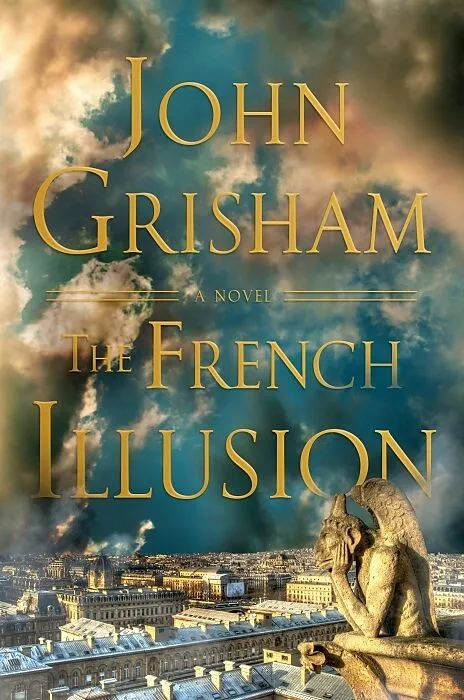
The French Illusion
Beschreibung
An upcoming book from the Knopf Doubleday Publishing Group. Autorentext JOHN GRISHAM is the author of more than fifty consecutive #1 bestsellers, which have been translated into nearly fifty languages. His recent books include The Widow, Framed, and Camino Gho...Format auswählen
- Fester EinbandCHF 23.05
- Fester EinbandCHF 250.40
- Kartonierter EinbandCHF 41.20

Wird oft zusammen gekauft
Andere Kunden kauften auch
Beschreibung
An upcoming book from the Knopf Doubleday Publishing Group.
Autorentext
JOHN GRISHAM is the author of more than fifty consecutive #1 bestsellers, which have been translated into nearly fifty languages. His recent books include The Widow, Framed, and Camino Ghosts.
Grisham is a two-time winner of the Harper Lee Prize for Legal Fiction and was honored with the Library of Congress Creative Achievement Award for Fiction.
When he's not writing, Grisham serves on the board of directors of the Innocence Project and of Centurion Ministries, two national organizations dedicated to exonerating those who have been wrongfully convicted. Much of his fiction explores deep-seated problems in our criminal justice system.
John lives on a farm in central Virginia.
Klappentext
#1 New York Times bestselling author John Grisham delivers a gripping, suspenseful page-turner about a Paris honeymoon gone horribly wrong—and the nightmare that follows.
After Paul and Chelsea Tanner’s fairytale wedding, their future is full of promise. But their honeymoon to Paris takes a dark, shocking turn when they are kidnapped while on a day trip to the French countryside. Who would target them, and why? It turns out this is not the first crime of its kind. The search for clues soon stretches across borders, with the FBI, CIA, and French Intelligence trying to work together to put the pieces of the puzzle together. Struggling to find answers, a young lawyer is recruited to be the bait in an elaborate CIA operation.
Propulsive and surprising, The French Illusion is an unmistakable Grisham thrill ride—gripping and impossible to put down.
Leseprobe
Chapter 1
The surveillance began on the third day of the honeymoon, though the bride and groom had no possible way of knowing it. And why should they have known or even been suspicious? So far in their short happy lives they had committed no felonies, breached no contracts, sued no one or been sued, joined no subversive groups, offended no foreign governments, defamed not a soul, listened to their parents when it mattered, and for the past two years had been thoroughly faithful to one another in every conceivable way. They came from nice families who’d given them proper educations. Who in the world could they have possibly angered or provoked?
A mole inside their trendy Left Bank hotel served them up, and for his treachery he would soon receive an envelope stuffed with enough euros to equal a year’s wages. He spent most of his spare time watching the endless wave of tourists attracted to the City of Light. On any given week, at least half of the eighty rooms in the hotel where he worked were booked by Americans, many of them just married. He monitored other hotels as well.
Once their names were in play, it took less than twenty-four hours of online digging to know more about Paul and Chelsea than they could have imagined. But, in this world of shameless self-aggrandizement, isn’t that what they really wanted? Their splashy wedding a few days earlier in Annapolis had drawn three hundred friends and relatives. Dozens of beautiful photos told the story. Chelsea svelte, tanned and toned and positively radiant. Paul in his fiercely starched naval whites, equally lean and bronzed and ready for command. Both quoted from memory sappy sonnets promising eternal love and bliss and plenty of children. Paul even read an embarrassing poem that made Chelsea cry. There was a close-up of her tears to prove it! For the benefit of her followers she posted a daily schedule of their honeymoon in Paris, evidently in the belief that they were the first couple in history to attempt such a romantic adventure.
The surveillance picked it apart and made plans accordingly. Following the young lovers was easy because their destinations and movements were so clearly telegraphed, and the thought of looking over their shoulders never crossed their minds. They had eyes only for each other. There was no one back there. After each thrilling visit to the Louvre, the Eiffel Tower, Notre-Dame, Sacré-Coeur, and so on, the photos kept coming and the surveillance indexed them against Chelsea’s itinerary. The couple was punctual and keen to cover a lot of territory during their eight-day fantasy.
According to her musings on social media, limited of course to her select group of followers but ridiculously hackable, Chelsea fell in love with Paris as a ten-year-old when her mother took her there one summer. Her father and his doctor buddies splurged on an exotic fishing trip to Alaska, and in an act of revenge-shopping her mother called the travel agent. The girls spent a week in a small boutique hotel, rumored to be the favorite of Lauren Bacall, roamed the streets for hours each day, and had afternoon tea in the courtyard. When the tourist sites were too crowded they retreated to the Luxembourg Gardens where they sat in the shade near the Grand Pond and read books about Paris. Chelsea took all the French language courses she could in school and watched videos for hours. During her second year of college she qualified for a semester abroad and lived at the Sorbonne. While her American friends stuck together and tried to avoid speaking French, she spent weekends with her new French friends and their families. She never claimed to be fluent but was highly proficient and strove for improvement.
Long before he finally proposed, Paul knew precisely where they would honeymoon. He had never been to Paris, but after two years of courting Chelsea he felt as though he knew the city well. Far less enamored with social media than his bride, he made it clear that he was terribly excited about the trip. His priority was a long day trip to the beaches of Normandy. He came from a family of servicemen, and military history was his hobby.
On the fifth day, they left the hotel at 7 a.m. on schedule, a bit early for vacationers and honeymooners but the drive ahead of them would take three hours. They rode in the rear seat of a shiny black Peugeot with Malik at the wheel. The private car had been Paul’s idea because they could cover more territory and see more battle sites with a pro behind the wheel. Malik was very much the professional driver—black suit, crisp white shirt, black tie, perfect manners, and excellent language skills. With a captive audience, Chelsea immediately began chattering away in French and within minutes knew that Malik was from Senegal in West Africa, where he grew up speaking French, English, Wolof, and was now studying Japanese. It was good for business. He had been in Paris for fourteen years and had no plans to leave. His wife was a schoolteacher. They had three small children and lived with her parents in a suburb north of Paris.
Paul understood none of the conversation and was soon nodding off.
They went straight to the D-Day beaches, where Paul could have spent days wandering around, trying to grasp the enormity of the courage and carnage of that epic battle. At the American Cemetery, they were deeply moved by the magnitude of the manicured burial grounds, the sacred soil that held the remains of over three thousand American soldiers. Paul managed to locate the grave of a distant relative who died during the initial assault on Omaha Beach.
The concierge had booked lunch in a bistro in the town of Bayeux. Malik had taken other clients there and said the food was excellent. With a sly grin he said he had asked the owner to put on ice a bottle of local white wine, and it was already cold. He escorted them to the bistro, introduced them to the madam of the house, and left to go find lunch on his own. He would be back at 2 p.m. to retrieve them and continue the tour at the war museum in Caen.
Malik parked on a narrow street off the town square and found a seat at an outdoor café. It was…