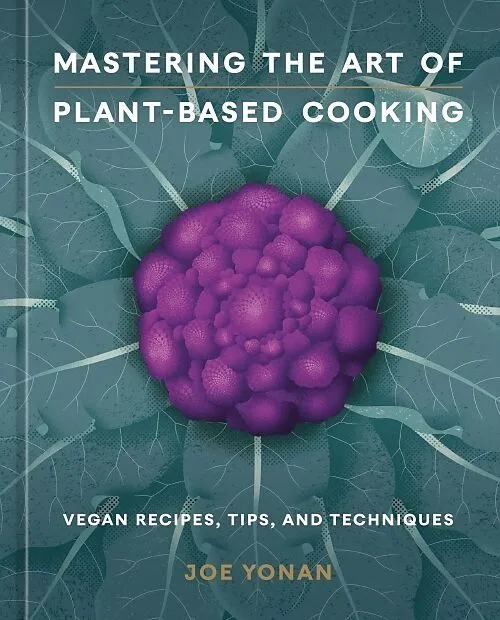
Mastering the Art of Plant-Based Cooking
Beschreibung
Discover the richness of vegan cuisine with more than 300 mouthwatering recipes for flavorful staples, weeknight meals, and celebratory feasts, from a James Beard Award–winning food writer. Plant-based eating has been evolving for centuries, creating a s...Format auswählen
- Fester EinbandCHF 51.90

Wird oft zusammen gekauft
Andere Kunden kauften auch
Beschreibung
Discover the richness of vegan cuisine with more than 300 mouthwatering recipes for flavorful staples, weeknight meals, and celebratory feasts, from a James Beard Award–winning food writer. Plant-based eating has been evolving for centuries, creating a storied base of beloved recipes that are lauded around the globe. As an award-winning food editor and writer, Joe Yonan has spent years reporting on and making plant-based foods. With his finger on the pulse of this ever-growing cuisine, he has collected recipes and essays from prominent food writers in the plant-based sphere, creating a book that shows the true abundance of vegan food around the world, offering something for everyone.;The book opens with an in-depth pantry section, showing how to create homemade versions of foundational ingredients like milks, butters, stocks, dressings, and spice mixes. The following chapters build on these elements, with recipes for meals throughout the day like:; ; Smoky Eggplant Harissa Dip Chile-Glazed Sweet Potato and Tempeh Hash Citrus and Mango Salad with Fresh Turmeric and Cucumbers Bibimbap with Spicy Tofu Crumbles White Pizza with Crispy Cauliflower and Shitakes Enchiladas Five Ways Black Tahini Swirled Cheesecake With numerous variations on base recipes, an extensive dessert section, hundreds of vegan meals, and stunning photography, <Mastering the Art of Plant-Based Cooking< will become a mainstay in your kitchen, delivering new ideas for years to come.
Autorentext
Joe Yonan is the three-time James Beard Award-winning food and dining editor of The Washington Post. He is the author of the bestseller Cool Beans, which was named one of the top cookbooks of the year by Food Network, NPR, Forbes, Wired, and more. Joe writes the Post’s “Weeknight Vegetarian” column. He is also a prolific interviewer for public author events, known for leading entertaining on-stage conversations with such figures as José Andrés, Madhur Jaffrey, Jacques Pepin, Ruth Reichl, Pati Jinich, Deborah Madison, Claire Saffitz and many more. He teaches cooking classes every year at Rancho La Puerta spa in Tecate, Mexico.
Klappentext
JAMES BEARD AWARD WINNER • “Everything you need to know about plant-based cooking . . . a foundational book to use on repeat.”—Melissa Clark, The New York Times
Discover the richness of global vegan cuisine with this “dependable, thorough, and vibrant” (Yotam Ottolenghi) cookbook featuring more than 300 mouthwatering recipes for flavorful staples, weeknight meals, and celebratory feasts, from a renowned food writer.
ONE OF NPR AND BON APPÉTIT’S BEST COOKBOOKS OF THE YEAR
Plant-based eating has been evolving for centuries, creating a storied base of beloved recipes that are lauded around the globe. Mastering the Art of Plant-Based Cooking is the first book to collect these dishes and wisdom into a single volume, treating vegan food as its own cuisine, worthy of mastery.
As an award-winning food editor and writer, Joe Yonan has spent years reporting on and making plant-based foods. With his finger on the pulse of this ever-growing cuisine, he has collected recipes and essays from prominent food writers in the plant-based sphere, creating a book that shows the true abundance of vegan food around the world, offering something for everyone. The book opens with an in-depth pantry section, showing how to create homemade versions of foundational ingredients like milks, butters, stocks, dressings, and spice mixes. The following chapters build on these elements, with recipes for meals throughout the day like:
• Smoky Eggplant Harissa Dip
• Chile-Glazed Sweet Potato and Tempeh Hash
• Citrus and Mango Salad with Fresh Turmeric and Cucumbers
• Bibimbap with Spicy Tofu Crumbles
• White Pizza with Crispy Cauliflower and Shitakes
• Enchiladas Five Ways
• Black Tahini Swirled Cheesecake
With numerous variations on base recipes, an extensive dessert section, hundreds of vegan meals, and stunning photography, Mastering the Art of Plant-Based Cooking will become a mainstay in your kitchen, delivering new ideas for years to come.
Leseprobe
Introduction
Of all the eating trends over the last few decades, none has gotten more traction—or press—than the move toward plant-based cooking.
But the truth is, vegetarian and vegan diets date back millennia, to the Buddhism and Jainism of the Indian subcontinent and to ancient Greece. According to some (disputed) reports, Pythagoras abstained from animal foods. (Would that make veganism the true Pythagorean theorem?) In the seventeenth century, Francis Bacon catalogued a long history of vegetarian Spartans, Indians, a Jewish sect of Essenes, and various Christian ascetics “who had lived unusually long lives,” according to Tristram Stuart’s fascinating book, The Bloodless Revolution. And there’s evidence that much earlier than Pythagoras, despite the claims of a certain trendy diet, humans during the Paleolithic era subsisted mostly on plants.
Modern iterations of this way of eating have deep roots, some of them intertwining. In India, which has the world’s largest proportion of vegetarians, meat-free eating is most widely practiced among the upper caste. India’s religious traditions all teach compassion for animals, and ancient ideas connect spirituality to low-resource living, which includes rejecting animals as food. India has also had a strong influence on the rest of the world, with Mahatma Gandhi and other prominent Indians preaching the gospel of vegetarianism on trips to the West.
Given the two nations’ relationship, India’s ideas have had a particularly strong effect on Britain. There, in keeping with ideas of plant-based eating as a form of spiritual cleansing, a vegetarian community called the Concordium established itself in the mid-nineteenth century at mystic James Pierrepont Greaves’s utopian Alcott House. Originally, “vegetarian” connoted abstention from all animal products, but at Britain’s Vegetarian Society, the term was loose enough to allow for dairy and egg consumption until the Vegan Society spun off in the mid-twentieth century, coining the name “vegan” from the first and last letters of the word “vegetarian” because its founders believed veganism to be “the beginning and end” of vegetarianism: where it got its start and its natural conclusion.
In the United States, meanwhile, the Seventh-day Adventist Church encouraged vegetarianism starting in the mid-1800s, and that movement—along with Jamaican Rastafarianism and the Nation of Islam— helped lead to a growth in plant-based eating in the Black community. Sylvester Graham, father of the graham cracker, bridged the worlds of religion and public health around the same time, when, as the cholera epidemic headed toward America, he drew crowds interested in his ideas that a vegetarian diet was not only outlined by God but also the best way to prevent disease. Much later, the idea of avoiding animal products for environmental reasons got a big boost from Frances Moore Lappé’s 1971 blockbuster book Diet for a Small Planet, and in the decades that followed, the health arguments from such books as T. Colin Campbell’s The China Study in 2005 and the documentary Forks Over Knives in 2011 converted plenty of readers and viewers.
Now, it’s been five years since The Economist declared 2019 the “year of the vegan,” and endorsements by Ellen DeGeneres, Al Gore, Tom Brady, Natalie Portman, Mike Tyson, Beyoncé, and more have given the movement celebrity cred.
But what’s really grown over the…