
IHR WARENKORB IST AKTUELL LEER.
Haben Sie noch nichts passendes gefunden? Stöbern Sie durch unser komplettes Sortiment.
Oder melden Sie sich an bzw. registrieren Sie sich.
- Kostenlose Lieferung
- Kauf auf Rechnung
- Ex Libris Tiefpreis
- Filiallieferung und 650+ Abholorte
- Rabatt-Bons als Club-Mitglied
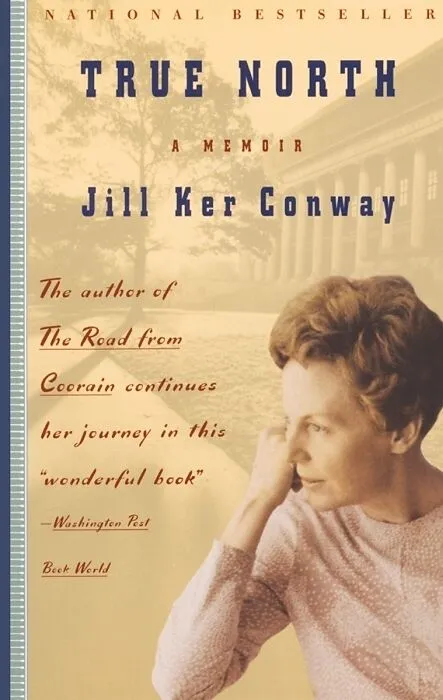
True North
Beschreibung
Zusatztext "Compelling...A fascinating life." -- The Toronto Star "Conway is a remarkable woman--spunky, intelligent." -- The Globe and Mail "A wonderful book...An immensely engaging storyteller." -- Washington Post Book World Informationen zum Autor Jill Ker ...Format auswählen
- Kartonierter EinbandCHF 23.20

Wird oft zusammen gekauft
Andere Kunden kauften auch
Beschreibung
Zusatztext "Compelling...A fascinating life." -- The Toronto Star "Conway is a remarkable woman--spunky, intelligent." -- The Globe and Mail "A wonderful book...An immensely engaging storyteller." -- Washington Post Book World Informationen zum Autor Jill Ker Conway taught at the University of Toronto from 1964 to 1975 when she became the first woman president of Smith college. Since 1985 she has been a visiting scholar at MIT, and lives in Boston. Klappentext Conway's The Road from Coorain presents a vivid memoir of coming of age in Australia. In 1960, however, she had reached the limits of that provincial--and irredeemably sexist--society and set off for America. True North--the testament of an extraordinary woman living in an extraordinary time--te lls the profound story of the challenges that confronted Conway, as she sought to establish her public self. Leseprobe NORTHERN LIGHT Within hours of my arrival in September 1960, New York astonished and delighted me. The astonishment was instant. I stepped from the plane at what is now called John F. Kennedy Airport but was then called Idlewild into a wall of water, my first encounter with an East Coast hurricane. The scene inside the airport resembled a Brueghel run wild. Sodden people lurched in all directions, colliding in their frantic search for lost luggage and nonexistent taxis. Some laughed and told war stories of other major storms. Others interrogated all comers, anxious for news. Accustomed to a prim British stiffness when with strangers, and doubly wary because of repeated warnings delivered by well-traveled Australian friends about the dangers of life in New York, I was monosyllabic at first in response to friendly and cheery questions about where I was from and where I was going. I could scarcely believe the hive of activity at the airport at 2:00 a.m., or the philosophic figures draped over every chair and bench seeking sleep amid the hubbub. The reasons for the chaos emerged slowly. The hurricane, named, for reasons I couldn't understand, Donna, had flooded all the roads leading to the airport, preventing ground crews, taxis, indeed all forms of transportation from reaching Idlewild. The crowd seemed to accept this situation with easy familiarity. I, accustomed to Australian good weather, thought it highly disruptive of well-laid plans. These people seemed much more flexible than I was used to, and much more friendly. I broke down and began to exchange stories with my neighbors about how long my flight from San Francisco had circled the airport (an hour and a half). I wondered out loud how I could make it to the International House at Columbia, where I was staying for a few days to explore the city. "Oh, there'll be a night watchman to let you in, no matter what hour we get into Manhattan. The buses will make it first. Just take a Carey bus to the East Side Terminal. There will be taxis there. It's only a short ride to Columbia." The speaker was a lanky young man with a crew cut and thick-lensed, horn-rimmed spectacles, who turned out to be a graduate student headed for Yale. He eventually helped me extract my heavy suitcases from the mountains of luggage suddenly produced by a few drenched and harassed baggage men, and showed me where to load them on the bus headed for the East Side Terminal. The night watchman at International House was a friendly and dignified black man. "I thought you'd show up soon. I've been listening to the radio, wondering how you were doing in this storm after coming all the way from Australia." As he spoke over his shoulder, leading me to my room, the image of Manhattan as a vast impersonal city, an image created by countless movies, antiurban novels, and crime stories, faded farther into the background. I fell asleep relishing the comforts of a room far less spartan than the Australian dormitories I'd grown up with....
"Compelling...A fascinating life." --*The Toronto Star
*"Conway is a remarkable woman--spunky, intelligent." --*The Globe and Mail
*"A wonderful book...An immensely engaging storyteller." --*Washington Post Book World
Autorentext
Jill Ker Conway taught at the University of Toronto from 1964 to 1975 when she became the first woman president of Smith college. Since 1985 she has been a visiting scholar at MIT, and lives in Boston.
Klappentext
Conway's The Road from Coorain presents a vivid memoir of coming of age in Australia. In 1960, however, she had reached the limits of that provincial--and irredeemably sexist--society and set off for America. True North--the testament of an extraordinary woman living in an extraordinary time--te lls the profound story of the challenges that confronted Conway, as she sought to establish her public self.
Zusammenfassung
Conway's The Road from Coorain presents a vivid memoir of coming of age in Australia. In 1960, however, she had reached the limits of that provincial--and irredeemably sexist--society and set off for America. True North--the testament of an extraordinary woman living in an extraordinary time--tells the profound story of the challenges that confronted Conway, as she sought to establish her public self.
Leseprobe
NORTHERN LIGHT
Within hours of my arrival in September 1960, New York astonished and delighted me. The astonishment was instant. I stepped from the plane at what is now called John F. Kennedy Airport but was then called Idlewild into a wall of water, my first encounter with an East Coast hurricane. The scene inside the airport resembled a Brueghel run wild. Sodden people lurched in all directions, colliding in their frantic search for lost luggage and nonexistent taxis. Some laughed and told war stories of other major storms. Others interrogated all comers, anxious for news.
Accustomed to a prim British stiffness when with strangers, and doubly wary because of repeated warnings delivered by well-traveled Australian friends about the dangers of life in New York, I was monosyllabic at first in response to friendly and cheery questions about where I was from and where I was going. I could scarcely believe the hive of activity at the airport at 2:00 a.m., or the philosophic figures draped over every chair and bench seeking sleep amid the hubbub.
The reasons for the chaos emerged slowly. The hurricane, named, for reasons I couldn't understand, Donna, had flooded all the roads leading to the airport, preventing ground crews, taxis, indeed all forms of transportation from reaching Idlewild. The crowd seemed to accept this situation with easy familiarity. I, accustomed to Australian good weather, thought it highly disruptive of well-laid plans. These people seemed much more flexible than I was used to, and much more friendly. I broke down and began to exchange stories with my neighbors about how long my flight from San Francisco had circled the airport (an hour and a half). I wondered out loud how I could make it to the International House at Columbia, where I was staying for a few days to explore the city. "Oh, there'll be a night watchman to let you in, no matter what hour we get into Manhattan. The buses will make it first. Just take a Carey bus to the East Side Terminal. There will be taxis there. It's only a short ride to Columbia." The speaker was a lanky young man with a crew cut and thick-lensed, horn-rimmed spectacles, who turned out to be a graduate student headed for Yale. He eventually helped me extract my heavy suitcases from the mountains of luggage suddenly produced by a few drenched and harassed baggage men, and showed me where to load them on the bus headed for the East Side Terminal.
The night watchman at International House was a friendly and dignified black man. "I thought you'd show up soon. I've been listening to the radio, wondering how you were doing in this storm after coming all the way from Australia." As he spoke over his shoulder, leading…