Food Oral Processing
Beschreibung
Autorentext Jianshe Chen is Head of the Division of Food and Sensory Science at Singapore Institute of Food and Biotechnology Innovation (SIFBI), Agency for Science, Technology and Research (ASTAR), Singapore. He pioneered the field of food oral processing and...Format auswählen
- Fester EinbandCHF 387.20

Wird oft zusammen gekauft
Andere Kunden kauften auch
Beschreibung
Autorentext
Jianshe Chen is Head of the Division of Food and Sensory Science at Singapore Institute of Food and Biotechnology Innovation (SIFBI), Agency for Science, Technology and Research (A*STAR), Singapore. He pioneered the field of food oral processing and sensory perception during his career at the University of Leeds in the UK and Zhejiang Gongshang University in China. Recognized among the world's most influential food scientists, his contributions have shaped both academic research and industrial applications in food science.
Klappentext
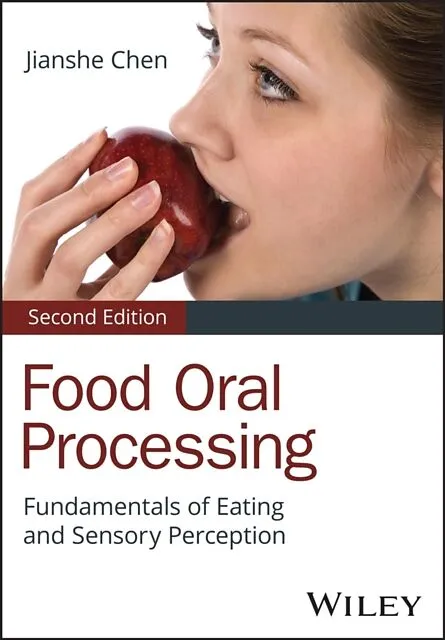
Presents a comprehensive update on the science of eating, drinking, and sensory perception Understanding how food is consumed, broken down, and perceived in the mouth is central to the study of sensory science and the development of healthier, more appealing food products. Food Oral Processing: Fundamentals of Eating and Sensory Perception provides an authoritative and fully updated exploration of the physics, physiology, and psychology of oral processing. With international interest in food texture, flavor release, and nutrition at an all-time high, this authoritative resource brings together essential foundations with the latest research advances in the field. The second edition of Food Oral Processing significantly expands upon its predecessor, featuring 37 chapters that address both revised and emerging areas of inquiry. In addition to in-depth discussion of mastication, swallowing, and oral rheology, the book explores new developments in mass transfer mechanisms of aroma and taste compounds, food-saliva interactions, and oral lubrication. Entirely new chapters address topics such as the unique oral processing dynamics of infants, school children, and the elderly, as well as current insights from neuroscience on the central and peripheral processing of food texture and flavor perception. Integrating direct applications for product innovation, nutritional design, and public health throughout, Food Oral Processing:
- Links oral processing research to sensory science, nutrition, and product development
- Examines food-saliva interactions and their role in flavor release and texture perception
- Explores the neuroscience of oral processing, including neural pathways of texture and taste perception
- Covers advanced techniques such as mastication simulator, EMG, fMRI and etc for in vitro and in situ oral processing studies
- Provides insights into designing plant-based and reduced-fat foods for enhanced eating experiences Food Oral Processing: Fundamentals of Eating and Sensory Perception, Second Edition, remains an essential reference for food scientists, sensory researchers, oral biologists, and dental researchers. It is also ideal for upper-level undergraduate and postgraduate courses in food science, nutrition, sensory perception, and oral physiology
Inhalt
Section I: The Oral and Nasal Cavities: Anatomy, Physiology and Biology
1. Oral Cavity
2. Oral Receptors
3. Nasal Cavity and Olfactory Receptors
4. Saliva and its Roles in the Oral Processing of Food
5. Oral Microbiota and Flavor Perception: In-Mouth Metabolism and Redox Regulation
Section II: Food Oral Management
6. Oral Management of Food
7. The Mastication and Oral Break Down of Solid Foods
8. Bolus Formation and Swallowing
9. Food-saliva Interactions
10. Oral Behaviour of Food Emulsions and Emulsion Gels
11. Oral Emulsification and Oil/Fat Sensation
12. Mass Transfer and Flavor Release during Food Oral Processing
13. Oral-Nasal Mass Transfer during Food Oral Processing
14. Saliva Foam and the Dynamic Release of Aroma
15. Food Oral Processing with Reduced Capability of Eating and Sensory Perception: The Case of the Elderly
16. Food Oral Processing for Infants and Young Children
17. Eating in Children and Adults with Down Syndrome
Section III: Oral Processing and Sensory Perception
18. Texture Lexicons, Texture Terms, and their Variations
19 Food Oral Processing and Texture Perception
20 Food Oral Processing and Flavour Perception
21 Oral Processing of Spicy Foods and Spiciness Sensation
22 Multi-sensory Integration and Psychophysics of Sensory Perception
23 Sweetness Sensation and Sugar Reduction in New Product Development
Section IV: Instrumental characterization of eating and sensory perception
24. Oral Rheology
25. Oral Tribology
26. The Road Forward to Instrumentally Assessing Oral Texture Perception: Biomimetic and Bioinspired Soft Machines
27. Methodologies to Determine Chewing Ability and Basic Processes Non-Invasively
28. Eating Capability of Elderly People: Assessment and Implications
29. Development of Mastication Simulators for Oral Processing Research
30. Applications of Electromyography (EMG) Technique for Eating Studies
31. The Use of fMRI for Neural Behaviour Study of Eating and Sensory Perception
32. Modelling and Simulation of Food Oral Processing
Section V: Applications and Implications of Food Oral Processing Research
33. Design of Food Structure for Enhanced Eating Experience
34. The Food Oral Processing Framework: Walking towards Fundamental Research along the Path of Product Development and Industrial R&D
35. Appreciation of Food Crispness and New Product Development
36. Design of Plant-Based Food for Enhanced Eating Experience
37. The Contribution of Food Oral Processing to Metabolism and Nutrient Digestion