
IHR WARENKORB IST AKTUELL LEER.
Haben Sie noch nichts passendes gefunden? Stöbern Sie durch unser komplettes Sortiment.
Oder melden Sie sich an bzw. registrieren Sie sich.
- Kostenlose Lieferung
- Kauf auf Rechnung
- Ex Libris Tiefpreis
- Filiallieferung und 650+ Abholorte
- Rabatt-Bons als Club-Mitglied
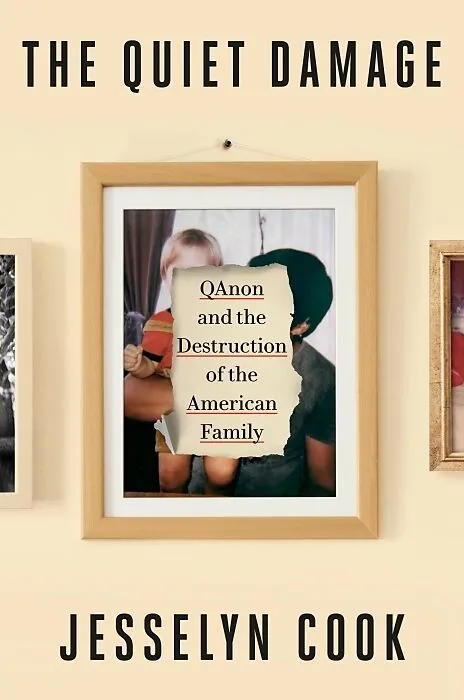
The Quiet Damage
Beschreibung
The riveting story of QAnon’s devastating impact on the American family, grappling with the seductive allure of disinformation, the trauma it causes, and how we might set ourselves free. The QAnon conspiracy theories--which posit that a nefarious cabal o...Format auswählen
- Fester EinbandCHF 33.20

Wird oft zusammen gekauft
Andere Kunden kauften auch
Beschreibung
The riveting story of QAnon’s devastating impact on the American family, grappling with the seductive allure of disinformation, the trauma it causes, and how we might set ourselves free. The QAnon conspiracy theories--which posit that a nefarious cabal of elites is secretly ruling our society, poisoning our bodies, and harming our children--have come to represent the peculiar mania driven by social media disinformation campaigns and its dire consequences on our politics. But what’s often overlooked is the raw destructive power these theories have on the American family. In an age in which partisanship has created deep divides within the home--between parents and children, brothers and sisters, husbands and wives--the extreme belief structure of QAnon widens those divides into seemingly insurmountable chasms, leaving people lost, confused, and broken. With studies showing that nearly 19% of Americans believe in QAnon-related theories, the true toll of QAnon on our mental and social health is as vast as it is urgent to confront. In At once a riveting account of the American family in crisis and a sociological exploration of the hidden costs of our global crisis of disinformation, <The Quiet Damage< is profound, brilliantly researched and beautifully written....
Autorentext
Jesselyn Cook is an award-winning investigative reporter and journalism lecturer who has written extensively about online conspiracy theories and their offline harms. Prior to covering the tech beat at NBC News, she was a senior reporter on HuffPost's national enterprise desk. She holds a master's degree in journalism and international relations from New York University and was selected as a 2025 Nieman Fellow at Harvard University.
Klappentext
The “gripping” (The Atlantic) story of five families shattered by pernicious, pervasive conspiracy theories, and how we might set ourselves free from a crisis that could haunt American life for generations.
“Excellent . . . This is the intimate side of the cold civil war America has been stuck in for nearly a decade.”—Michelle Goldberg, The New York Times
“SHED MY DNA”: three excruciating words uttered by a QAnon-obsessed mother, once a highly respected lawyer, to her only son, once the closest person in her life. QAnon beliefs and adjacent conspiracy theories have had devastating political consequences as they’ve exploded in popularity. What’s often overlooked is the lasting havoc they wreak on our society at its most basic and intimate level—the family.
In The Quiet Damage, celebrated reporter Jesselyn Cook paints a harrowing portrait of the vulnerabilities that have left so many of us susceptible to outrageous falsehoods promising order, purpose, and control. Braided throughout are the stories of five American families: an elderly couple whose fifty-year romance takes a heartbreaking turn; millennial sisters of color who grew up in dire poverty—one to become a BLM activist, the other, a hardcore conspiracy theorist pulling her little boy down the rabbit hole with her; a Bay Area hippie-type and her business-executive fiancé, who must decide whether to stay with her as she turns into a stranger before his eyes; evangelical parents whose simple life in a sleepy suburb spirals into delusion-fueled chaos; and a rural mother-son duo who, after carrying each other through unspeakable tragedy, stop speaking at all as ludicrous untruths shatter a bond long thought unbreakable.
Charting the arc of each believer’s path from their first intersection with conspiracy theories to the depths of their cultish conviction, to—in some cases—their rejection of disinformation and the mending of fractured relationships, Cook offers a rare, intimate look into the psychology of how and why ordinary people come to believe the unbelievable. Profound, brilliantly researched, and beautifully written, The Quiet Damage lays bare how we have been taken hostage by grifters peddling lies built on false hope—and how we might release our loved ones, and ourselves, from their grasp.
Leseprobe
**1
THE PLAN TO SAVE THE WORLD**
—Matt—
Matt gazed out the window at the trees and tried to calm his racing mind. It was autumn of 2019 in eastern Missouri, and the leaves had started to fall from their branches, blanketing the grass in crimson and amber. In the distance, people walked down the street in the late afternoon sun, going about their business as they pleased. Matt envied them.
He glanced back inside at the clock on the wall and sighed, his foot tapping anxiously against the leg of his chair. Half an hour left to go.
“Matt?”
His wife’s voice pierced his daze. Seated a few feet over, across from their marriage counselor, she was staring right at him with dark mascara tears streaming down her cheeks.
“Matt,” echoed Dr. Fellows, looking up from the notepad he’d been scribbling away in behind his desk. “Andrea just told you she feels like a single mother.”
His words hung in the air between them as Matt tried to refocus. From the moment they’d sat down, Andrea had been divulging through sobs how he had devolved from a loving, supportive partner into a distracted, inattentive roommate who rarely emerged from the basement. Now Dr. Fellows was studying him like an animal in a lab, trying to figure out what was going on with him. Matt looked at Andrea. Even if he told them, he knew they wouldn’t believe it.
A thirty-eight-year-old God-fearing Republican, Matt had a pointy brown beard and chin-length hair tucked under a baseball cap to complete his daily jeans-and-tee ensemble. He was a pensive, soft-spoken man of relatively few words, especially in counseling. But his eyes, a few shades of blue lighter than his wife’s, told a story of their own. They were crinkled with laugh lines from years of silly moments goofing around with Andrea and their two young kids and framed with dark circles from months of late-night doomscrolling marathons. He didn’t laugh much anymore.
“Is there anything you want to say?” Dr. Fellows nudged.
Matt leaned back in his chair with his hands on his knees and exhaled deeply through his nose. There were lots of things he wanted to say. Things so earth-shattering, so unbelievably surreal and crazy, that they would think he was, well, crazy.
“I’m sorry, Andrea,” he offered instead. “You’re right.”
Matt loved his wife. He and Andrea were college sweethearts; they had met through a student ministry group back when he was a shy, dorky senior who looked like Shaggy from Scooby-Doo and she was a bubbly brunette in her freshman year far out of his league. It was she who had pursued him, though, striking up flirty, late-night conversations on AOL Instant Messenger. They had a lot in common. Both had been raised with Christian conservative values in rural Missouri households where saying grace before meals was mandatory and the radio was set to Rush Limbaugh.
Their marriage wasn’t perfect, Matt knew that. It didn’t help that they’d spent most of it trapped in an unwinnable Tetris game of debt. No matter how many times they tried to reconfigure their life to make payments, the debts just kept stacking back up. Between Matt’s job at a small Christian radio station and Andrea’s as a middle-school librarian, their combined annual income was a little over $50,000. That didn’t leave much for weekend getaways, dinners at Olive Garden, or the other relative luxuries they’d imagined while building a family together. Maxed-out credit cards and past-due bills piled on the kitchen counter had never been part of that vision. To Ma…