
IHR WARENKORB IST AKTUELL LEER.
Haben Sie noch nichts passendes gefunden? Stöbern Sie durch unser komplettes Sortiment.
Oder melden Sie sich an bzw. registrieren Sie sich.
- Kostenlose Lieferung
- Kauf auf Rechnung
- Ex Libris Tiefpreis
- Filiallieferung und 650+ Abholorte
- Rabatt-Bons als Club-Mitglied
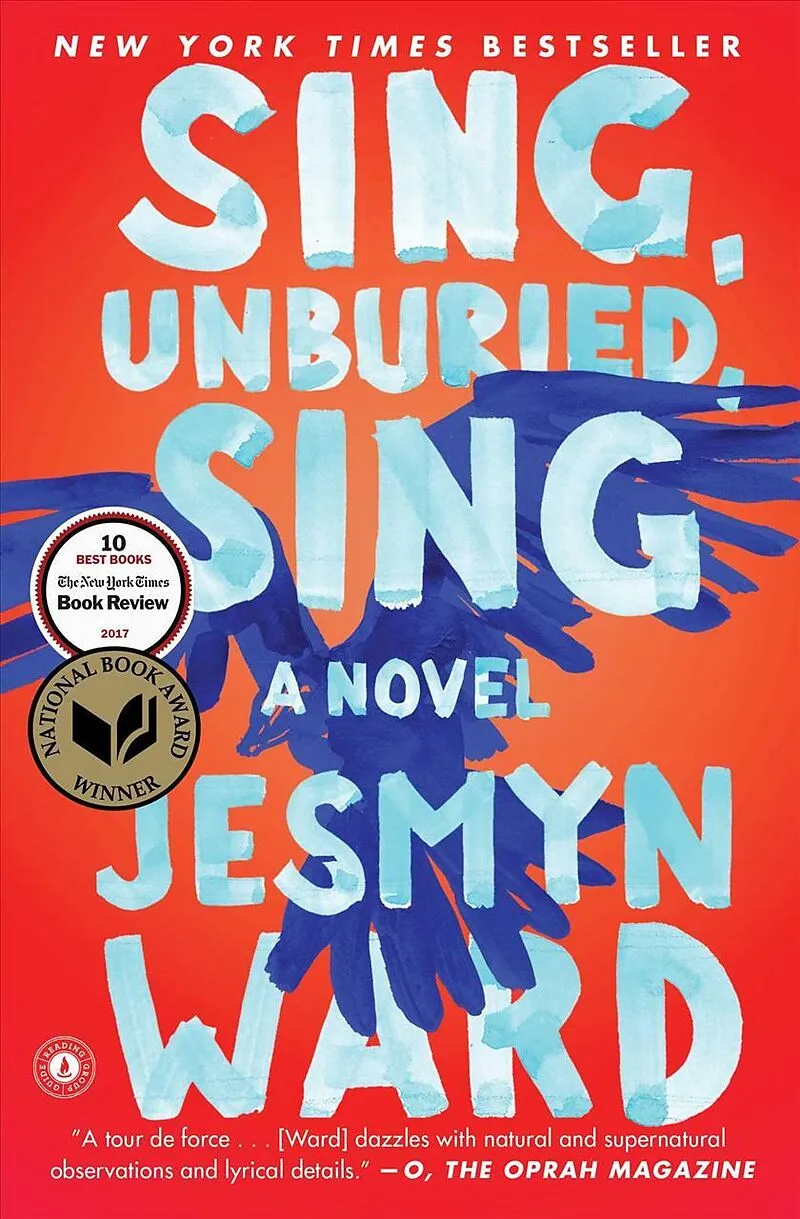
Sing, Unburied, Sing
Beschreibung
ldquo;If Sing, Unburied, Sing is proof of anything, it’s that when it comes to spinning poetic tales of love and family, and the social metastasis that often takes place but goes unspoken of in marginalized communities—let alone the black American ...Format auswählen
- Kartonierter Einband (Kt)CHF 20.00

Wird oft zusammen gekauft
Andere Kunden kauften auch
Beschreibung
ldquo;If Sing, Unburied, Sing is proof of anything, it’s that when it comes to spinning poetic tales of love and family, and the social metastasis that often takes place but goes unspoken of in marginalized communities**—let alone the black American South—**Jesmyn Ward is, by far, the best doing it today. Another masterpiece.”
—Jason Reynolds, author of Ghost
"The connection between the injustices of the past and the desperation of present are clearly drawn in Sing, Unburied, Sing, a book that charts the lines between the living and the dead, the loving and the broken. I am a huge fan of Jesmyn Ward’s work, and this book proves that she is one of the most important writers in America today."
—Ann Patchett, author of Commonwealth
“Sing, Unburied, Sing is a road novel turned on its head, and a family story with its feet to the fire. Lyric and devastating, Ward's unforgettable characters straddle past and present in this spellbinding return to the rural Mississippi of her first book. You'll never read anything like it.”
—Ayana Mathis, author of The Twelve Tribes of Hattie
“Read Jesmyn Ward’s Sing, Unburied, Sing and you’ll feel the immense weight of history—and the immense strength it takes to persevere in the face of it. This novel is a searing, urgent read for anyone who thinks the shadows of slavery and Jim Crow have passed, and anyone who assumes the ghosts of the past are easy to placate. It’s hard to imagine a more necessary book for this political era.”
—Celeste Ng, author of Everything I Never Told You
Autorentext
Jesmyn Ward received her MFA from the University of Michigan and has received the MacArthur Genius Grant, a Stegner Fellowship, a John and Renee Grisham Writers Residency, the Strauss Living Prize, and the 2022 Library of Congress Prize for American Fiction. She is the winner of two National Book Awards for Fiction for Sing, Unburied, Sing and Salvage the Bones. She is also the author of the novel Where the Line Bleeds and the memoir Men We Reaped, which was a finalist for the National Book Critics Circle Award and won the Chicago Tribune Heartland Prize and the Media for a Just Society Award. She is currently a professor of creative writing at Tulane University and lives in Mississippi.
Klappentext
Winner of the National Book Award
A New York Times bestseller
A majestic, stirring novel from two-time National Book Award winner Jesmyn Ward following a family on a journey through Mississippi—now in a gorgeous new package designed for the modern reader.
Jesmyn Ward brings the archetypal road novel into rural 21st-century America in this intimate portrait of a family and an epic tale of hope and struggle. When thirteen-year-old Jojo’s father is released from prison, his mother packs the family into a car and drives north to Parchman Farm, the State Penitentiary at the heart of Mississippi. At Parchman, Jojo encounters another thirteen-year-old boy, a specter who wanders the prison and carries with him the ugly history of the South—and a resounding lesson for Jojo about fathers and sons, legacies, violence, and love.
Sing, Unburied, Sing journeys through Mississippi’s past and present, delivering an enduring, exquisite portrait of the ugly truths at the heart of the American story and how they both gnarl, and strengthen, family bonds.
Zusammenfassung
WINNER of the NATIONAL BOOK AWARD and A NEW YORK TIMES TOP 10 BEST BOOK OF THE YEAR
A finalist for the Kirkus Prize, Andrew Carnegie Medal, Aspen Words Literary Prize, and a New York Times bestseller, this majestic, stirring, and widely praised novel from two-time National Book Award winner Jesmyn Ward, the story of a family on a journey through rural Mississippi, is a “tour de force” (O, The Oprah Magazine) and a timeless work of fiction that is destined to become a classic.
Jesmyn Ward’s historic second National Book Award–winner is “perfectly poised for the moment” (The New York Times), an intimate portrait of three generations of a family and an epic tale of hope and struggle. “Ward’s writing throbs with life, grief, and love… this book is the kind that makes you ache to return to it” (Buzzfeed).
Jojo is thirteen years old and trying to understand what it means to be a man. He doesn’t lack in fathers to study, chief among them his Black grandfather, Pop. But there are other men who complicate his understanding: his absent White father, Michael, who is being released from prison; his absent White grandfather, Big Joseph, who won’t acknowledge his existence; and the memories of his dead uncle, Given, who died as a teenager.
His mother, Leonie, is an inconsistent presence in his and his toddler sister’s lives. She is an imperfect mother in constant conflict with herself and those around her. She is Black and her children’s father is White. She wants to be a better mother but can’t put her children above her own needs, especially her drug use. Simultaneously tormented and comforted by visions of her dead brother, which only come to her when she’s high, Leonie is embattled in ways that reflect the brutal reality of her circumstances.
When the children’s father is released from prison, Leonie packs her kids and a friend into her car and drives north to the heart of Mississippi and Parchman Farm, the State Penitentiary. At Parchman, there is another thirteen-year-old boy, the ghost of a dead inmate who carries all of the ugly history of the South with him in his wandering. He too has something to teach Jojo about fathers and sons, about legacies, about violence, about love.
Rich with Ward’s distinctive, lyrical language, Sing, Unburied, Sing is a majestic and unforgettable family story and “an odyssey through rural Mississippi’s past and present” (The Philadelphia Inquirer).
Leseprobe
Sing, Unburied, Sing
Chapter 1
Jojo
I like to think I know what death is. I like to think that it’s something I could look at straight. When Pop tell me he need my help and I see that black knife slid into the belt of his pants, I follow Pop out the house, try to keep my back straight, my shoulders even as a hanger; that’s how Pop walks. I try to look like this is normal and boring so Pop will think I’ve earned these thirteen years, so Pop will know I’m ready to pull what needs to be pulled, separate innards from muscle, organs from cavities. I want Pop to know I can get bloody. Today’s my birthday.
I grab the door so it don’t slam, ease it into the jamb. I don’t want Mam or Kayla to wake up with none of us in the house. Better for them to sleep. Better for my little sister, Kayla, to sleep, because on nights when Leonie’s out working, she wake up every hour, sit straight up in the bed, and scream. Better for Grandma Mam to sleep, because the chemo done dried her up and hollowed her out the way the sun and the air do water oaks. Pop weaves in and out of the trees, straight and slim and brown as a young pine tree. He spits in the dry red dirt, and the wind makes the trees wave. It’s cold. This spring is stubborn; most days, it won’t make way for warmth. The chill stays like water in a bad-draining tub. I left my hoodie on the floor in Leonie’s room, where I sleep, and my T-shirt is thin, but I don’t rub my arms. If I let the cold goad me, I know when I see the goat, I’ll flinch or frown when Pop cuts the throat. And Pop, being Pop, will see.
“Better to leave the baby asleep,” Pop says.
Pop built our house h…