
IHR WARENKORB IST AKTUELL LEER.
Haben Sie noch nichts passendes gefunden? Stöbern Sie durch unser komplettes Sortiment.
Oder melden Sie sich an bzw. registrieren Sie sich.
- Kostenlose Lieferung
- Kauf auf Rechnung
- Ex Libris Tiefpreis
- Filiallieferung und 650+ Abholorte
- Rabatt-Bons als Club-Mitglied
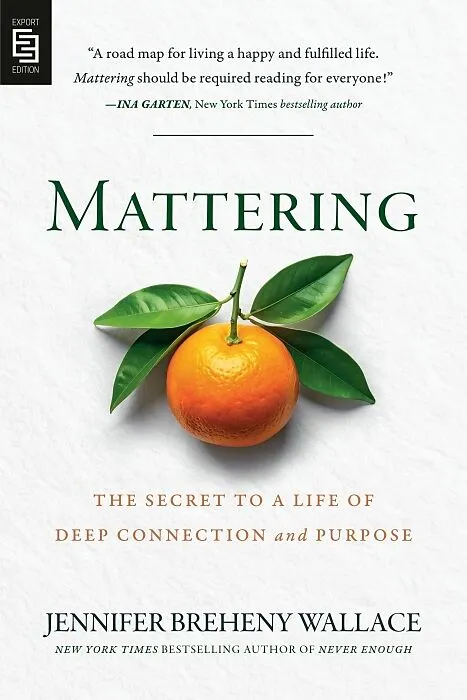
Mattering
Beschreibung
From award-winning journalist and bestselling author Jennifer Wallace comes In this groundbreaking work, Wallace makes an urgent case: mattering--the feeling that we are valued and have an opportunity to add value--is a core human need, as essential to our wel...Format auswählen
- Kartonierter EinbandCHF 23.50
- Fester EinbandCHF 33.20

Wird oft zusammen gekauft
Andere Kunden kauften auch
Beschreibung
From award-winning journalist and bestselling author Jennifer Wallace comes In this groundbreaking work, Wallace makes an urgent case: mattering--the feeling that we are valued and have an opportunity to add value--is a core human need, as essential to our well-being as food and water. And yet, in today’s world, that fundamental need is going unmet, with perilous consequences. As mental and social health crises surge, we often blame social media, the pace of modern life, and polarizing politics. But beneath these issues lies a deeper crisis, what Wallace calls “an erosion of mattering.”; With her signature warmth and insight, Wallace weaves together research and deeply moving stories of mattering lost and regained. From burned-out employees to overwhelmed caregivers to people grappling with grief or struggling through a destabilizing transition, For readers of Brené Brown, David Brooks, and Adam Grant, <Mattering< is both a call to action and a blueprint for living a meaningful life and creating a world we so urgently need....
Autorentext
Jennifer Breheny Wallace is an award-winning journalist and author of the New York Times bestselling book Never Enough: When Achievement Culture Becomes Toxic—and What We Can Do About It, which was named an Amazon Best Book of the Year. Wallace began her journalism career at CBS's 60 Minutes and is a contributor to The Wall Street Journal and The Washington Post. She lives in New York City.
Zusammenfassung
From award-winning journalist and bestselling author Jennifer Wallace comes Mattering—a landmark book that introduces a transformative new framework to confront the loneliness, burnout, and lack of purpose so many of us face today.
In this groundbreaking work, Wallace makes an urgent case: mattering—the feeling that we are valued and have an opportunity to add value—is a core human need, as essential to our well-being as food and water. And yet, in today’s world, that fundamental need is going unmet, with perilous consequences. As mental and social health crises surge, we often blame social media, the pace of modern life, and polarizing politics. But beneath these issues lies a deeper crisis, what Wallace calls “an erosion of mattering.”
With her signature warmth and insight, Wallace weaves together research and deeply moving stories of mattering lost and regained. From burned-out employees to overwhelmed caregivers to people grappling with grief or struggling through a destabilizing transition, Mattering explores how our lives are transformed when we are reminded, in small and intentional ways, that we are valued and that we have value to offer. Wallace provides the essential elements to building what she calls our “mattering core”: recognizing your impact, being relied on (but not too much), feeling prioritized, and being truly known and invested in. Strengthening this core helps us reconnect to our sense of purpose, deepen our relationships, and navigate life’s uncertainties and challenges with greater resilience.
For readers of Brené Brown, David Brooks, and Adam Grant, Mattering is a rare, culture-shifting book that offers both a diagnosis and a remedy. With a clear road map and actionable takeaways, Wallace reveals how to unlock this powerful force within ourselves and how to build cultures of mattering in our homes, workplaces, and communities.
Mattering is both a call to action and a blueprint for living a meaningful life and creating a world we so urgently need.
Leseprobe
Chapter 1
Connect to Your Impact
The Mattering Core
Recognition: You and your actions are valued, and your absence would be felt.
Reliance: You feel needed because others depend on you.
Importance: You feel significant because you're prioritized.
Ego Extension: You feel cared for because others are invested in your well-being.
Attunement: You feel deeply understood and meaningfully responded to.
Greg Bulanow felt glass crunch beneath his boots as he rushed toward the wreck. It was one of his first calls as a rookie firefighter, and he knew every minute counted. The driver was alive but trapped under the twisted steel. Greg's training took over. He squeezed through a jagged opening to reach the woman, who was crying out in pain. Her breathing was quick and panicked. Greg spoke to her gently. "We're going to get you out of here," he promised as he draped his heavy bunker coat around the woman to shield her from the flying shards of metal and glass as they worked to free her. Greg stayed by her side, steadying her through every jolt. When the last barrier gave way and she was lifted to safety, Greg felt both drained and deeply grateful. He had helped someone through one of the worst moments of their life.
Greg never planned to become a firefighter. After earning an English degree from a small liberal arts college in Ohio, he moved to Charleston, South Carolina, with his new wife, Jacqueline, envisioning a life of cobblestone streets and a future in writing. He'd work for a year or two, then pursue an MFA in creative writing. When he saw a fire department job listing in the newspaper, he applied, thinking it would be a way to save money, have an adventure, and collect good stories for graduate school.
But around the time Greg helped extract the woman from the wreck, his view of firefighting began to change. He was thinking less about becoming a writer and more about the meaning he found in the work. When Greg and his crew arrived on the scene of a medical emergency or accident, there was a moment when everything shifted. Strangers handed over their loved ones with absolute trust, believing that Greg and his team would make things better. And Greg wanted to live up to that trust. Over the next decade, his dedication paid off. By age thirty-six, he was chief of the North Charleston Fire Department, overseeing 250 employees across eleven stations.
But once Greg stepped into his new leadership role, firefighter morale-a perennial problem-now became his responsibility. The demands of the work were relentless. These men and women responded to roughly twenty-two thousand calls a year, and the physical and emotional signs of burnout were hard to miss. Many firefighters felt upper management did not understand their day-to-day challenges. Camaraderie was fading, and their personal lives seemed to be suffering, too. Some firefighters had gone through multiple divorces, while others were turning to heavy drinking. Firefighters were leaving the department, and the constant turnover left Greg scrambling to fill station gaps. Greg attempted to rebuild morale with new trucks and top-of-the-line gear and equipment. But when he unveiled the improvements, he was met with skepticism. Someone muttered that the department was trying to buy their support. The comment stung. It also made Greg realize that the problem needed a deeper solution.
The problem of invisibility
We live in a culture that constantly tells us that the answer to discontent is to find a deep, driving purpose. Self-help books, commencement speeches, and social media posts urge us to discover our calling, align our work with our values, raise children with intention, or serve the world through volunteering. This emphasis on meaning and purpose is understandable. It's essential to our well-being. But as I researched the burnout epidemic, the advice to "do something meaningful" often fell short. Greg's firefighters were a striking example. These were people saving lives, responding to emergencies, and doing work most would call deeply meaningful. And yet, many of them were burned out or disengaged, with some even leaving the force. It didn't add up.
When I asked Greg about this paradox, his response surprised me. He explained that …