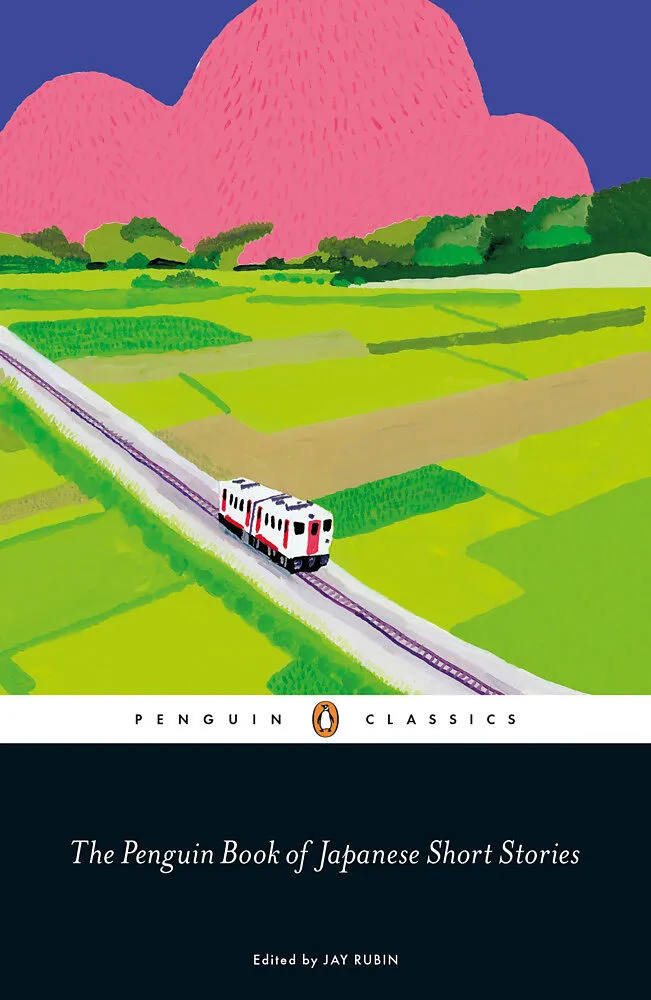
The Penguin Book of Japanese Short Stories
Beschreibung
A major new collection of Japanese short stories, many appearing in English for the first time, with an introduction by Haruki Murakami A Penguin Classic This fantastically varied and exciting collection celebrates the art of the Japanese short story, from its...Format auswählen
- Kartonierter EinbandCHF 20.30
- E-Book (epub)CHF 10.00

Wird oft zusammen gekauft
Andere Kunden kauften auch
Beschreibung
A major new collection of Japanese short stories, many appearing in English for the first time, with an introduction by Haruki Murakami A Penguin Classic This fantastically varied and exciting collection celebrates the art of the Japanese short story, from its origins in the nineteenth century to the remarkable practitioners writing today. Edited by acclaimed translator Jay Rubin, who has himself freshly translated some of the stories, and with an introduction by Haruki Murakami, this book is a revelation. Stories by writers already well known to English-language readers are included--like Tanizaki, Akutagawa, Murakami, Mishima, Kawabata, and Yoshimoto--as well as many surprising new finds. From Yuko Tsushima's "Flames" to Yuten Sawanishi's "Filling Up with Sugar" to Shin'ichi Hoshi's "Shoulder-Top Secretary" to Banana Yoshimoto's "Bee Honey," The Penguin Book of Japanese Short Stories is filled with fear, charm, beauty, and comedy.
“An exhilarating glimpse into Japanese literature.” —Patti Smith, via Instagram
“One of my most treasured volumes.” —Jeva Lange, The Week
“Assembled by longtime Haruki Murakami translator Jay Rubin (and blessed with an introduction by Murakami himself), this handsome 576-page tome is cleverly organized by theme rather than chronology, giving the book a stronger sense of cohesion than if it had started in the nineteenth century and ended with stories from today. . . . You might encounter a witch, or a devastating earthquake, or ‘The Girl from Ipanema.’ ” —GQ, “The 17 Best Books of 2018”
“With everything from ritual suicides to cows with human faces, The Penguin Book of Japanese Short Stories is bizarre, exotic and memorably gory.” —Daily Mail (London)
“Highly recommended.” —The Spectator (London)
“A feast of literature . . . [It’s] a literature lover’s dream, page after page of memorable writing, stories that leave a lasting impression yet can be fully absorbed in one sitting. It’s one anthology that will surely find a life outside the classroom, offering up the living, vital world of Japanese literature in all its diversity and with a true taste for excellence.” —The Japan Times **
“Superb . . . Impressive . . . A fascinating collection of short stories from all periods and from several authors who all too rarely make it into English translation . . . Offers a perfect balance of the classic, along with the unsettling and innovatively modern. All the traditional literary superstars are here, but there are also stories which resonate with contemporary experience. The result is a superb collection of diverse voices whose stories are both intellectually and emotionally rewarding.” —PopMatters
“[An] excellent new collection . . . that pushes boundaries and makes some noise.” —***International Examiner
“Reading through this collection has been so fresh and interesting. . . . Now and then I’d be quite astounded at the different and strangely compelling ways the fiction of my own country could be grasped. . . . Unpredictably rewarding.” —*Haruki Murakami, from the Introduction****
Autorentext
Jay Rubin is an American translator and academic. He is the translator of several of Haruki Murakami's major works, including Norwegian Wood and The Wind-Up Bird Chronicle, Natsume Soseki's The Miner and Sanshiro and Ryunosuke Akutagawa's Rashomon and Seventeen Other Stories. He is the author of Making Sense of Japanese, Haruki Murakami and the Music of Words and a novel, The Sun Gods.
Leseprobe
Contents
 
Japan and the West
 
•  “The Story of Tomoda and Matsunaga” by Jun'ichirō Tanizaki
•  “Behind the Prison” by Kafū Nagai
•  Chapter 1 from Sanshirō by Natsume Sōseki
     
Loyal Warriors
 
•  “The Last Testament of Okitsu Yagoemon” by Ōgai Mori
•  “Patriotism” by Yukio Mishima
 
Men and Women
 
•  “Flames” by Yūko Tsushima
•  “In the Box” by Taeko Kōno
•  “Fading Flowers” by Kenji Nakagami
•  “Bee Honey” by Banana Yoshimoto
•  “The Smile of a Mountain Witch” by Minako Ohba
•  “A Bond for Two Lifetimes—Gleanings” by Fumiko Enchi
 
Nature and Memory
 
•  “Peaches” by Abe Akira
•  “The Tale of the House of Physics” by Yōko Ogawa
•  “Unforgettable People” by Doppo Kunikida
•  “The 1963/1982 Girl from Ipanema” by Haruki Murakami
 
Modern Life and Other Nonsense
 
•  “Closet LLB” by Kōji Uno
•  “Mr. English” by Keita Genji
•  “Factory Town” by Minoru Betsuyaku
•  “Dreams of Love, Etc.” by Mieko Kawakami
•  “Shoulder-Top Secretary” by Shin'ichi Hoshi
 
Dread
 
•  “Hell Screen” by Ryūnosuke Akutagawa
•  “Filling Up with Sugar” by Yūten Sawanishi
•  “Kudan” by Hyakken Uchida
 
Disasters, Natural and Man-Made
 
•  “The Great Earthquake” by Ryūnosuke Akutagawa
•  “Hiroshima, City of Doom” by Yōko Ōta
•  “Insects” by Yūichi Seirai
•  “The Silver Fifty-sen Pieces” by Yasunari Kawabata
•  “American Hijiki” by Akiyuki Nosaka
•  “Pink” by Tomoyuki Hoshino
•  “UFO in Kushiro” by Haruki Murakami
•  “Hiyoriyama” by Kazumi Saeki
•  “Planting” by Aoko Matsuda
•  “Same as Always” by Yūya Satō
The following is from the introduction to *The Penguin Book of Japanese Short Stories.
-
*From Seppuku to Meltdown 
-
I once heard the story that when jazz drummer Buddy Rich was being admitted to a hospital, the nurse at the front desk asked him if he had any allergies. “Only to country and western music,” he replied. In my case, my only allergy is to Japan’s so-called “I novel”—the form of autobiographical writing that has been at the forefront of Japan’s modern fiction since the turn of the 20th century.
To tell the truth, from my teens to my early twenties, I read hardly any Japanese fiction. And for a long while I was convinced that, with a few exceptions, early modern and contemporary Japanese literature was simply boring. There were many reasons for this, but foremost among them may be that the novels and stories we were assigned to read in school were pretty bad. My “I-novel allergy” was also quite strong back then (these days, to be sure, it has become less intense), and since you can’t hope either to make your way through or to understand modern Japanese literature if you’re going to avoid its constitutional predisposition to producing “I novels,” I made a conscious effort while young to avoid getting anywhere near Japan…