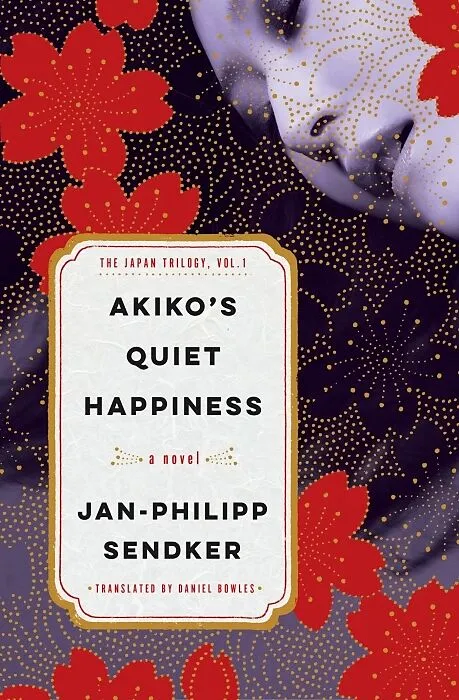
Akiko's Quiet Happiness
Beschreibung
Two lonely former classmates reconnect in Tokyo and unravel a family secret in this touching new novel from the internationally bestselling author of Still grieving the death of her mother, 29-year-old Akiko is single and lives in self-imposed isolation in Tok...Format auswählen
- Kartonierter EinbandCHF 21.10
Wird oft zusammen gekauft
Andere Kunden kauften auch
Beschreibung
Two lonely former classmates reconnect in Tokyo and unravel a family secret in this touching new novel from the internationally bestselling author of Still grieving the death of her mother, 29-year-old Akiko is single and lives in self-imposed isolation in Tokyo. Then one evening, she unexpectedly runs into Kento, her first love from school. Kento now leads a reclusive life as a hikikomori, only venturing out at night. At the same time, Akiko discovers evidence that her mother had been lying to her about their family, causing her to doubt everything. She has to admit to herself that she doesn’t know who she is. With Kento’s help, Akiko embarks on a journey into her own history, which takes her life in surprising directions and leads her to questions she had never dared to ask herself before: How do I want to live? And do I have the courage to love?
Autorentext
Jan-Philippe Sendker
Leseprobe
1
I recognized the composition by its first notes: Chopin, a nocturne, the eighth. At the piano: an unassuming woman the age of my mother, to her left and right two shopping bags bulging at their seams. With her eyes closed, she played so well that passersby began stopping in their tracks. Although the piece was much too subdued for a public piano in a noisy shopping arcade, more and more listeners came under her spell all the same. Soon, not a footstep could be heard, not a cough, not a whisper.
The woman took her time.
Her upper body swayed slowly to the rhythm of the music. I couldn’t believe how much this stranger was revealing of herself in public, couldn’t believe the tones she elicited from the instrument.
Each one of them pierced my heart.
Right where it hurts the most, where no one else could reach.
Of all compositions, it had to be my mother’s favorite. I hadn’t listened to it since the day she was cremated. I swallowed the lump in my throat and bit my lip.
After the final note, the woman let her arms fall to her side and remained motionless for a moment. Silence hung in the air. No one moved.
She opened her eyes, taking note of her audience. A wisp of a smile flickered across her face, uncertain and embarrassed. Hesitant, she rose, grabbed her shopping bags, and vanished into the crowd as if nothing had happened.
It took a while for people to continue on their way. I remained behind, alone.
My heart was pounding as though I’d been sprinting.
“So sorry I’m late.” Naoko stood before me. She was out of breath. “What’s wrong? Are you unwell?”
“No, why do you ask?”
“You’re trembling!”
“Everything’s fine. I’m probably just hungry.” What was I supposed to say? Naoko had no interest in music.
She took my arm, and we entered an izakaya where we had eaten many times before. The food was good and cheap, as was the sake. We ordered edamame, sashimi, grilled fish marinated in miso, tamagoyaki, a few yakitori skewers, and two large glasses of beer.
I still could not get Chopin’s melody out of my head.
“Is everything okay?” Naoko asked again.
I nodded.
After the waiter had left, she pulled a pink photo album out of her bag and laid it on the table before me. Glued to the cover was the photo of a radiantly beautiful woman in a white wedding dress, holding a bouquet. The picture was taken from the side, with the woman turning her head slightly and beaming at the camera. She glowed in a warm, soft light from the setting sun or from a spotlight. My eyes shuttled back and forth between the album and Naoko.
“Is that you?” I blurted out.
“Who else?”
Too astonished to reply, I stared at the picture. I had never seen Naoko look that beautiful. If I were being honest, it surprised me that she was even able to look that beautiful. Not that she was an ugly, plain woman—not at all. Naoko was half a head shorter than me, slightly stout, and had large breasts and robust upper arms and legs without seeming plump or fat. She had a round, somewhat flat face, full lips, and narrow eyes, and for as long as I had known her wore a pageboy hairstyle that looked fantastic on her. She had grown up in Osaka and was the only woman at the company who dared to wear bright colors: canary cardigans, floral blouses, scarves in rose, green, or pink. Whether on the street or at the train station, she was always recognizable from a distance in her red coat amid the sea of pedestrians wearing black, gray, and navy blue.
She had a certain effect on men. There was hardly a man among us in the department, I suspect, who wouldn’t have wanted to visit a love hotel with her.
Impressed, I opened the album to its first page. She looked even more beautiful in the next picture. It was taken head-on, with the contours of her décolleté delineated at the neckline of her tight-fitting gown, the silhouette of a temple vaguely visible in the background. She was beaming, which was not a smile of hers I was familiar with.
I leafed carefully from one page to the next. The photos showed a happy Naoko trying on different wedding dresses, Naoko at the hairdresser, Naoko having her makeup done, Naoko at the florist—always at the center of a circle of laughing women who were doing her hair, tracing her eyebrows, holding a veil, or opening a car door. Naoko in a limousine, cheerfully waving from the open window. Naoko in a garden on a red bridge, a swan in the foreground.
What was missing was a picture of her with the groom, which came as no surprise. Naoko had married herself.
When she’d told me about her idea a year earlier, I’d thought she was joking. She said she was going to turn thirty soon and wanted to be married before then. Even as a little girl, she had dreamed about a wedding in white, about herself as a bride with a veil, wearing a crown in her hair and a dress that women only wear once in their lives.
But she’d never dreamed about a bridegroom. Nothing about that had changed, she explained.
She didn’t want to spend her life with a man, or with a woman. She didn’t want to fall asleep every night next to the same person and wake up next to them the following morning. She didn’t want to share her breakfast with anyone. She wanted to go to bed when she felt like it, not when it was expected of her. She didn’t want to have to wait for anyone, and, even more importantly, she didn’t want to feel bad for keeping someone else waiting. She hated the smell of another person in her bed or in her bathroom, which was one reason why she frequented love hotels.
But because she didn’t want to forgo a wedding, she had decided to marry herself.
Throughout the months that followed, Naoko would tell me about her wedding preparations every time we met up. She would describe in detail the kind of dress she was considering and how much fun she had at the fittings. She wanted me to tell her if she should wear a veil and where I would spend my wedding night if I were her.
I’d listened to it all and still hadn’t believed she would really go through with it. Now I was clapping the album shut, speechless. “Wow” was all I could muster.
The waiter set our beers on the table. We raised a toast to the newlyweds.
“Did you ever think I could look so pretty?”
“No . . . I mean, yes,” I stammered, slightly embarrassed.
“I didn’t. I really didn’t. At first, I thought it was just going to be a few framed photos and an album as a memento, but I was wrong. I look at the pictures and see how pretty I can be. Me, all by myself, without a man.”
She raised her glass. “Kampai.”
“Kampai,” I replied.
A server brought us a plate of raw tuna. We ordered two glasses of sake.
“Eve…