Black. Single. Mother
Beschreibung
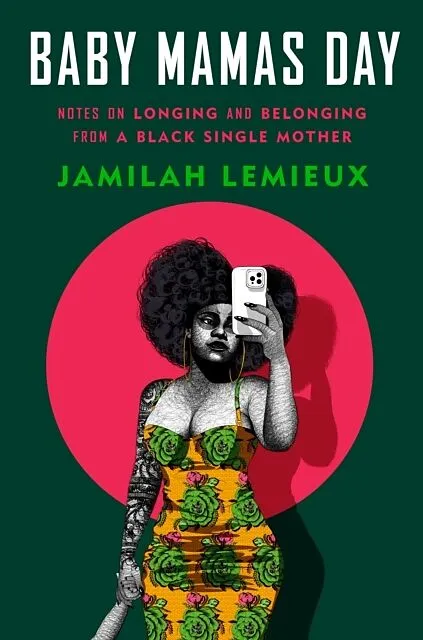
A personal meditation on, examination of, and tribute to Black single motherhood, unapologetically told through poignant essays and candid interviews, by a celebrated cultural critic. Through her signature candid, humorous and yet often biting takes, Lemieux s...Format auswählen
- Fester EinbandCHF 42.30

Wird oft zusammen gekauft
Andere Kunden kauften auch
Beschreibung
A personal meditation on, examination of, and tribute to Black single motherhood, unapologetically told through poignant essays and candid interviews, by a celebrated cultural critic.
Through her signature candid, humorous and yet often biting takes, Lemieux suffers no fools while also courageously revealing the scars of her own parenting journey and search for self-acceptance in a world that doesn’t see the full worth of women like her. With a particular verve and relatability—honed, in part, from her many years among “Black Twitter’s” most prominent voices—Lemieux puts the lived reality of Black single motherhood: uncertainty, fierceness, and sensuality on full display. Interspersed with beautifully written personal narrative, readers will find cultural and historical analysis, and interviews with single mothers from all walks of life, telling it how it really is.
<Baby Mamas Day< is a bold testament to the multifaceted Black single mother and an invitation to all readers to finally recognize this powerful figure for who she is—not bad, but so, so good.
Autorentext
Jamilah Lemieux is a cultural critic and writer with a focus on issues of race, gender, and sexuality. A leading feminist thinker, social influencer, and millennial media darling, Lemieux has written for a host of platforms, including the Los Angeles Times, The Nation, Essence, Playboy, The Cut, The Guardian, Colorlines, The Washington Post, Wired, Self, Refinery29, and The New York Times. She was prominently featured in Lifetime’s docuseries Surviving R. Kelly and Surviving R. Kelly Part II: The Reckoning. She also appeared in A&E’s Secrets of Playboy. Lemieux penned the forewords for the anniversary editions of Michele Wallace’s Black Macho and the Myth of the Superwoman and Ann Petry’s Miss Muriel and Other Stories. Currently, she writes a weekly advice column for Slate’s “Care and Feeding” parenting section. She resides in Los Angeles with her daughter, Naima.
Leseprobe
1.
Something’s Missing
For a long time, I was a Black woman completely unaware that I faced the world in my mother’s clothes. —Joan Morgan, When Chickenheads Come Home to Roost
I’ve spent too much of my life trying to figure out what’s wrong with us, my mother and me. How did we end up “alone” in the house with no man? First, the two of us alone together, and then me, alone with her granddaughter, a second-generation single mother. Was her failure my doom? Did I ever have a chance to be more than an unwed mom, or was this essentially my fate from the point when my parents’ messy—like, messy—relationship culminated in my out-of-wedlock birth? It’s not that I saw anything in my mother that seemed bad, not that there was anything deficient about her parenting. She has always loved me with the entirety of her heart, I was always well cared for, nurtured, tended to. I knew just how much I mattered to her, that she’d do anything for me. But—and this is a big but—she did not have a man! She was unchosen, unloved. No flowers on her birthday, no Valentine’s Day candy. No one to care for her but me.
Not only was my mother manless, but she also showed no interest in doing anything to correct this obvious deficiency, and that was reason for me to question a whole lot of things about her for longer than I’d like to admit.
My obsession with what I believed to be missing from our lives didn’t line up with the truth of who my mother was. But the truth didn’t stop me from resenting our circumstances and always judging her. Despite her limited financial means, my mother gave me a childhood that was rich in experiences. She figured out how to send me to the best schools, and she dutifully dedicated herself to my academic success. She adored me, and she prioritized me in ways that perhaps she couldn’t if she’d also had to care for a man. Back then, I didn’t know how much labor relationships required of women, nor could I fathom how a woman could be okay without one.
As a young child, I suspected my mother loved me more than most other mothers loved their children. I’m not sure exactly why I felt this way, but I believed it very strongly. I was convinced that our connection was more than what other mothers and children had, that what we had was special.
Once, when I was in kindergarten, one of the Teenage Mutant Ninja Turtles was scheduled to appear at a local grocery store to promote their line of cookies. I’m not sure which one it was, but it wasn’t Raphael, the one I had a crush on (I loved his sarcastic attitude). My mother promised to pick me up early to go meet him. Having no concept of time, I spent most of the day agonizing, worried that she’d lied, forgotten, or simply changed her mind. When Mommy stepped into the classroom, about thirty minutes before dismissal, I felt so guilty for having doubted her and told myself I wouldn’t do it again. My mother always kept her word and she always showed up for me.
If anyone knows about my mother, they know how passionate she is about her only child. It was a source of pride when I was younger, but by my teenage years, I started to resent how much I was the center of her universe. “Get a life, lady!” I wanted to scream at her more than a few times. I was filled with confusion and growing resentment that my mother seemed satisfied just being my mother.
Mommy rarely hit me, something I always felt was a distinct advantage that she held over other mothers. I was spanked on a few occasions as a child and popped in the mouth once or twice when I became an adolescent, but overwhelmingly, I escaped the violence that seemed to be so common within my peers’ homes. When I hear other Black folks talk about having their mother instill the fear of God in them, I can’t relate. On some level, I attributed this to my mother’s superior love for me.
Until I was a teenager (and the owner of a nasty, often disrespectful mouth), I always knew that my mother liked me. We weren’t just mother and daughter, we were best friends. So often, it was just the two of us, and we were excellent company for each other. Even as I hungered for a larger family, I was clear that I had a powerful connection with my mom and that we were, in a way, some sort of soulmates.
Josephine “Isoke” Poston, my mother, is the oldest of nine children. Before she was born, there was an incident where her father had badly beaten a white man, an employer who had called him his “hardworking nigger.” After being threatened by the Klan, he was forced to flee Arkansas, where his family had been for generations, to seek a new life in Kansas City. His young wife (my grandmother) joined him there, where he enlisted in the military, and then the daring couple relocated once more to Chicago. As they made their way through the Windy City, they moved around the West Side and the Low End before finally settling in the newly constructed Robert Taylor Homes, a massive public housing project in Chicago’s historic Bronzeville section (once the largest housing project in the nation).
In general, Mom talks in positive broad strokes about her upbringing; she says things like there was “a lot of people and a lot of love” in her house. However, when she explains her observations of her young parents’ union, and the marriages of her grandparents, aunts, and other couples who were influential in her formative years, things are a little less buttoned up.
My maternal grandmother and grandfather were only twelve and seventeen respectively when they …