
IHR WARENKORB IST AKTUELL LEER.
Haben Sie noch nichts passendes gefunden? Stöbern Sie durch unser komplettes Sortiment.
Oder melden Sie sich an bzw. registrieren Sie sich.
- Kostenlose Lieferung
- Kauf auf Rechnung
- Ex Libris Tiefpreis
- Filiallieferung und 650+ Abholorte
- Rabatt-Bons als Club-Mitglied
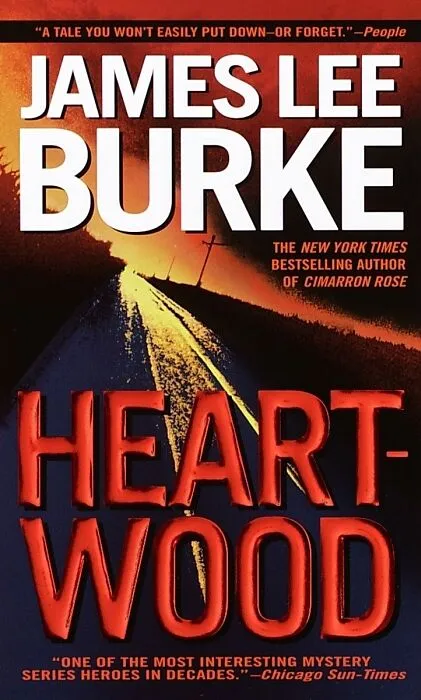
Heartwood
Beschreibung
Critical acclaim for James Lee Burke and the Billy Bob Holland Series: "Burke is a master at setting mood, laying in atmosphere, all with quirky, raunchy dialogue that's a delight." --Elmore Leonard "Billy Bob Holland is as angst-ridden and morally shell-shock...Format auswählen
- Kartonierter EinbandCHF 12.80

Wird oft zusammen gekauft
Andere Kunden kauften auch
Beschreibung
Critical acclaim for James Lee Burke and the Billy Bob Holland Series:
"Burke is a master at setting mood, laying in atmosphere, all with quirky, raunchy dialogue that's a delight."
--Elmore Leonard
"Billy Bob Holland is as angst-ridden and morally shell-shocked as Dave Robicheaux ever was, but like Robicheaux, Holland's moral compass always points to true north...Don't miss out."
--Rocky Mountain News
"Burke [is] one of the best writers of our time. His plots build tension to such a pitch that it tempts one to rush through his books. But his writing demands that his works be savored."
--Denver Post
"Burke is known for the lush bayou cadences that give solid flesh to his longtime series hero, deputy sheriff Dave Robicheaux, and this prose style moves easily to the steamy precincts of southeast Texas."
--Chicago Sun-Times
Autorentext
James Lee Burke
Klappentext
A brilliantly layered novel of crime, character, and place from the two-time Edgar Award winner, Gold Dagger Award winner, and New York Times bestselling author of Sunset Limited.
Few writers in America today combine James Lee Burke's lush prose, crackling story lines, and tremendous sense of history and landscape. In Cimmaron Rose, longtime fans of the Dave Robicheaux series found that the struggles of Texas defense attorney Billy Bob Holland show Burke at his best in exploring classic American themes--the sometimes subtle, often violent strains between the haves and the have-nots; the collision of past and present; the inequities in the criminal justice system.
Heartwood is a kind of tree that grows in layers. And as Billy Bob's grandfather once told him, you do well in life by keeping the roots in a clear stream and not letting anyone taint the water for you. But in Holland's dusty little hometown of Deaf Smith, in the hill country north of Austin, local kingpin Earl Deitrich has made a fortune running roughshod and tainting anyone who stands in his way. Billy Bob has problems with Deitrich and his shamelessly callous demeanor, but can't shake the legacy of his passion for Deitrich's "heartbreak-beautiful" wife, Peggy Jean.
When Holland takes on the defense of Wilbur Pickett—a man accused of stealing an heirloom and three hundred thousand dollars in bonds from Deitrich's office--he finds himself up against not only Earl's power and influence, but also a past Billy Bob can't will away. A wonderfully realized novel, rich in Texas atmosphere and lore, and a dazzling portrait of the deadly consequences of self-delusion, Heartwood could only have been written by James Lee Burke, a writer in expert command of his craft.
Leseprobe
IT WOULD BE EASY TO SAY WE RESENTED EARL Deitrich because he was rich. Maybe to a degree we did. He grew up in River Oaks, down in Houston, in an enormous white mansion set up on a hillock surrounded by shade trees. Its size and seclusion separated it even from the Midas levels of wealth that characterized his few neighbors. But our problem with him was not simply his money.
He was an officer, on leave from the army, when he came to the town of Deaf Smith, up in the Texas hill country, where the working classes wrestled drill bits and waited tables and the new rich chewed on toothpicks at the country club. He used his wealth to hold up a mirror to our inadequacies and take Peggy Jean Murphy from our midst, then brought her back to us as his wife and possession, almost as though she were on display.
Peggy Jean Murphy, who was heart-breakingly beautiful, who lived in our dreams, who commanded such inclusive respect the roughest kids in the West End dared not make a loose remark about her lest they be punched senseless by their own kind.
Earl Deitrich made us realize that our moments on the dance floor with her at high school proms and the romantic fantasies we entertained about marriage to her had always been the vanity of blue-collar kids who had never been in the running at all. Maybe even the high school quarterback she'd loved before he'd been drafted and killed on the Mekong had not been in the running, either.
But that was a long time ago. I tried not to think about Peggy Jean anymore. She and Earl lived abroad and in Montana much of the year and I didn't have occasion to see them, or to regret the decisions that led me into law enforcement on the border and the months of unrecorded and officially denied nocturnal raids into Coahuila, where a playing card emblazoned with the badge of the Texas Rangers was stuffed into the mouths of the dead.
But try as I might, I would never forget the spring afternoon when Peggy Jean got down from the back of my horse and walked with me into a woods above the river and allowed me to lose my virginity inside her.
When I rose from her hot body, her pale blue eyes were empty, staring at the clouds above the pine tops. I wanted her to say something, but she didn't.
"I don't guess I got a lot of experience at this," I said.
She ran her hand down my arm and held my fingers. There were blades of grass on her shoulders and breasts.
"You were fine, Billy Bob," she said.
Then I knew she had not made love to me but to a soldier who had died in Vietnam.
"You want to go to a movie tonight?" I asked.
"Maybe tomorrow," she replied.
"I like you a whole lot. I know when you lose somebody, it takes a long--"
"We'd better go back now. We'll go to the movie tomorrow. I promise," she said.
But no one competes well with ghosts. At least no one in our town did, not until Earl Deitrich arrived.
Earl and Peggy Jean's house was rumored to have cost twelve million dollars to build. It was three stories high, concave in shape, inset in a scooped-out hillside, the yard terraced with tons of flagstone. The front was filled with windows the size of garages, framed by white-painted steel beams. Ninety-foot skinned and lacquered ponderosa logs were anchored at angles from the roof to the ground, so that at a distance the house looked like a giant, gold-streaked tooth couched in the hills.
It was spring, on a Thursday, when I drove my Avalon out to their house for lunch. I had never felt comfortable around Earl, even though I did my best to like him, but she had left a handwritten note in the mailbox at my law office, saying they were back in town and would love to see me.
So I drove across the old iron bridge on the river, back into the hills, then through a cattleguard and down a long green valley whose fields were covered with buttercups and bluebonnets and Indian paintbrush. As I approached the house I saw a sun-browned, blond man in khakis and scuffed boots and a cut-off denim shirt setting fence posts around a horse lot that had been nubbed down to dirt.
His name was Wilbur Pickett and he had failed at almost every endeavor he had ever undertaken. When he tried to borrow money to start up a truck farm, his own mother told everybody in town Wilbur couldn't grow germs on the bottom of his shoe.
He wildcatted down in Mexico and set fire to a sludge pit next to the rig, then the wind blew the flames through a dry field and burned down the local police chief's ranch house. Wilbur barely got back across the border with his life.
In the Flint Hills of eastern Kansas, after a blistering 110-degree day, he unloaded an eighteen-wheeler full of hogs in rest pens without noticing the rails were down on the far side. Then watched them fan across the hills into three counties under a sky spiderwebbed with lightning.
But when it came to horses and bulls, Wilbur could come out of a rodeo chute like his pants were stitched to their hides. He broke mustangs in Wyoming and went seven seconds with Bodacious, the most notorious bull on the professional circuit (Bodacious would pitch the rider forward, t…