Beschreibung
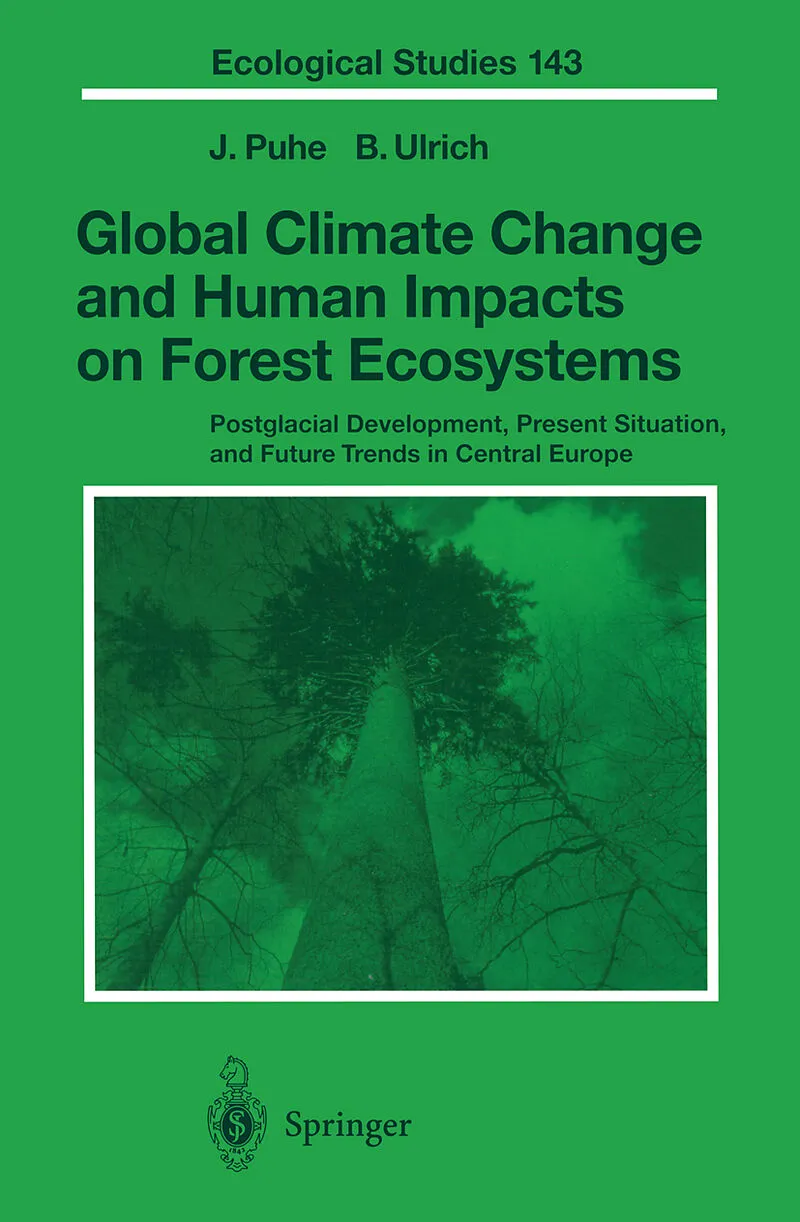
The inclusion of forests as potential biological sinks in the Kyoto Protocol to the United Nations Framework Convention on Climate Change (UNFCCC) in 1997 has attracted international attention and again has put scientific and political focus on the world's for...The inclusion of forests as potential biological sinks in the Kyoto Protocol to the United Nations Framework Convention on Climate Change (UNFCCC) in 1997 has attracted international attention and again has put scientific and political focus on the world's forests, regarding their state and development. The international discus sion induced by the Kyoto Protocol has clearly shown that not only the tropical rain forests are endangered by man's activities, but also that the forest ecosystems of boreal, temperate, mediterranean and subtropical regions have been drastically modified. Deforestation on a large scale, burning, over-exploitation, and the degra dation of the biological diversity are well-known symptoms in forests all over the world. This negative development happens in spite of the already existing knowledge of the benefits of forests on global energy and water regimes, the biogeochemical cycling of carbon and other elements as well as on the biological and cultural diversity. The reasons why man does not take care of forests properly are manifold and complex and there is no easy solution how to change the existing negative trends. One reason that makes it so difficult to assess the impacts of human activity on the future development of forests is the large time scale in which forests react, ranging from decades to centuries.
A unique and up-to-date compilation of fundamental and practice-oriented information on global climate change, atmospheric pollution, human land use, forest utilisation and their impacts on forest ecosystems in central Europe Discusses options for a sustainable forest management and how to mitigate the increasing atmospheric accumulation of greenhouse gases Includes supplementary material: sn.pub/extras
Klappentext
To judge the future development of forest ecosystems, their history, state, as well as changes in their boundary conditions have to be taken into account. For centuries man has utilized and often overutilized forests. During the last 100-200 years, forests in central Europe have been intensively managed and at the same time subjected to deposition of acidity and nitrogen compounds from air pollution. In addition, we currently witness a climate change which seems to be generated by man-made emission of greenhouse gases. BRThis volume presents relevant information on the development of central European forest ecosystems in a historical perspective, and it reviews the ongoing environmental changes and their potential impacts. Further, scenarios on the future of central European forest ecosystems and the options for a sustainable forest management are discussed.
Inhalt
1 Introduction.- 2 Forest-Ecosystem Fundamentals.- 2.1 The Forest Ecosystem and Its Environment.- 2.2 Space and Time Seal es of Ecosystem Processes.- 2.3 Complexity and Order in Forest Ecosystems.- 2.3.1 Hierarchy Theory.- 2.4 Process Patterns as Ecological Indicators.- 2.5 Stabilising and Destabilising Effects.- 3 Post-Glacial Development of Climate and Forest Ecosystems.- 3.1 Climate Development.- 3.2 Vegetation Development.- 3.3 Post-Glacial Changes in Nutrient Cycling and Soil Conditions.- 4 Sources and Sinks of Greenhouse Gases and Air Pollutants.- 4.1 Overview.- 4.2 Carbon Compounds.- 4.3 Nitrogen and Sulphur Compounds, and 03.- 4.4 Heavy Metals.- 5 Present State of Forest Ecosystems.- 5.1 Introduction.- 5.2 Forest Soil Condition.- 5.3 Forest Vegetation Condition.- 5.4 Overall Forest Carbon Reserves.- 6 Implications of Changes in Ambient and Climatic Conditions on Ecosystem Processes.- 6.1 Implications of the Deposition of Acid and Nitrogen.- 6.2 Implications of an Increase in the Atmospheric Carbon Dioxide Content.- 6.2.1 Atmospheric C02 Concentrations in Earth's History and Plant Developmental Responses.- 6.3 Additional Effects of an Increase in Temperature.- 6.4 Implications of Climatic Changes on the Water Balance.- 6.5 Implications of Catastrophic Weather Incidents.- 6.6 Implications of Increased UV-B Radiation.- 7 Scenarios of Future Changes.- 7.1 Expected Climate Changes.- 7.2 Expected Soil Changes.- 7.3 Modelling Vegetation and Its Development Under Changing Conditions.- 7.4 Expected Development of Forest Area and Wood Resources.- 7.5 Forestry Options for C02 Mitigation.- 7.6 Trends of Change in Common Forest Ecosystem Types of Central Europe.- 8 Forest Management.- 8.1 Introduction.- 8.2 Development of Forest Management in Central Europe.- 8.3Forest-Management Practices.- 8.4 Forest Practice and Management in a European Comparison.- 8.5 Management Strategies to Cope with Forest Decline.- 8.6 Forest-Management Reactions on Climate Warming.- 9 Human Impacts on Central European Forests: Summary and Conclusions.- References.