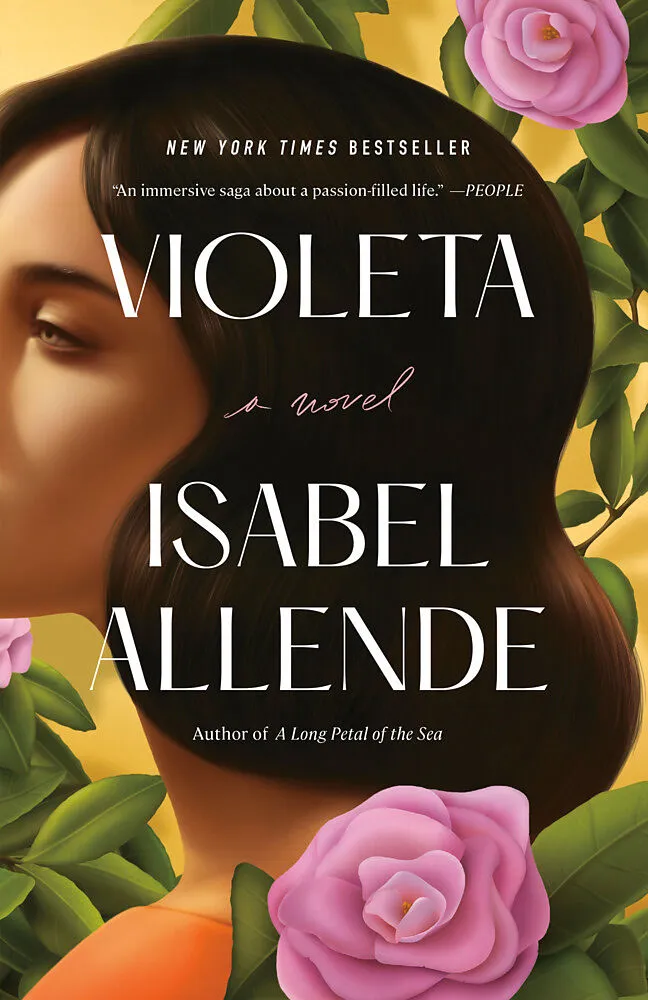

Violeta [English Edition]
Beschreibung
Informationen zum Autor Isabel Allende Klappentext NEW YORK TIMES BESTSELLER • This sweeping novel from the author of A Long Petal of the Sea tells the epic story of Violeta Del Valle, a woman whose life spans one hundred years and bears witness to the gr...Format auswählen
- Kartonierter EinbandCHF 21.10
Wird oft zusammen gekauft
Andere Kunden kauften auch
Beschreibung
Informationen zum Autor Isabel Allende Klappentext NEW YORK TIMES BESTSELLER • This sweeping novel from the author of A Long Petal of the Sea tells the epic story of Violeta Del Valle, a woman whose life spans one hundred years and bears witness to the greatest upheavals of the twentieth century. An immersive saga about a passion-filled life. People ONE OF THE BEST BOOKS OF THE YEAR: PopSugar, Real Simple, Reader's Digest Violeta comes into the world on a stormy day in 1920, the first girl in a family with five boisterous sons. From the start, her life is marked by extraordinary events, for the ripples of the Great War are still being felt, even as the Spanish flu arrives on the shores of her South American homeland almost at the moment of her birth. Through her father's prescience, the family will come through that crisis unscathed, only to face a new one as the Great Depression transforms the genteel city life she has known. Her family loses everything and is forced to retreat to a wild and beautiful but remote part of the country. There, she will come of age, and her first suitor will come calling. She tells her story in the form of a letter to someone she loves above all others, recounting times of devastating heartbreak and passionate affairs, poverty and wealth, terrible loss and immense joy. Her life is shaped by some of the most important events of history: the fight for women's rights, the rise and fall of tyrants, and ultimately not one, but two pandemics. Through the eyes of a woman whose unforgettable passion, determination, and sense of humor carry her through a lifetime of upheaval, Isabel Allende once more brings us an epic that is both fiercely inspiring and deeply emotional. Leseprobe 1 I came into the world one stormy Friday in 1920, the year of the scourge. The evening of my birth the electricity went out, something that often happened during storms, so they lit candles and kerosene lamps, which were always kept on hand for these types of emergencies. María Gracia, my mother, began to feel the contractionsa sensation she knew well since she'd already birthed five sonsand she surrendered to the pain, resigned to bringing another male into the world with the help of her sisters, who had assisted her through the difficult process several times. The family doctor had been working tirelessly for weeks in one of the field hospitals and she felt it imprudent to call him for something as prosaic as childbirth. On previous occasions they had used a midwife, always the same one, but the woman had been among the first to fall victim to the flu and they didn't know of anyone else. To my mother it seemed she'd spent the entirety of her adult life either pregnant, recovering from childbirth, or convalescing after a miscarriage. Her oldest son, José Antonio, had turned seventeen, she was sure of that, because he had been born the same year as one of our worst earthquakes, which knocked half the country to the ground and left thousands of deaths in its wake. But she could never precisely recall the ages of her other sons nor how many pregnancies she'd failed to carry to term. Each miscarriage had left her incapacitated for months and after each birth she'd felt exhausted and melancholic for a long while. Before getting married she had been the most beautiful debutante in the capitalslender, with an unforgettable face, green eyes, and translucent skinbut the extremes of motherhood had distorted her body and drained her spirit. She loved her sons, in theory, but in practice she preferred to keep them at a comfortable distance. The exuberant band of boys was as disruptive as a battle in her peaceful feminine realm. She'd once admitted during confession that she felt doomed to bear only sons, like a curse from the Devil. In penitence she was ordered to recite a rosary every day for...
Autorentext
Isabel Allende
Klappentext
**NEW YORK TIMES BESTSELLER • This sweeping novel from the author of A Long Petal of the Sea tells the epic story of Violeta Del Valle, a woman whose life spans one hundred years and bears witness to the greatest upheavals of the twentieth century.
“An immersive saga about a passion-filled life.”—People**
ONE OF THE BEST BOOKS OF THE YEAR: PopSugar, Real Simple, Reader’s Digest
Violeta comes into the world on a stormy day in 1920, the first girl in a family with five boisterous sons. From the start, her life is marked by extraordinary events, for the ripples of the Great War are still being felt, even as the Spanish flu arrives on the shores of her South American homeland almost at the moment of her birth.
Through her father’s prescience, the family will come through that crisis unscathed, only to face a new one as the Great Depression transforms the genteel city life she has known. Her family loses everything and is forced to retreat to a wild and beautiful but remote part of the country. There, she will come of age, and her first suitor will come calling.
She tells her story in the form of a letter to someone she loves above all others, recounting times of devastating heartbreak and passionate affairs, poverty and wealth, terrible loss and immense joy. Her life is shaped by some of the most important events of history: the fight for women’s rights, the rise and fall of tyrants, and ultimately not one, but two pandemics.
Through the eyes of a woman whose unforgettable passion, determination, and sense of humor carry her through a lifetime of upheaval, Isabel Allende once more brings us an epic that is both fiercely inspiring and deeply emotional.
Leseprobe
1
I came into the world one stormy Friday in 1920, the year of the scourge. The evening of my birth the electricity went out, something that often happened during storms, so they lit candles and kerosene lamps, which were always kept on hand for these types of emergencies. María Gracia, my mother, began to feel the contractions a sensation she knew well since she d already birthed five sons and she surrendered to the pain, resigned to bringing another male into the world with the help of her sisters, who had assisted her through the difficult process several times. The family doctor had been working tirelessly for weeks in one of the field hospitals and she felt it imprudent to call him for something as prosaic as childbirth. On previous occasions they had used a midwife, always the same one, but the woman had been among the first to fall victim to the flu and they didn t know of anyone else.
To my mother it seemed she d spent the entirety of her adult life either pregnant, recovering from childbirth, or convalescing after a miscarriage. Her oldest son, José Antonio, had turned seventeen, she was sure of that, because he had been born the same year as one of our worst earthquakes, which knocked half the country to the ground and left thousands of deaths in its wake. But she could never precisely recall the ages of her other sons nor how many pregnancies she d failed to carry to term. Each miscarriage had left her incapacitated for months and after each birth she d felt exhausted and melancholic for a long while. Before getting married she had been the most beautiful debutante in the capital slender, with an unforgettable face, green eyes, and translucent skin but the extremes of motherhood had distorted her body and drained her spirit.
She loved her sons, in theory, but in practice she preferred to keep them at a comfortable distance. The exuberant band of boys was as disruptive as a battle in her peaceful feminine realm. She d once admitted during confession that she felt doomed to bear only sons, like a curse from the Devil. In penitence she was ordered to recite a rosary every day for two years straight and to make a sizable donation to the church renovation fund. Her husband forbade her from returning to confession.
Unde…