
IHR WARENKORB IST AKTUELL LEER.
Haben Sie noch nichts passendes gefunden? Stöbern Sie durch unser komplettes Sortiment.
Oder melden Sie sich an bzw. registrieren Sie sich.
- Kostenlose Lieferung
- Kauf auf Rechnung
- Ex Libris Tiefpreis
- Filiallieferung und 650+ Abholorte
- Rabatt-Bons als Club-Mitglied
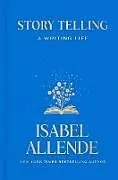
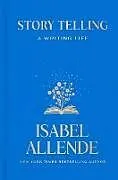
Story Telling
Beschreibung
A profound exploration of the art and magic of writing by In this deeply personal and insightful book, Isabel Allende delves into her creative process, reflecting on nearly half a century of writing that has captivated millions of readers worldwide. For Isabel...Format auswählen
- Fester EinbandCHF 26.30

Wird oft zusammen gekauft
Andere Kunden kauften auch
Beschreibung
A profound exploration of the art and magic of writing by In this deeply personal and insightful book, Isabel Allende delves into her creative process, reflecting on nearly half a century of writing that has captivated millions of readers worldwide. For Isabel, writing is more than a craft. It is an addiction, a means of preserving memory, and a way to make sense of life. She offers readers an intimate glimpse into her creative world, where stories take shape through intuition, discipline, and a deep connection to the human experience. It is also a glimpse into the life of a writer who views literature as a portal to understanding the chaos of life. <Story Telling< is not a prescriptive guide to writing. Rather, it is a conversation. In it, Isabel shares her triumphs, mistakes, and lessons learned from the challenges and joys of writing. She intertwines her own stories with invaluable wisdom for anyone pursuing the craft, making this book equally a memoir, a masterclass in the alchemy of storytelling, and a celebration of the enduring power of stories.
Autorentext
Isabel Allende
Klappentext
A profound exploration of the art and magic of writing by New York Times bestselling author Isabel Allende.
In this deeply personal and insightful book, Isabel Allende delves into her creative process, reflecting on nearly half a century of writing that has captivated millions of readers worldwide.
For Allende, writing is more than a craft. It is an addiction, a means of preserving memory, and a way to make sense of life. She offers readers an intimate glimpse into her creative world, where stories take shape through intuition, discipline, and deep connection to the human experience. It is also a glimpse into the life of a writer who views literature as a portal to understanding the chaos of life.
Story Telling is not a prescriptive guide to writing. Rather, it is a conversation. In it, Allende shares her triumphs, her mistakes, and the lessons learned through the challenges and joys of writing. She intertwines her own stories with invaluable wisdom for anyone pursuing the craft, making this book equally a memoir, a master class in the alchemy of storytelling, and a celebration of the enduring power of narrative.
Leseprobe
Chapter 1
The Magic of Storytelling
Writing has defined me. It is the framework through which I experience everything. It’s the lens through which I examine my presence in the world. With this in mind, I recently put aside other pending projects and started to think about the nature of storytelling. My books are my only contribution; each is an offering that I prepare with great care, hoping that it will be well received. Because of this, as I approach the end of my life, it seems important to write about . . . writing.
Reflecting on this subject is not difficult. Extracting universals from my work is, however. But I have been urged in this book not just to chronicle my own journey as a writer, but to try to pass along what I’ve learned that might help others. So, this is an invitation to explore this craft to which I have dedicated my life. Some of you may be interested in literature in general, others may look for advice. I hope the former will be entertained by my adventures as a writer, and the latter will lose the fear of the blank screen and allow joy to nurture their inspiration.
Literature is magical: Conjuring up a story is a mysterious process. It is organic, instinctive. To write I have to enter a dimension of dreams, intuition, premonition; I have to surrender, let the characters do what they must and allow the tale to tell itself. I spend most of my life in silence and alone, like a monk in his cell. Writing is like meditating. In solitude I remember, I hear voices and have visions. The quieter I am, the more I can hear and see. In the silence of writing sometimes I am visited by spirits—or are they the muses?—I feel them like a slight touch on the nape of the neck. Writing, I transform into a medium.
From the beginning of my writing life I was fortunate to have a mother who read my work. She was a tough critic. She belonged to a generation that practiced the art of writing in beautiful calligraphy, with correct grammar and spelling and elevated language. She and I also wrote letters to each other every day for most of our lives. Many of her letters are six or more handwritten pages with not a single correction, every sentence perfect. Our fanatic correspondence was not the common parlance of today’s communication. Now the world is visual; people use brief, terse messages, getting straight to the point. I try to remember my mother when I write. She cared about the choice of words; she wanted elegance, originality, irony. How I miss her red pencil!
After almost half a century writing fiction I have learned a few things about myself, because each book is a journey into memory and the soul, an exercise in introspection. Now I know my limitations and I forgive my mistakes more easily because I have a certain fondness for my old defects. Age has not made me wiser or calmer, it has not made me more amenable or less prone to fall in love, but it has given me a quiet happiness when I least expected it. I am not afraid of pain because I am stronger than I look, or of death because I have seen it up close. It is not a skeleton with a scythe but a kind lady who smells of gardenias and sits waiting for me in my garden. I only fear the moment when I will not be able to write anymore.
I have very little control over whatever happens to me—I have finally accepted this—so I have relaxed and I live day by day. That gives me a freedom I didn’t have when I was younger. I like the life I have had, and I regret only the pain that I may have caused to others. If I could start again, I would travel more or less the same road and I would certainly fight the same battles, especially those against the patriarchy. They have been a lot of fun! But I would try to start writing earlier.
It helps to have a twisted mind
Writing is not an option for me, it’s an addiction. I could phrase it more eloquently and say that it’s an attempt to make sense of the confusion of life and to preserve memory, but the truth is that if I didn’t write, my soul would shrivel. That’s why I have written so many books: I can’t stop. Along the roads I have traveled, memories are left behind and in time they disappear; what I don’t write is blown away by the wind.
The remote past is my sacred place of inspiration: the house of my grandparents where I grew up, the Spanish language with the Chilean accent of my childhood, the extraordinary women who raised me: my clairvoyant grandmother, my mother with her fierce love and her bright mind, the old nannies with whom I listened to radio soap operas in the kitchen. My childhood was not a happy one, it was a time of insecurity and fear, as it is for most children in the world, but I had the fabulous refuge of books.
My mother’s bachelor brothers also lived under my grandparents’ roof. Tío Pablo was a bookworm; he collected books and I remember him always reading, even at the table. He taught me to read very early on and gave me my first book: Scandinavian fairy tales, snow and ice. My other uncle, Tío Marcos, had a lot of fun torturing my brothers and me with his “rough games,” as he called them. For example, he would hang me upside down over the toilet and threaten to flush me.
I go back to those years over and over. I am hiding under the stairs of that large, somber, and drafty house, reading. My mother is suffering one of her terrible migraines and I am by her side praying that God will alleviate her pain. It’s a dark night and the Devil is in the wardrobe mirror w…