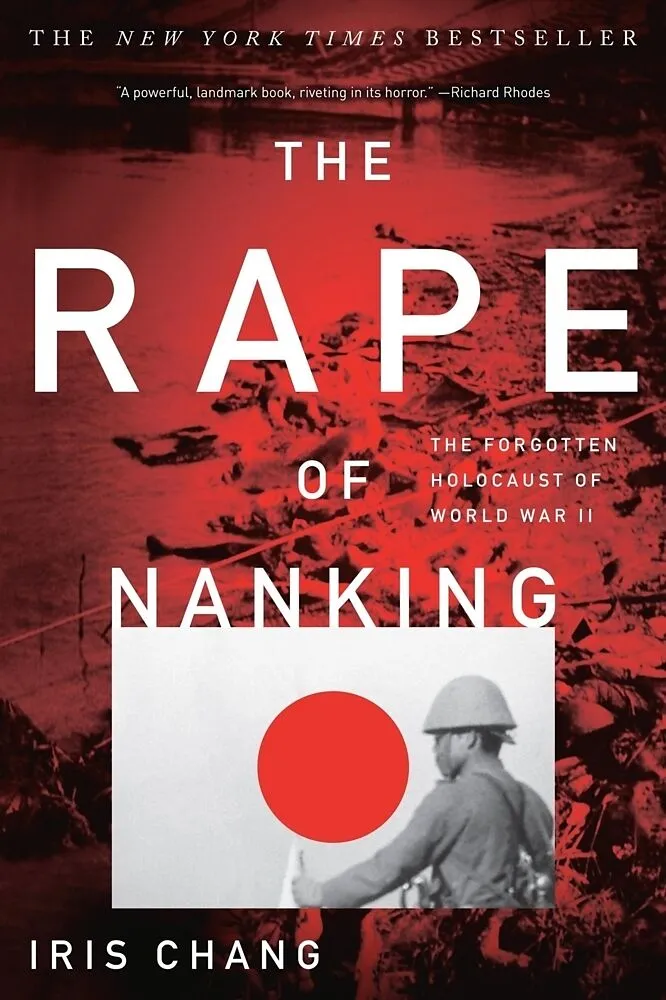
The Rape of Nanking
Beschreibung
Im Dezember 1937 eroberten japanische Truppen Nanking, die damalige Hauptstadt Chinas. In den folgenden Wochen war Nanking der Schauplatz eines der entsetzlichsten Massaker der modernen Kriegsgeschichte. In einer unbeschreiblichen Gewaltorgie vergewaltigte, ve...Format auswählen
- Kartonierter EinbandCHF 25.90

Wird oft zusammen gekauft
Andere Kunden kauften auch
Beschreibung
Im Dezember 1937 eroberten japanische Truppen Nanking, die damalige Hauptstadt Chinas. In den folgenden Wochen war Nanking der Schauplatz eines der entsetzlichsten Massaker der modernen Kriegsgeschichte. In einer unbeschreiblichen Gewaltorgie vergewaltigte, verstümmelte und ermordete das für seine Disziplin berühmte japanische Militär etwa 300 000 Männer, Frauen und Kinder.
Iris Chang schildert das Geschehen aus drei Perspektiven, der der japanischen Soldaten, der chinesischen Opfer und schließlich der Europäer und Amerikaner, die damals in Nanking lebten.
Informationen zum Autor Iris Chang (1968-2004) lived and worked in California. A graduate of the University of Illinois at Urbana, she was the recipient of the John T. and Catherine D. MacArthur Foundation's Program on Peace and International Cooperation award, as well as major grants from the National Science Foundation, the Pacific Cultural Foundation, and the Harry Truman Library. Klappentext This "New York Times" national bestseller recounts the forgotten story of the brutal massacre of 300,000 Chinese civilians by the Japanese army. "Anyone interested in the relation between war, self-righteousness, and the human spirit will find "The Rape of Nanking" of fundamental importance".--Ross Terrill, author of "China in Our Time". of photos. Vorwort The New York Times bestselling account of one of history's most brutal- and forgotten- massacres, when the Japanese army destroyed China's capital city on the eve of World War II. Zusammenfassung The New York Times bestselling account of one of history's most brutal- and forgotten- massacres, when the Japanese army destroyed China's capital city on the eve of World War II In December 1937, one of the most horrific atrocities in the long annals of wartime barbarity occurred. The Japanese army swept into the ancient city of Nanking (what was then the capital of China), and within weeks, more than 300,000 Chinese civilians and soldiers were systematically raped, tortured, and murdered. In this seminal work, Iris Chang, whose own grandparents barely escaped the massacre, tells this history from three perspectives: that of the Japanese soldiers, that of the Chinese, and that of a group of Westerners who refused to abandon the city and created a safety zone, which saved almost 300,000 Chinese. Drawing on extensive interviews with survivors and documents brought to light for the first time, Iris Chang's classic book is the definitive history of this horrifying episode. "Chang vividly, methodically, records what happened, piecing together the abundant eyewitness reports into an undeniable tapestry of horror." - Adam Hochschild, Salon ...
Vorwort
The New York Times bestselling account of one of history's most brutal- and forgotten- massacres, when the Japanese army destroyed China's capital city on the eve of World War II.
Autorentext
Iris Chang (1968–2004) lived and worked in California. A graduate of the University of Illinois at Urbana, she was the recipient of the John T. and Catherine D. MacArthur Foundation’s Program on Peace and International Cooperation award, as well as major grants from the National Science Foundation, the Pacific Cultural Foundation, and the Harry Truman Library.
Klappentext
*The New York Times* bestselling account of one of history's most brutal—and forgotten—massacres, when the Japanese army destroyed China's capital city on the eve of World War II
“Chang vividly, methodically, records what happened, piecing together the abundant eyewitness reports into an undeniable tapestry of horror.” —Adam Hochschild, Salon**
In December 1937, the Japanese army swept into the ancient city of Nanking. Within weeks, more than 300,000 Chinese civilians and soldiers were systematically raped, tortured, and murdered—a death toll exceeding that of the atomic blasts of Hiroshima and Nagasaki combined. Historian Iris Chang tells the story from three perspectives: that of the Japanese soldiers, that of the Chinese, and that of a group of Westerners who refused to abandon the city and created a safety zone that saved almost 300,000 Chinese.
 
More than just narrating the details of an orgy of violence, in The Rape of Nanking Chang analyzes the militaristic culture that fostered in the Japanese soldiers a total disregard for human life. It also tells of the concerted effort during the Cold War on the part of the West and even China to stifle open discussion of this atrocity. Drawing on extensive interviews with survivors and documents brought to light for the first time, Iris Chang’s classic is the definitive history of this horrifying episode.
Zusammenfassung
The New York Times bestselling account of one of history's most brutal-and forgotten-massacres, when the Japanese army destroyed China's capital city on the eve of World War II, "piecing together the abundant eyewitness reports into an undeniable tapestry of horror" (Adam Hochschild, Salon)