Haben Sie noch nichts passendes gefunden? Stöbern Sie durch unser komplettes Sortiment.
Oder melden Sie sich an bzw. registrieren Sie sich.


Beschreibung
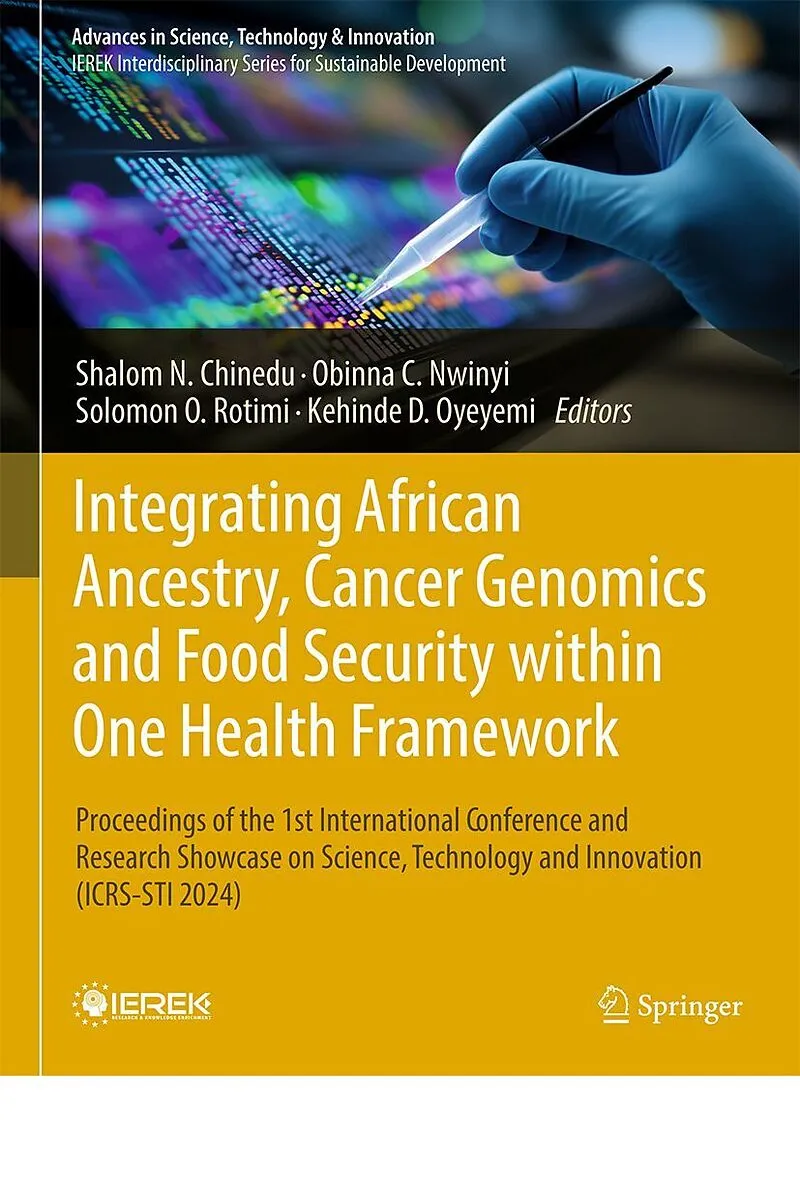
This book Integrating African Ancestry, Cancer Genomics and Food Security within One Health Framework is a collection of the few selected and thoroughly reviewed papers from the presented papers at the 1st International Conference and Research Showcase on Sci...
This book Integrating African Ancestry, Cancer Genomics and Food Security within One Health Framework is a collection of the few selected and thoroughly reviewed papers from the presented papers at the 1st International Conference and Research Showcase on Science, Technology and Innovation (ICRS-STI 2024). This book explores how African genetic diversity influences cancer susceptibility, progression, and treatment outcomes. The book emphasizes the intersections between human health, animal health, and environmental factors in cancer development and prevention. This book accesses the environmental and Dietary Impacts on Cancer and investigates how food systems, nutrition, and environmental exposures contribute to cancer risks in African populations. This book promotes the precision medicine in Africa, Highlighting the importance of incorporating African genomic data into cancer research for developing personalized and effective treatments. This book explores how improving food security and nutrition can mitigate cancer risks and enhance overall health outcomes. It provides strategies for integrating genomic research with public health policies to address cancer and food security challenges. It encourages collaboration among geneticists, public health experts, environmental scientists, and policymakers to develop holistic health solutions. This book title Integrating African Ancestry and Cancer Genomics within the One Health Framework: Advancing Food Security and Sustainable Health Solutions targets audiences include the health professionals, policy makers, and researchers within the developing and middle-income countries as well as those in the developed countries whose interests target Africa as a whole.
Explores genetic diversity and cancer risks Promotes precision medicine in Africa Examines dietary impacts on cancer
Autorentext
Shalom Nwodo Chinedu is a professor of Biochemistry at Covenant University and Chair, Covenant Health Research Ethics Committee (CHREC). He is a seasoned academic, researcher and university administrator, and has been actively engaged in university education since 1992. He currently teaches courses and supervises projects, dissertations, and theses for undergraduate and graduate students in Biochemistry and related fields. He also serves as an external examiner for undergraduate and postgraduate examinations and an assessor for professorial promotions and appointments to several local and foreign universities.
Obinna Chukwuemeka Nwinyi is a professor of Microbiology at Covenant University in Nigeria. His research interests are in Environmental Microbiology and Public Health, with a focus on Bioremediation of organic pollutants, food security, and organic and medicinal plant research. He served as a former Ag. Dean, School of Postgraduate Studies, Covenant University and Deputy Director, Research and Development, Covenant University, Ota. His academic awards and achievements include: Year 2021, 2nd prize winner for National PIN/RMRDC Institutional award in Nigeria; Winner, Professor Oyewale Tomori National Prize for Young Scientist in Microbiology in 2015; Fulbright Fellowship Award; Honorary Citizen of the great State of Nebraska, awarded by the Governor of Nebraska, USA.
Solomon Rotimi is a professor of Clinical Biochemistry and a visiting consultant at the Directorate of Research and Innovation, National Institute for Cancer Research and Treatment, Nigeria. He is an MPI on the US Department of Defence (DOD) award for the Establishment of an Inclusive Cancer Care Research Equity (iCCaRE) for Black Men Consortium and the applied research director at the World Bank-funded Covenant Applied Informatics and Communication Africa Centre of Excellence (CApIC-ACE). His research uses a cocktail of genomics, molecular, and bioinformatics tools to understand how genomics and environmental factors, including pathogens, nutrients, and xenobiotics, contribute to cancer disparities among Black people. He was a senior Fulbright Visiting Scholar at Dr John Carpten's Lab in the Department of Translational Genomics, Keck School of Medicine, the University of Southern California (USC), until August 2019.
Dr Kehinde D. Oyeyemi is a senior faculty member at Covenant University, Nigeria. He bagged B.Sc., M.Sc., and PhD in Applied Geophysics from the University of Calabar, University of Ibadan, and Covenant University, respectively. His research focuses on bringing solutions to challenges facing sustainable energy, water and the environment. He received the CSIS-TWAS-UNESCO postdoctoral fellowship award in 2022 to visit the CSIR-National Geophysical Research Institute in India. His current research interests include transboundary groundwater management and the development of sustainable groundwater use in Africa, food security with a special focus on smart solutions for precision agriculture, and climate change adaptation.
Inhalt
CAR T cells in solid tumors The breast cancer immunotherapy challenge.- Biomarkers of Prostate Cancer in African Black A Mini Review.- Antitumoral Effects of Short Chain Fatty Acids in Breast Cancer Cells A Mechanistic Perspective.- Deciphering the tumor microenvironment strategies to combat therapeutic resistance in cancer.- Impact of DARC/ACKR1 rs12075 SNP and Gene Expression on Cancer Prognosis A Scoping Review and Meta Analysis.- Case Control Study of Butyrylcholinesterase Activity in Nigerian Prostate Cancer Patients.- Assessing Ancestry Specific Genetic Markers and Vitamin D Levels in Nigerian Prostate Cancer The Case of ERCC6 and CYP17A1 Variants.- In Silico Discovery of Turmeric (Curcuma longa) Phytochemicals as EGLN1 Inhibitors IC50 Prediction and Molecular Docking Analysis.- Exploring the Role of MET Gene SNPs in Breast Cancer Susceptibility among Nigerian Women A Case-Control Study.- Assessment of Butyrylcholinesterase Activity in Nigerian Breast Cancer Patients.- Bioinformatics and Network Analysis Reveal Prognostic Molecular Signatures and Pathways in HER2 Breast Cancer Patients Treated with AT CMF Chemotherapy.- Microbial profile of the prostate tissue and expressed prostatic secretion associated with prostate cancer patients.- Molecular Docking of Fibroblast growth factor receptors (FGFRs) Inhibitors in Breast Cancer.- Investigating the Role of IGF1 and IGF1R Genetic Polymorphisms in Prostate Cancer Risk Among Nigerian Men.- Application of Computational tools in Medicinal Plant Studies.