Haben Sie noch nichts passendes gefunden? Stöbern Sie durch unser komplettes Sortiment.
Oder melden Sie sich an bzw. registrieren Sie sich.


Beschreibung
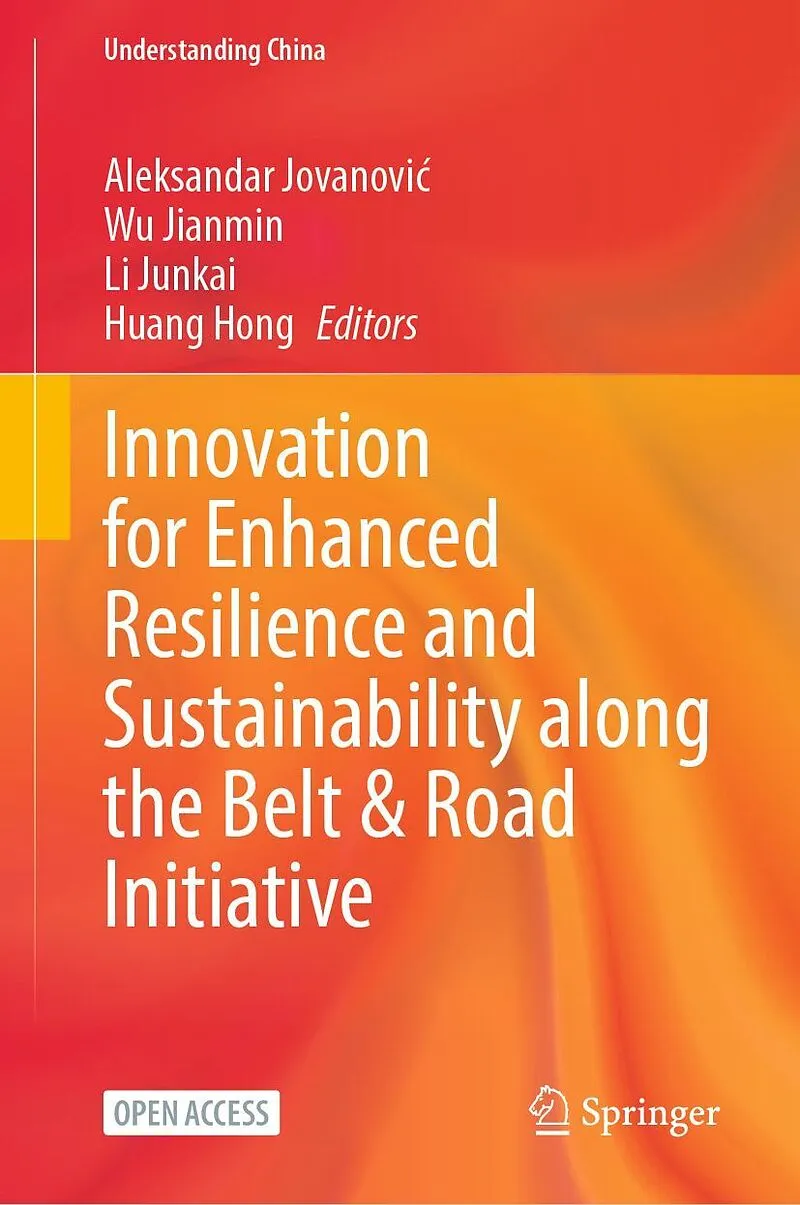
This open access book presents a comprehensive exploration of resilient innovation and innovation for resilience within the context of the PR China Belt & Road Initiative (BRI). By integrating insights from diverse stakeholders, it offers a fresh perspect...This open access book presents a comprehensive exploration of resilient innovation and innovation for resilience within the context of the PR China Belt & Road Initiative (BRI). By integrating insights from diverse stakeholders, it offers a fresh perspective on enhancing resilience through innovation while promoting sustainable practices and advanced innovation solutions for enhancing resilience..
The innovative approach proposes collaborative frameworks that leverage existing initiatives in standardization, research, and international cooperation as foundational elements for building resilience. This book aims to create a network of innovation centers along the BRI, fostering international collaboration and knowledge exchange.
Covering a wide range of innovation and resilience related topics, the content includes assessments, regulations, risk management, and the role of critical infrastructures and the society in enhancing resilience. It is designed for policymakers, researchers, and practitioners interested in the intersection of innovation, sustainability, and international cooperation.
Key features of the book include:
This book is open access, which means that you have free and unlimited access Offers a groundbreaking analysis of resilient innovation within the BRI, highlighting collaborative frameworks Pioneers a network approach to innovation centers along the BRI, emphasizing knowledge exchange and global collaboration Delivers actionable strategies for resilience in innovation, supported by case studies and expert insights
Autorentext
Aleksandar JOVANOVIC: CEO of the Steinbeis EU-VRi European Risk and Resilience Institute in Stuttgart, Germany, Advisor of the Zhongguancun Global High-Level Think Tank Alliance (ZGCTA), Beijing, China. He leads the EU-VRi institute that provides top-level expertise in the areas of risk and resilience assessment and management for private and public sector. His current focus is on resilience stress-testing, indicators and use of AI for enhancing resilience. He is a full professor at Steinbeis University and past visiting professor and Associate Member of ETH Zürich, Switzerland. He has coordinated over 150 large international projects, published over 150 papers and was convenor of 5 international (ISO), European (CEN) and national (DIN) standards. His previous assignments include academic and research work at Politecnico di Milano (Italy), Ecole Polytechnique (France), Universities of Tokyo (Japan), University of California La Jolla (USA), the European Commission (Belgium and Italy), Argonne Ntl. Lab. (USA), and other institutions. He has he worked in/for industry internationally.
WU Jianmin, President of Beijing Academy of Science and Technology (BJAST), Director-General of the Zhongguancun Global High-Level Think Tank Alliance (ZGCTA), Researcher, Ph.D. in Economics. He previously served as the Deputy Director of the Beijing Municipal Science and Technology Commission and the Deputy Director of the Management Committee of Beijing Huairou Science City. He has been engaged in long-term research consultation and organization implementation in the fields of strategic planning, laws and regulations, reform policies, and project management for scientific and technological innovation. He has led or participated in more than 20 national and provincial-level projects (research topics), published over 60 papers and research reports, and authored 5 monographs.
LI Junkai, Director of Center for International and Regional Cooperation of Beijing Academy of Science and Technology(BJAST), Secretary-General of the Zhongguancun Global High-Level Think Tank Alliance (ZGCTA), and Director of Training Center for "Belt and Road" International Sci-Tech Cooperation. She holds a Ph.D. in Management from Peking University and serves as a researcher and doctoral supervisor. She has been engaged in long-term scientific research and management in the fields of science and technology strategy, international cooperation, and regional economics. She has been granted approval for over 40 national and provincial key projects, published more than 100 papers, authored 28 academic books. She has written over 80 reports which have been adopted by government departments for internal references, with more than 40 receiving comments from central and provincial government leaders.
Huang HONG, professor and doctoral supervisor in the School of Safety Science at Tsinghua University. He holds a Ph.D. in Chemical System Engineering from the University of Tokyo, Japan. His research focuses on urban public safety, urban risk and vulnerability analysis, urban resilience, disaster prediction and numerical simulation, etc, where he has achieved several innovative results. He has published over 300 papers in important domestic and international academic journals, with more than 150 papers indexed by SCI/EI. Professor Huang has also received several honours, including: First Prize from China Association of Work Safety; First Prize from China Association for Public Safety, First Prize from the China Occupational Safety and Health Association Second Prize of the Beijing Municipal Science and Technology Award, Outstanding Paper Award from the Japanese Air Conditioning Society, Research Award from the Japan Wind Engineering Association.
Inhalt
Part I: The IRRI concept Innovation for enhancing Resilience & Resilience of Innovation.- Chapter 1. Innovation for resilience & resilience of innovation for Belt and Road Initiative (BRI).- Chapter 2. Resilient Innovation for Sustainable Development.- Chapter 3. Developing an international resilience capability to support China's Belt and Road Initiative.- Chapter 4. Theoretical Connotations and Enhancement Pathways of Supply Chain Resilience: International Practices and Strategies under the Belt and Road Initiative.- Chapter 5. International Science and Technology Innovation Policy Exchanges and Trainings in Promoting the Belt and Road Initiative: Practice and Enlightenment from the International Research and Training Center for Science and Technology Strategy (CISTRAT) under the Auspices of UNESCO.- Chapter 6. Potential Benefits for African Countries in Engaging with the Belt and Road Initiative (BRI).- Part II: Ensuring Resilience of Innovation along BRI: International initiatives, projects, regulations, standards.- Chapter 7. Research on Think Tank Alliance Promoting International Cooperation to Achieve Resilience and Sustainable Innovation.- Chapter 8. Innovation for Societal Resilience: shaping nexus narrative and solutions based on 'area, actors, and agency' triad.- Chapter 9. Citizen Preparedness as Foundation of Societal Resilience.- Chapter 10. With reference to Israel's practice in technology transfer: enhancing technology innovation resilience along the Belt and Road countries.- Chapter 11. Standardization and research instruments in support of the regulatory framework for the enhancement of the critical infrastructure resilience European case studies.- Chapter 12. Challenges for Critical Infrastructure Resilience in Small States: Ensuring End-to-End Supply Chain Security in Slovenia.- Part III: Innovation of Enhanced Resilience along BRI Technology, methods, tools.- Chapter 13. Analysis of…