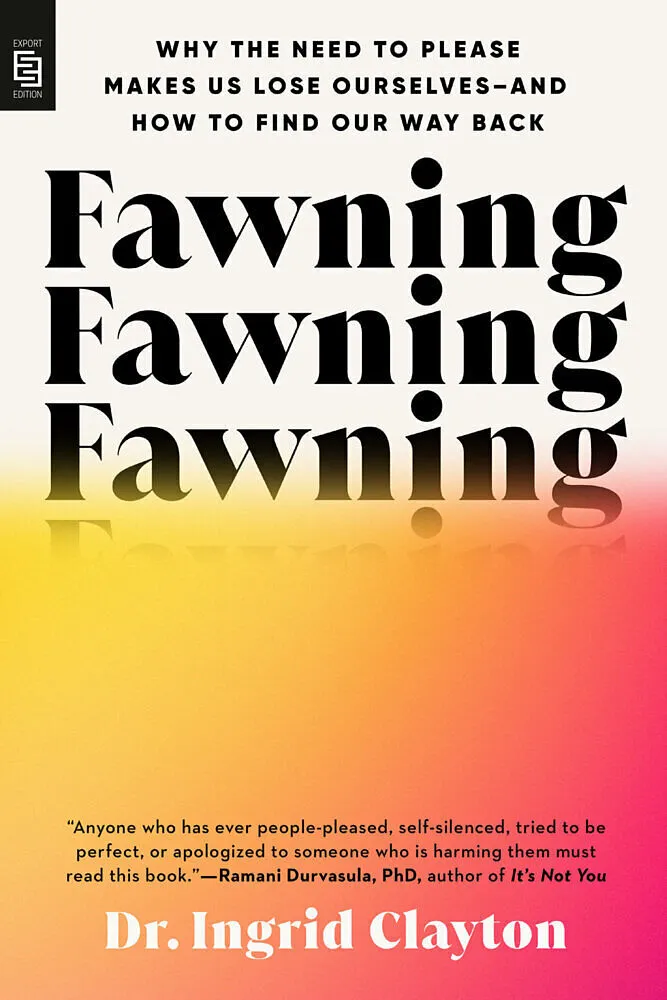
Fawning
Beschreibung
From a clinical psychologist and expert in complex trauma recovery comes a powerful guide introducing Most of us are familiar with the three Fs of trauma--flight, fight, or freeze. But psychologists have identified a fourth, extremely common (yet little-unders...Format auswählen
- Kartonierter EinbandCHF 22.70

Wird oft zusammen gekauft
Andere Kunden kauften auch
Beschreibung
From a clinical psychologist and expert in complex trauma recovery comes a powerful guide introducing Most of us are familiar with the three Fs of trauma--flight, fight, or freeze. But psychologists have identified a fourth, extremely common (yet little-understood) response: fawning. Often conflated with “codependency” or “people pleasing,” fawning occurs when we inexplicably draw Fawning explains why we stay in bad jobs, fall into unhealthy partnerships, and seek out dysfunctional environments, even when it seems so obvious to others that we should go. And fawning The good news: we can break the pattern of chronic fawning for good, once we see it for the trauma response it is. Drawing on twenty years of clinical psychology work--as well as a lifetime of experience as a recovering fawner herself--Dr. Ingrid Clayton has written a groundbreaking book that brings this emerging concept into the mainstream conversation. Readers will learn WHY we fawn, HOW to recognize the signs of fawning (including taking blame, conflict avoidance, hypervigilance, and caretaking at the expense of ourselves), and WHAT we can do to successfully “unfawn” and finally be ourselves, in all our imperfect perfection. A landmark book full of empathy and understanding, <Fawning< offers trauma survivors the vocabulary to discuss their experiences--and, in so doing, gives them the tools to finally heal.
Autorentext
Ingrid Clayton is a licensed clinical psychologist with a master's in transpersonal psychology and a Ph.D. in clinical psychology. She’s had a thriving private practice for over fifteen years and is a regular contributor to Psychology Today where her blog, “Emotional Sobriety,” has received more than 1 million views. She lives in Los Angeles, California.
Leseprobe
· One ·
The Fourth F
What Is Fawning?
When I was thirteen years old, I loved sitting outside in the hot tub at night. We lived in Aspen, Colorado, and when the lights from the house were turned off, I could easily identify the constellations in the vast dark sky.
One night my stepdad Randy came to join me. His legs were like tree trunks as he stomped across the deck, commanding my attention. I watched as he stepped into the tub, his shorts puffing up with air before sinking into the darkness. Then I went back to stargazing, wondering which version of him I was getting: the one who seemed to despise me, correcting my every move, or the guy who gave off the appearance of being charming and kind.
Only a year earlier, Randy had gone from being my dad's best friend to my mom's husband, and shortly thereafter he had moved us to this remote mountain town. I was still absorbing the shock, isolated from friends and family in this strange new place. I quickly memorized the local tavern's phone number, as the bartenders often confirmed our parents' whereabouts. This allowed my brother, stepbrother, and me to prepare for the unpredictability that often erupted when they returned home.
The rules of this new household were arbitrary, based on Randy's mood and ever-changing. New standards erupted on the spot. No matter how hard I tried to follow them, it was impossible. And when I didn't, I was grounded-unable to leave the house for months while he gave me the silent treatment.
But now, in the hot tub, he wasn't ignoring or criticizing me. His mood seemed pleasant, and it was a relief. "I bet you wish you could live up there with the stars, huh?" Randy laughed a little, but he wasn't laughing at me. It was like he was acknowledging: I know you wish you weren't here-with me-and that's okay. Speaking to that truth was disarming. It felt like maybe we could be real with each other. My hard shell softened against the jets, and I gave a little giggle while poking at my braces with my tongue.
"Why don't you come sit on my lap so you don't have to crank your neck?" Randy motioned that I could rest my head against his chest while looking up at the sky. More than anything, after the precarity of the last year, I wanted to feel cared for. I wanted a happy family. I perceived his invitation as an olive branch of stepfatherly love.
I drifted over to his side of the tub, sat in his lap, and leaned back so that my head rested on his upper chest. My toes peeked out of the bubbling water, while his arms anchored me in place. My guard came down even further as I felt tethered, seen, and appreciated.
"I like being this close to you," Randy said as his hands lightly squeezed my hips. "I'm so glad you don't seem to mind."
My body tensed as my thoughts raced. Why would he say that? What does he mean? I immediately felt the implication of his words, hovering over the energy of his hands, and knew I probably should mind. But I also knew I had to walk a fine line. I didn't want to get in trouble-provoking the version of him that terrified me. So, I responded carefully, keeping my voice thin as the mountain air, "Why would I mind?"
As I waited for Randy's answer in the hot tub, the prickliness of his body hair felt like needles on my skin. The water was creating a suction between us, and I felt trapped. I held my body as still as possible.
"Some girls are uptight," he said. "They might want more personal space from the men in their lives." He paused and then continued: "I'm glad you aren't like them and that we can be this close."
This moment changed everything. At least it changed something in me. It was the first time I felt unsafe with Randy while he was seemingly being kind. All the other times I felt unsafe, he was aggressive and mean. It felt chaotic. But in this moment, his voice was soft and steady. He appeared gentle. Yet I had a conscious sense in my body that he wasn't saying the whole truth. Something was deeply wrong.
If I could slow it down, it's as though my psyche were split in two. On the one hand, I was afraid. I was thirteen, just a child, sensing a threat to my sense of safety. On the other hand, I had to filter my fear through the power dynamics in the hot tub. This was, after all, the adult authority figure in my life. From the minute Randy had moved in with us, my mom's small frame had slipped into his shadow. Her limbs moved only when his did, her words formed only when she'd heard him say them before. I was constantly wondering where my mom was, even when she was standing right in front of me. Randy was in charge, and we all needed to stay on his good side.
So what did I do next? While we typically think of fight, flight, or freeze as responses to threat, my body instinctively knew that these reflexes were not available.
Fighting wasn't really an option. First of all, Randy wasn't being overtly hostile, so there was nothing to fight against. Rather, he was grooming me-emotionally manipulating me-and it was effective. I began to second-guess myself, wondering if this was possibly as innocuous as he was portraying. Additionally, Randy was twice my size. Although I'd never witnessed physical violence between him and my mom, I'd seen her bruises. Fighting would have been dangerous.
Fleeing is, of course, also impossible for most children. Where are we meant to run? To whom? We humans are reliant on our caregivers for longer than any other species, needing the adults in our lives to survive. I was far from my friends and family. I had nowhere else safe to go.
Freezing is a common trauma response, but in this situation my body didn't freeze-at least not completely. I had to continue navigating this situation with some presence of mind. I sensed that if I followed his cues, I could likely maintain his affection without making things worse. I didn't feel safe, but I had to pretend otherwise. I did not like him, but I needed him to like me.
So my body found another option. In the hot tub alone with my stepfather, I was terrified, but I acted…