Beschreibung
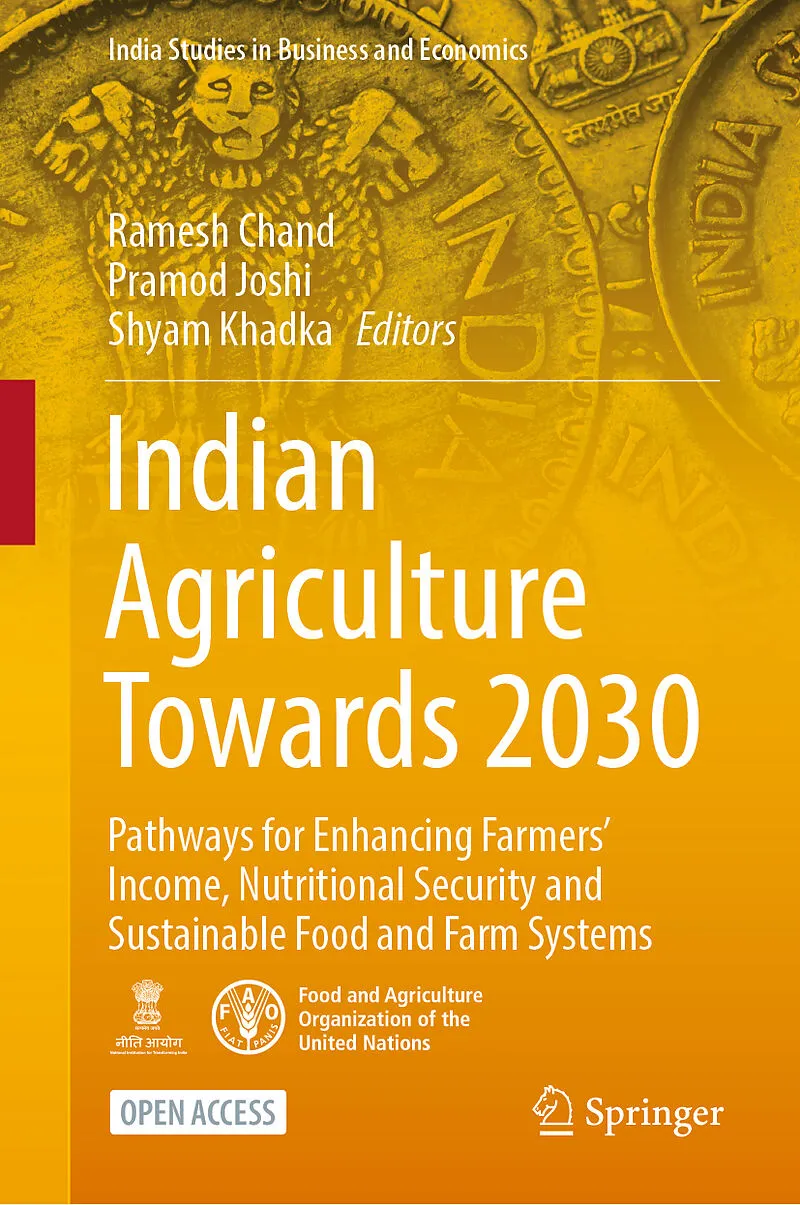
This open access book brings together varying perspectives for transformational change needed in India's agriculture and allied sectors. Stressing the need of thinking for a post-Green Revolution future, the book promotes approaching this change through eight...This open access book brings together varying perspectives for transformational change needed in India's agriculture and allied sectors. Stressing the need of thinking for a post-Green Revolution future, the book promotes approaching this change through eight broad areas, indicating the policy shifts needed to meet the challenges for the coming decade (2021-2030).
The book comprises of ten contributions. Apart from the overview chapter on transformational change and the concluding chapter on pathways for 2030, there are eight thematic chapters on topics such as transforming Indian agriculture, dietary diversity for nutritive and safe food; climate crisis and risk management; water in agriculture; pests, pandemics, preparedness and biosecurity natural farming; agroecology and biodiverse futures; science, technology and innovation in agriculture; and structural reforms and governance. The writing style of these papers written by technical experts is forward-lookingnot merely an analysis of what has been and why it was so, but what ought to be.
This is an essential reading for those interested in agriculture, food and nutrition sectors of India, and more so their interconnectedness.
This book is open access, which means that you have free and unlimited access
Provides multiple perspectives on agri-issues by a set of renowned authors
Focuses on the transformative shift needed for Indian agriculture in the next decade (20212030)
Promotes approaching this change through eight broad areas
Autorentext
Prof. Ramesh Chand is currently Member-Agriculture of the National Institution for Transforming India, better known as the NITI Aayog (in the rank and status of Union Minister of State). He has a Ph.D. in Agricultural Economics from Indian Agricultural Research Institute (IARI), New Delhi. He is Fellow, National Academy of Agricultural Sciences and Indian Society of Agricultural Economics. He has been involved in policy formulation for agriculture sector for the last two decades. Prior to joining NITI Aayog, he was ICAR National Professor and Director, National Institute of Agricultural Economics and Policy Research, New Delhi. Dr. Pramod Joshi superannuated as Director-South Asia, International Food Policy Research Institute, Washington DC. Prior to this, he was holding the positions of Director, ICAR-National Academy of Agricultural Research Management, and Director of the ICAR-National Centre of Agricultural Economics and Policy Research. He has extensively worked toward transforming agriculture and market integration in India, and many south and Southeast Asian countries. Presently, he is President of the Agricultural Economics Research Association and Secretary of the National Academy of Agricultural Sciences. Mr. Shyam Khadka has extensive experience in strategizing, designing, implementing, monitoring, and evaluating a wide range of policies, programs, and projects aimed at developing agriculture, ensuring food and nutrition security, and reducing poverty. After working in the Agricultural Development Bank of Nepal for 17 years, he spent 25 years in the UN system working first in UNOPS and IFAD covering a wide range of countries in East, South, and South-East Asia and then as Chief of Asia and Pacific Service of the Investment Centre at FAO Headquarters. After serving as FAO Representative in India for 3 years, he retired in 2018 and now lives in Kathmandu, Nepal.
Inhalt
Chapter 1. Transformational Change.- Chapter 2. Transforming Indian Agriculture.- Chapter 3. Dietary Diversity for Nutritive and Safe food.- Chapter 4. Climate Crisis and Risk Management.- Chapter 5. Water in Agriculture.- Chapter 6. Pests, Pandemics, Preparedness and Biosecurity.- Chapter 7. Natural Farming, Agroecology and Biodiverse Futures.- Chapter 8. Science, Technology and Innovation.- Chapter 9. Structural Reforms and Governance.- Chapter 10. Pathways for 2030.