
IHR WARENKORB IST AKTUELL LEER.
Haben Sie noch nichts passendes gefunden? Stöbern Sie durch unser komplettes Sortiment.
Oder melden Sie sich an bzw. registrieren Sie sich.
- Kostenlose Lieferung
- Kauf auf Rechnung
- Ex Libris Tiefpreis
- Filiallieferung und 650+ Abholorte
- Rabatt-Bons als Club-Mitglied
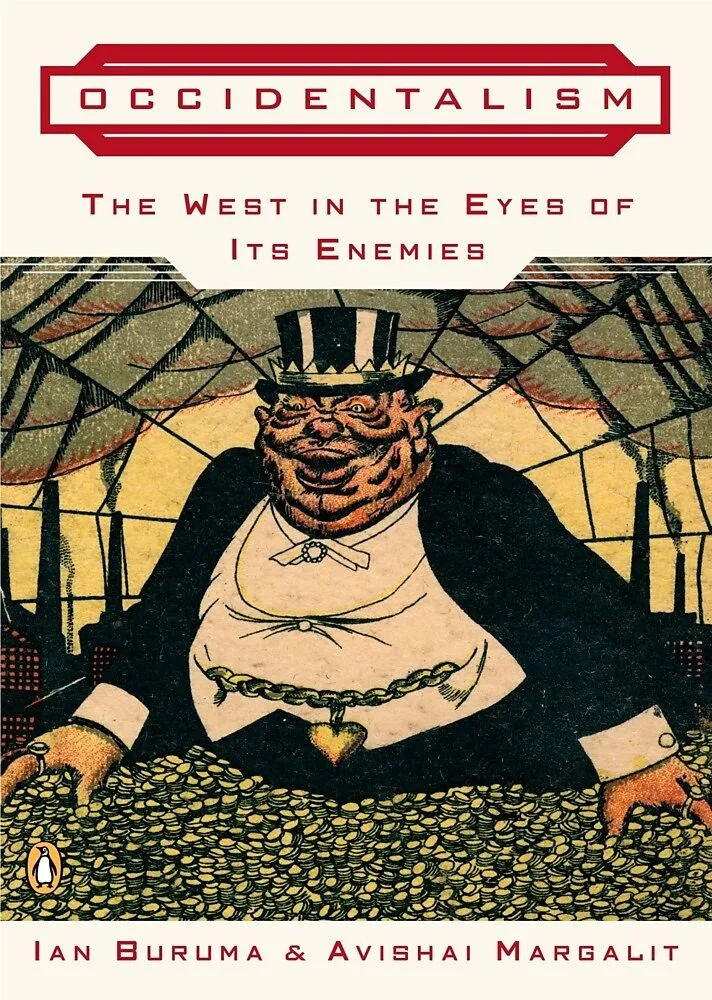

Occidentalism
Beschreibung
Zusatztext "Succinct! elegant! and challenging..." The Economist "A useful primer on the habits of mind that drive our most implacable foes.... Accurate and fair-minded." The New York Times Informationen zum Autor Ian Buruma is currently Luce Professor at Bard...Format auswählen
- Kartonierter EinbandCHF 30.00
Wird oft zusammen gekauft
Andere Kunden kauften auch
Beschreibung
Zusatztext "Succinct! elegant! and challenging..." The Economist "A useful primer on the habits of mind that drive our most implacable foes.... Accurate and fair-minded." The New York Times Informationen zum Autor Ian Buruma is currently Luce Professor at Bard College. His previous books include God's Dust , Behind the Mask , The Missionary & The Libertine , Playing the Game , The Wages of Guilt , Anglomania , and Bad Elements . He writes frequently for The New York Review of Books , The New York Times Magazine , The New Yorker , and the Financial Times . Avishai Margalit is Schulman Professor of Philosophy at the Center for Rationality at the Hebrew University in Jerusalem. His previous books include Idolatry , The Decent Society , Views and Reviews , and The Ethics of Memory . Klappentext Twenty-five years ago, Edward Said's Orientalism spawned a generation of scholarship on the denigrating and dangerous mirage of "the East" in the Western colonial mind. But "the West" is the more dangerous mirage of our own time, Ian Buruma and Avishai Margalit argue, and the idea of "the West" in the minds of its self-proclaimed enemies remains largely unexamined and woefully misunderstood. Occidentalism is their groundbreaking investigation of the demonizing fantasies and stereotypes about the Western world that fuel such hatred in the hearts of others. We generally understand "radical Islam" as a purely Islamic phenomenon, but Buruma and Margalit show that while the Islamic part of radical Islam certainly is, the radical part owes a primary debt of inheritance to the West. Whatever else they are, al Qaeda and its ilk are revolutionary anti-Western political movements, and Buruma and Margalit show us that the bogeyman of the West who stalks their thinking is the same one who has haunted the thoughts of many other revolutionary groups, going back to the early nineteenth century. In this genealogy of the components of the anti-Western worldview, the same oppositions appear again and again: the heroic revolutionary versus the timid, soft bourgeois; the rootless, deracinated cosmopolitan living in the Western city, cut off from the roots of a spiritually healthy society; the sterile Western mind, all reason and no soul; the machine society, controlled from the center by a cabal of insiders-often Jews-pulling the hidden levers of power versus an organically knit-together one, a society of "blood and soil." The anti-Western virus has found a ready host in the Islamic world for a number of legitimate reasons, they argue, but in no way does that make it an exclusively Islamic matter. A work of extraordinary range and erudition, Occidentalism will permanently enlarge our collective frame of visionIn July 1942, just six months after the Japanese bombed the American fleet in Pearl Harbor and overwhelmed the Western powers in Southeast Asia, a number of distinguished Japanese scholars and intellectuals gathered for a conference in Kyoto. Some were literati of the so-called Romantic group; others were philosophers of the Buddhist/ Hegelian Kyoto school. Their topic of discussion was how to overcome the modern. It was a time of nationalist zeal, and the intellectuals who attended the conference were all nationalists in one way or another; but oddly enough the war itself, in China, Hawaii, or Southeast Asia, was barely mentioned. At least one of the members, Hayashi Fusao, a former- Marxist-turned-ardent-nationalist, later wrote that the assault on the West had filled him with jubilation. Even though he was in freezing Manchuria when he heard the news, it felt as though dark clouds had lifted to reveal a clear summer sky. No doubt similar emotions came over many of his colleagues, but war propaganda was not the ostensible point of the conference. These men, the li...
"Succinct, elegant, and challenging..." —The Economist "A useful primer on the habits of mind that drive our most implacable foes.... Accurate and fair-minded." —The New York Times
Autorentext
Ian Buruma is currently Luce Professor at Bard College. His previous books include God's Dust, Behind the Mask, The Missionary & The Libertine, Playing the Game, The Wages of Guilt, Anglomania, and Bad Elements. He writes frequently for The New York Review of Books, The New York Times Magazine, The New Yorker, and the Financial Times.
Avishai Margalit is Schulman Professor of Philosophy at the Center for Rationality at the Hebrew University in Jerusalem. His previous books include Idolatry, The Decent Society, Views and Reviews, and The Ethics of Memory.
Klappentext
Twenty-five years ago, Edward Said's Orientalism spawned a generation of scholarship on the denigrating and dangerous mirage of "the East" in the Western colonial mind. But "the West" is the more dangerous mirage of our own time, Ian Buruma and Avishai Margalit argue, and the idea of "the West" in the minds of its self-proclaimed enemies remains largely unexamined and woefully misunderstood. Occidentalism is their groundbreaking investigation of the demonizing fantasies and stereotypes about the Western world that fuel such hatred in the hearts of others.
We generally understand "radical Islam" as a purely Islamic phenomenon, but Buruma and Margalit show that while the Islamic part of radical Islam certainly is, the radical part owes a primary debt of inheritance to the West. Whatever else they are, al Qaeda and its ilk are revolutionary anti-Western political movements, and Buruma and Margalit show us that the bogeyman of the West who stalks their thinking is the same one who has haunted the thoughts of many other revolutionary groups, going back to the early nineteenth century. In this genealogy of the components of the anti-Western worldview, the same oppositions appear again and again: the heroic revolutionary versus the timid, soft bourgeois; the rootless, deracinated cosmopolitan living in the Western city, cut off from the roots of a spiritually healthy society; the sterile Western mind, all reason and no soul; the machine society, controlled from the center by a cabal of insiders-often Jews-pulling the hidden levers of power versus an organically knit-together one, a society of "blood and soil." The anti-Western virus has found a ready host in the Islamic world for a number of legitimate reasons, they argue, but in no way does that make it an exclusively Islamic matter.
A work of extraordinary range and erudition, Occidentalism will permanently enlarge our collective frame of vision
Zusammenfassung
Twenty-five years ago, Edward Said's Orientalism spawned a generation of scholarship on the denigrating and dangerous mirage of "the East" in the Western colonial mind. But "the West" is the more dangerous mirage of our own time, Ian Buruma and Avishai Margalit argue, and the idea of "the West" in the minds of its self-proclaimed enemies remains largely unexamined and woefully misunderstood. Occidentalism is their groundbreaking investigation of the demonizing fantasies and stereotypes about the Western world that fuel such hatred in the hearts of others.
We generally understand "radical Islam" as a purely Islamic phenomenon, but Buruma and Margalit show that while the Islamic part of radical Islam certainly is, the radical part owes a primary debt of inheritance to the West. Whatever else they are, al Qaeda and its ilk are revolutionary anti-Western political movements, and Buruma and Margalit show us that the bogeyman of the West who stalks their thinking is the same one who has haunted the thoughts of many other revolutionary groups, going back to the early nineteenth century. In this genealogy of the components of the anti-Western worldview, the same oppositions appear again and again: the heroic revolutionary versus the timid, soft bourgeois; the rootless, deracinated cosmopolitan living in the Wester…