Beschreibung
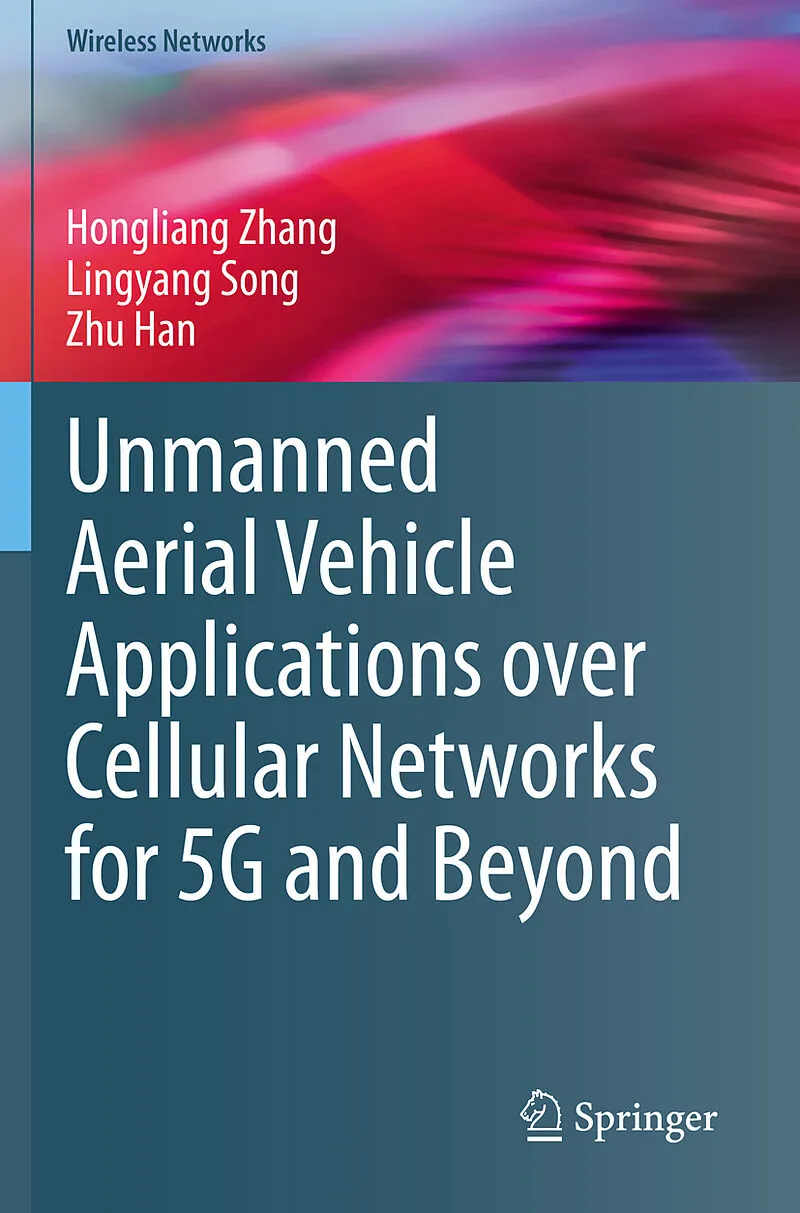
This book discusses how to plan the time-variant placements of the UAVs served as base station (BS)/relay, which is very challenging due to the complicated 3D propagation environments, as well as many other practical constraints such as power and flying speed....This book discusses how to plan the time-variant placements of the UAVs served as base station (BS)/relay, which is very challenging due to the complicated 3D propagation environments, as well as many other practical constraints such as power and flying speed. Spectrum sharing with existing cellular networks is also investigated in this book. The emerging unmanned aerial vehicles (UAVs) have been playing an increasing role in the military, public, and civil applications. To seamlessly integrate UAVs into future cellular networks, this book will cover two main scenarios of UAV applications as follows. The first type of applications can be referred to as UAV Assisted Cellular Communications.
Second type of application is to exploit UAVs for sensing purposes, such as smart agriculture, security monitoring, and traffic surveillance. Due to the limited computation capability of UAVs, the real-time sensory data needs to be transmitted to the BS for real-time data processing. The cellular networks are necessarily committed to support the data transmission for UAVs, which the authors refer to as Cellular assisted UAV Sensing. To support real-time sensing streaming, the authors design joint sensing and communication protocols, develop novel beamforming and estimation algorithms, and study efficient distributed resource optimization methods.
This book targets signal processing engineers, computer and information scientists, applied mathematicians and statisticians, as well as systems engineers to carve out the role that analytical and experimental engineering has to play in UAV research and development. Undergraduate students, industry managers, government research agency workers and general readers interested in the fields of communications and networks will also want to read this book.
Provides an introduction to the UAV paradigm, from 5G and beyond communication perspective, which currently has attracted plenty of attentions from both academia and industrial sides Introduces the key methods, including optimization, game, and graph theory, for UAV applications, in a comprehensive way Discusses the state-of-the-art for cellular network assisted UAV sensing, and many examples are illustrated in detail to provide a wide scope for general readers
Autorentext
Hongliang Zhang (S'15-M'19) received the B.S. and Ph.D. degrees at the School of Electrical Engineering and Computer Science at Peking University, in 2014 and 2019, respectively. He was a Postdoctoral Fellow in the Electrical and Computer Engineering Department at the University of Houston, Texas from Jul. 2019 to Jul. 2020. Currently, he is a Postdoctoral Associate in the Department of Electrical Engineering at Princeton University, New Jersey. His current research interest includes reconfigurable intelligent surfaces, aerial access networks, and game theory. He received the best doctoral thesis award from Chinese Institute of Electronics in 2019. He is an exemplary reviewer for IEEE Transactions on Communications in 2020. He has served as a TPC Member for many IEEE conferences, such as Globecom, ICC, and WCNC. He is currently an Editor for IET Communications and Frontiers in Signal Processing. He also serves as a Guest Editor for IEEE IoT-J special issue on Internetof UAVs over Cellular Networks. Boya Di (S'17-M'19) received the B.S. degree in electronic engineering from Peking University, in 2014, and the Ph.D. degree from the Department of Electronics, Peking University, China, in 2019. She currently works as a Post-Doctoral Researcher with Imperial College London. Her research interests include reconfigurable intelligent surfaces, multi-agent systems, and edge computing. One of her journal papers is currently listed as ESI highly cited articles. She serves as an Associate Editor of the IEEE TRANSACTIONS ON VEHICULAR TECHNOLOGY. Lingyang Song (S'03-M'06-SM'12-F'19) received his PhD from the University of York, UK, in 2007, where he received the K. M. Stott Prize for excellent research. He worked as a research fellow at the University of Oslo, Norway until rejoining Philips Research UK in March 2008. In May 2009, he joined the School of Electronics Engineering and Computer Science, Peking University, and is now a Boya Distinguished Professor. His main research interests include wireless communications, mobile computing, and machine learning. Dr. Song is the co-author of many awards, including IEEE Leonard G. Abraham Prize in 2016, IEEE ICC 2014, IEEE ICC 2015, IEEE GlobeCom 2014, and the best demo award in the ACM Mobihoc 2015. Dr. Song received National Science Fund for Distinguished Young Scholars in 2017, First Prize in Nature Science Award of Ministry of Education of China in 2017. Dr. Song has served as a Distinguished Lecturer of IEEE Communications Society (2015-2018), an Area Editor of IEEE Transactions on Vehicular Technology (2019-), Co-chair of IEEE Communications Society Asia Pacific Board Technical Affairs Committee (2020-). Dr. Song is a Clarivate Analytics Highly Cited Researcher. Zhu Han (S'01-M'04-SM'09-F'14) received the B.S. degree in electronic engineering from Tsinghua University, in 1997, and the M.S. and Ph.D. degrees in electrical engineering from the University of Maryland, College Park, in 1999 and 2003, respectively. From 2000 to 2002, he was an R&D Engineer of JDSU, Germantown, Maryland. From 2003 to 2006, he was a Research Associate at the University of Maryland. From 2006 to 2008, he was an assistant professor in Boise State University, Idaho. Currently, he is a Professor in Electrical and Computer Engineering Department as well as Computer Science Department at the University of Houston, Texas. His research interests include wireless resource allocation and management, wireless communications and networking, game theory, wireless multimedia, security, and smart grid communication. Dr. Han received an NSF Career Award in 2010, the Fred W. Ellersick Prize of the IEEE Communication Society in 2011, the EURASIP Best Paper Award for the Journal on Advances in Signal Processing in 2015, and several best paper awards in IEEE conferences. Dr. Han is top 1% highly cited researcher according to Web of Science since 2017, and AAAS fellow since2019.
Inhalt
1 Overview of 5G and Beyond Communications.- 2 Basic Theoretical Background.- 3 UAV Assisted Cellular Communications.- 4 Cellular Assisted UAV Sensing.