
IHR WARENKORB IST AKTUELL LEER.
Haben Sie noch nichts passendes gefunden? Stöbern Sie durch unser komplettes Sortiment.
Oder melden Sie sich an bzw. registrieren Sie sich.
- Kostenlose Lieferung
- Kauf auf Rechnung
- Ex Libris Tiefpreis
- Filiallieferung und 650+ Abholorte
- Rabatt-Bons als Club-Mitglied
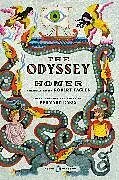
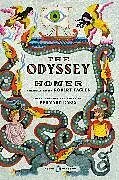
The Odyssey
Beschreibung
The Odyssey is literature''s grandest evocation of every man''s journey through life. In the myths and legends that are retold here, renowned translator Robert Fagles has captured the energy and poetry of Homer''s original in a bold, contemporary idiom and giv...Format auswählen
- Fester EinbandCHF 42.80
Wird oft zusammen gekauft
Andere Kunden kauften auch
Beschreibung
The Odyssey is literature''s grandest evocation of every man''s journey through life. In the myths and legends that are retold here, renowned translator Robert Fagles has captured the energy and poetry of Homer''s original in a bold, contemporary idiom and given us an edition of The Odyssey to read aloud, to savor, and to treasure for its sheer lyrical mastery. This is an edition to delight both the classicist and the general reader, and to captivate a new generation of Homer''s students.
Autorentext
Homer was the poet who the Greeks believed singularly composed The Iliad and The Odyssey. Nothing is known of his life. While seven Greek cities claim the honor of being his birthplace, ancient tradition places him in Ionia, located in the eastern Aegean coast. His birthdate is undocumented as well, though most modern scholars place the composition of The Iliad and The Odyssey in the late eighth or early seventh century B.C.
Robert Fagles (1933-2008) was the Arthur W. Marks ’19 Professor of Comparative Literature, Emeritus, at Princeton University. He received a National Humanities Medal in 2006 and won the Harold Morton Landon Translation Award from The Academy of American Poets twice, once for Homer’s The Iliad in 1991 and then again in 2007 for The Aeneid. His translations of Sophocles’s The Three Theban Plays, Aeschylus’s The Oresteia (nominated for a National Book Award), The Iliad (which also won an award from The Translation Center of Columbia University), and Homer’s The Odyssey are all published in Penguin Classics.
Bernard Knox (1914-2010) was Director Emeritus of Harvard’s Center for Hellenic Studies in Washington, D.C. He won the 1976-77 George Jean Nathan Award for Dramatic Criticism and the 1990 PEN/Spielvogel-Diamonstein Award for Essays Ancient and Modern. Knox fought in the Spanish Civil War and World War II; France decorated him with the Croix de Guerre for special operations behind German lines in 1944, and the US Army awarded him two Bronze Stars for combat in Italy. He also edited The Norton Book of Classical Literature, and collaborated with Robert Fagles on The Iliad, The Odyssey, The Aeneid, and The Three Theban Plays.
Klappentext
**The great epic of Western literature, translated by the acclaimed classicist Robert Fagles, hailed as “the best living translator of ancient Greek drama, lyric poetry, and epic into modern English” (Garry Wills, The New Yorker)
Now a major motion picture directed by Christopher Nolan
A Penguin Classics Hardcover**
“Sing to me of the man, Muse, the man of twists and turns driven time and again off course, once he had plundered the hallowed heights of Troy.” So begins Robert Fagles’s magnificent translation of The Odyssey, literature's grandest evocation of an everyman's journey through life. Odysseus’s reliance on his wit and wiliness for survival against divine and natural forces on his ten-year voyage home to Ithaca after the Trojan War is at once a timeless human story and an individual test of moral endurance.
Robert Fagles’s translation of The Odyssey, enhanced with maps, genealogy tables, and pronunciation guides, has been the touchstone translation of Homer’s epic for millions of readers. In the myths and legends retold here, Fagles has captured the energy and poetry of Homer’s original in a bold, contemporary idiom, and given us an Odyssey to read aloud, to savor, and to treasure for its sheer lyrical mastery. With an introduction and textual commentary by renowned classicist Bernard Knox, the Fagles translation of The Odyssey will continue to captivate the general reader and scholar alike.
Penguin Classics is the leading publisher of classic literature in the English-speaking world, representing a global bookshelf of the best works throughout history and across genres and disciplines. Readers trust the series to provide authoritative texts enhanced by introductions and notes by distinguished scholars and contemporary authors, as well as up-to-date translations by award-winning translators.
Leseprobe
I
Athene Visits Telemachus
Tell me, Muse, the story of that resourceful man who was driven to wander far and wide after he had sacked the holy citadel of Troy. He saw the cities of many people and he learnt their ways. He suffered great anguish on the high seas in his struggles to preserve his life and bring his comrades home. But he failed to save those comrades, in spite of all his efforts. It was their own transgression that brought them to their doom, for in their folly they devoured the oxen of Hyperion the Sun-god and he saw to it that they would never return. Tell us this story, goddess daughter of Zeus, beginning at whatever point you will.
All the survivors of the war had reached their homes by now and so put the perils of battle and the sea behind them. Odysseus alone was prevented from returning to the home and wife he yearned for by that powerful goddess, the Nymph Calypso, who longed for him to marry her, and kept him in her vaulted cave. Not even when the rolling seasons brought in the year which the gods had chosen for his homecoming to Ithaca was he clear of his troubles and safe among his friends. Yet all the gods pitied him, except Poseidon, who pursued the heroic Odysseus with relentless malice till the day when he reached his own country.
Poseidon, however, was now gone on a visit to the distant Ethiopians, in the most remote part of the world, half of whom live where the Sun goes down, and half where he rises. He had gone to accept a sacrifice of bulls and rams, and there he sat and enjoyed the pleasures of the feast. Meanwhile the rest of the gods had assembled in the palace of Olympian Zeus, and the Father of men and gods opened a discussion among them. He had been thinking of the handsome Aegisthus, whom Agamemnon’s far-famed son Orestes killed; and it was with Aegisthus in his mind that Zeus now addressed the immortals:
‘What a lamentable thing it is that men should blame the gods and regard us as the source of their troubles, when it is their own transgressions which bring them suffering that was not their destiny. Consider Aegisthus: it was not his destiny to steal Agamemnon’s wife and murder her husband when he came home. He knew the result would be utter disaster, since we ourselves had sent Hermes, the keen-eyed Giant-slayer, to warn him neither to kill the man nor to court his wife. For Orestes, as Hermes told him, was bound to avenge Agamemnon as soon as he grew up and thought with longing of his home. Yet with all his friendly counsel Hermes failed to dissuade him. And now Aegisthus has paid the final price for all his sins.’