
IHR WARENKORB IST AKTUELL LEER.
Haben Sie noch nichts passendes gefunden? Stöbern Sie durch unser komplettes Sortiment.
Oder melden Sie sich an bzw. registrieren Sie sich.
- Kostenlose Lieferung
- Kauf auf Rechnung
- Ex Libris Tiefpreis
- Filiallieferung und 650+ Abholorte
- Rabatt-Bons als Club-Mitglied
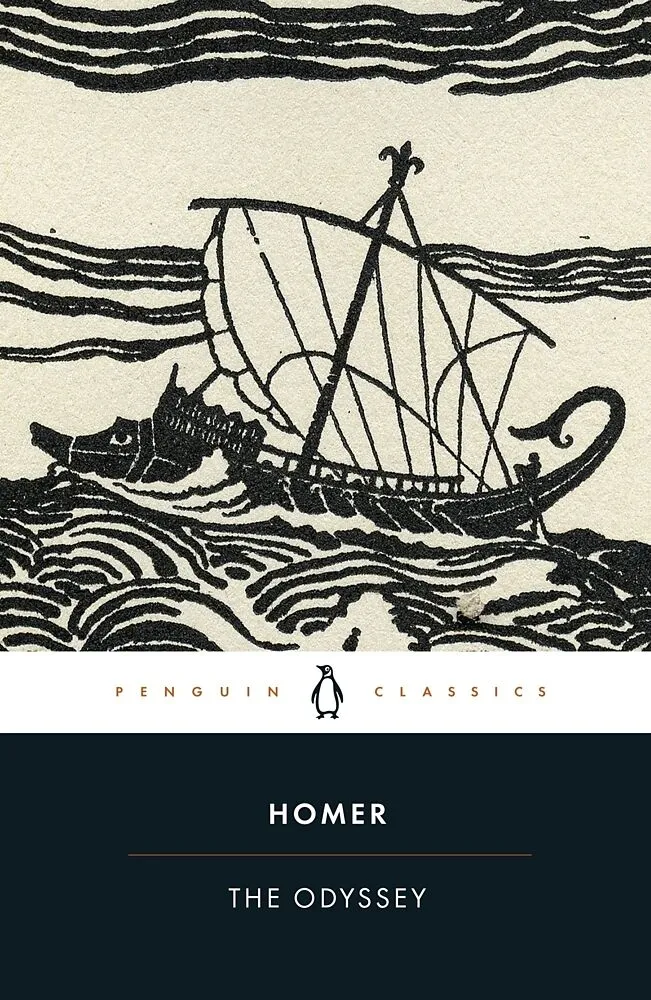
The Odyssey
Beschreibung
Zusatztext [Robert Fitzgerald's translation is] a masterpiece . . . An Odyssey worthy of the original. The Nation [Fitzgerald's Odyssey and Iliad ] open up once more the unique greatness of Homer's art at the level above the formula; yet at the same time they ...Format auswählen
- Kartonierter EinbandCHF 16.20
- Fester EinbandCHF 29.20
- E-Book (epub)CHF 7.50
- Kartonierter EinbandCHF 24.30

Wird oft zusammen gekauft
Andere Kunden kauften auch
Beschreibung
Zusatztext [Robert Fitzgerald's translation is] a masterpiece . . . An Odyssey worthy of the original. The Nation [Fitzgerald's Odyssey and Iliad ] open up once more the unique greatness of Homer's art at the level above the formula; yet at the same time they do not neglect the brilliant texture of Homeric verse at the level of the line and the phrase. The Yale Review [In] Robert Fitzgerald's translation . . . there is no anxious straining after mighty effects! but rather a constant readiness for what the occasion demands! a kind of Odyssean adequacy to the task in hand! and this line-by-line vigilance builds up into a completely credible imagined world. from the Introduction by Seamus Heaney Informationen zum Autor Homer Klappentext NOW A MAJOR FILM DIRECTED BY CHRISTOPHER NOLAN ' The Odyssey is a poem of extraordinary pleasures: it is a salt-caked, storm-tossed, wine-dark treasury of tales, of many twists and turns, like life itself' Guardian The epic tale of Odysseus and his ten-year journey home after the Trojan War forms one of the earliest and greatest works of Western literature. Confronted by natural and supernatural threats - ship-wrecks, battles, monsters and the implacable enmity of the sea-god Poseidon - Odysseus must use his bravery and cunning to reach his homeland and overcome the obstacles that, even there, await him. E. V. Rieu's translation of The Odyssey was the very first Penguin Classic to be published, and has itself achieved classic status. Translated by E. V. RIEURevised translation by D. C. H. RIEUWith an Introduction by PETER JONES 'Strangers! he cried. And who are you? Where do you come from over the watery ways? Is yours a trading venture; or are you cruising the main on chance, like roving pirates, who risk their lives to ruin other people? 'Our hearts sank. The booming voice and the very sight of the monster filled us with panic. Still, I managed to find words to answer him. We are Achaeans, I said, on our way back from Troy driven astray by contrary winds across a vast expanse of sea we're making our way home but took the wrong way the wrong route as Zeus, I suppose, intended that we should. We are proud to say that we belong to the forces of Agamemnon, Atreus' son, who by sacking the great city of Ilium and destroying all its armies has made himself the most famous man in the world today. We find ourselves here as suppliants at your knees, in the hope that you may give us hospitality, or even give us the kind of gifts that hosts customarily give their guests. Good sir, remember your duty to the gods; we are your suppliants, and Zeus is the champion of suppliants and guests. He is the god of guests: guests are sacred to him, and he goes alongside them. 'That is what I said, and he answered me promptly out of his pitiless heart: Stranger, you must be a fool, or must have come from very far afield, to order me to fear or reverence the gods. We Cyclopes care nothing for Zeus with his aegis, nor for the rest of the blessed gods, since we are much stronger than they are. I would never spare you or your men for fear of incurring Zeus' enmity, unless I felt like it. But tell me where you moored your good ship when you came. Was it somewhere along the coast, or nearby? I'd like to know. 'His words were designed to get the better of me, but he could not outwit someone with my knowledge of the world. I answered with plausible words: As for my ship, it was wrecked by the Earthshaker Poseidon on the borders of your land. The wind had carried us on to a lee shore. He drove the ship up to a headland and hurled it on the rocks. But I and my friends here managed t o escape with our lives. 'T this the gruel brute made no reply. Instead, he jumped up, and reaching out towards my men, seized a couple and dashed the...
#8220;[Robert Fitzgerald’s translation is] a masterpiece . . . An Odyssey worthy of the original.” –The Nation
“[Fitzgerald’s Odyssey and Iliad] open up once more the unique greatness of Homer’s art at the level above the formula; yet at the same time they do not neglect the brilliant texture of Homeric verse at the level of the line and the phrase.” –The Yale Review
“[In] Robert Fitzgerald’s translation . . . there is no anxious straining after mighty effects, but rather a constant readiness for what the occasion demands, a kind of Odyssean adequacy to the task in hand, and this line-by-line vigilance builds up into a completely credible imagined world.”
–from the Introduction by Seamus Heaney
Autorentext
Homer
Klappentext
**NOW A MAJOR FILM DIRECTED BY CHRISTOPHER NOLAN
'The Odyssey is a poem of extraordinary pleasures: it is a salt-caked, storm-tossed, wine-dark treasury of tales, of many twists and turns, like life itself' Guardian**
The epic tale of Odysseus and his ten-year journey home after the Trojan War forms one of the earliest and greatest works of Western literature. Confronted by natural and supernatural threats - ship-wrecks, battles, monsters and the implacable enmity of the sea-god Poseidon - Odysseus must use his bravery and cunning to reach his homeland and overcome the obstacles that, even there, await him. E. V. Rieu's translation of The Odyssey was the very first Penguin Classic to be published, and has itself achieved classic status.
Translated by E. V. RIEU
Revised translation by D. C. H. RIEU
With an Introduction by PETER JONES
Zusammenfassung
A tale of Odysseus and his ten-year journey home after the Trojan war forms one of the earliest and greatest works of Western literature. Confronted by natural and supernatural threats - from the witch Circe who turns his men into pigs, to the twin terrors of Scylla and Charybdis.
Leseprobe
#160;‘”Strangers!” he cried. “And who are you? Where do you come from over the watery ways? Is yours a trading venture; or are you cruising the main on chance, like roving pirates, who risk their lives to ruin other people?”
‘Our hearts sank. The booming voice and the very sight of the monster filled us with panic. Still, I managed to find words to answer him. “We are Achaeans,” I said, “on our way back from Troy – driven astray by contrary winds across a vast expanse of sea – we’re making our way home but took the wrong way – the wrong route – as Zeus, I suppose, intended that we should. We are proud to say that we belong to the forces of Agamemnon, Atreus’ son, who by sacking the great city of Ilium and destroying all its armies has made himself the most famous man in the world today. We find ourselves here as suppliants at your knees, in the hope that you may give us hospitality, or even give us the kind of gifts that hosts customarily give their guests. Good sir, remember your duty to the gods; we are your suppliants, and Zeus is the champion of suppliants and guests. He is the god of guests: guests are sacred to him, and he goes alongside them.”
‘That is what I said, and he answered me promptly out of his pitiless heart: “Stranger, you must be a fool, or must have come from very far afield, to order me to fear or reverence the gods. We Cyclopes care nothing for Zeus with his aegis, nor for the rest of the blessed gods, since we are much stronger than they are. I would never spare you or your men for fear of incurring Zeus’ enmity, unless I felt like it. But tell me where you moored your good ship when you came. Was it somewhere along the coast, or nearby? I’d like to know.”
‘His words were designed to get the better of me, but he could not outwit someone with my knowledge of the world. I answered with plausible words: “As for my ship, it was wrecked by the Earthshaker Poseidon on the borders of your land. The wind had carried us on to a lee shore. He drove the ship up…