Moby-Dick
Beschreibung
Herman Meville's profound and timeless inquiry into one man's obsession, in a gorgeous new clothbound edition Informationen zum Autor Herman Melville (1819-91) became in his late twenties a highly successful author of exotic novels based on his exper...Format auswählen
- Fester EinbandCHF 33.20
- Kartonierter EinbandCHF 19.20
- E-Book (epub)CHF 9.90
- Fester EinbandCHF 33.20

Wird oft zusammen gekauft
Andere Kunden kauften auch
Beschreibung
Herman Meville's profound and timeless inquiry into one man's obsession, in a gorgeous new clothbound edition
Informationen zum Autor Herman Melville (1819-91) became in his late twenties a highly successful author of exotic novels based on his experiences as a sailor - writing in quick succession Typee , Omoo , Redburn and White-Jacket . However, his masterpiece Moby-Dick was met with incomprehension and the other later works which are now the basis of his reputation, such as Bartleby, the Scrivener and The Confidence-Man , were failures. Melville stopped writing fiction and the rest of his long life was spent first as a lecturer and then, for nineteen years, as a customs official in New York City. He was also the author of the immensely long poem Clarel, which was similarly dismissed. At the end of his life he wrote Billy Budd, Sailor which was published posthumously in 1924. Klappentext Part of Penguin's beautiful hardback Clothbound Classics series, designed by the award-winning Coralie Bickford-Smith, these delectable and collectible editions are bound in high-quality colourful, tactile cloth with foil stamped into the design. In Herman Melville's Moby-Dick , Captain Ahab is an eerily compelling madman who focuses his distilled hatred and suffering (and that of generations before him) into the pursuit of a creature as vast, dangerous and unknowable as the sea itself. More than just a novel of adventure, this is a haunting social commentary populated with some of the most enduring characters in literature. Written with wonderfully redemptive humour, Moby Dick is a profound and timeless inquiry into character, faith and the nature of perception. Call me Ishmael. This resonant opening of Moby-Dick, the greatest novel in American literature, announces the narrator, Herman Melville, as he with a measure of slyness thought of himself. In the Scriptures Ishmael, a wild man sired by the overwhelming patriarch Abraham, was nevertheless the bastard son of a serving girl Hagar. The author himself was the offspring of two distinguished American families, the Melvilles of Boston and the Gansevoorts of Albany. Melville's father cast something of a blight on the family escutcheon by his tendency to bankruptcy which passed down to his son. Dollars damn me, the son was to say over and over. When he sat down in the green landscape of Pittsfield, Massachusetts, to compose Moby-Dick he was in debt, the father of one son, and another to be born a few days after the publication of the novel in England. Melville had published five novels previous to Moby-Dick; the first two did well, and then with the capriciousness of the public the subsequent novels failed to please. He was a known literary figure with a fading reputation. How he came upon the courage to undertake the challenging creation of the epical battle between a sea creature, a white whale called Moby Dick, and an old captain from Nantucket by the name of Ahab is one of literature's triumphant mysteries. Add to that, as one reads, that he was only thirty-two years old. Ten years before, in 1841, he had signed up as a common seaman on the whaling vessel Acushnet bound for the South Seas. Young Ishmael was drawn by the lure of the sea and by the wonder of the whale itself, the Leviathan, the monarch of the deep, "one grand hooded phantom, like a snow hill in the air." Until the discovery of petroleum oil in 1859 and Thomas Edison's invention of the incandescent lamp in 1879, whaling was a major commercial occupation in New England. Fortunes were made, grand houses were built, often with a "widow's walk" on the roof that testified to the great dangers of the enterprise. For the crew, service on a whaler was a drastic life of unremitting labor; foul, crowded quarters; bad food in scanty servings; contractual terms for years at miserable wages; brutalized companions picked up from all the ports of the world; tyrannical captains practicing a "...
Autorentext
Herman Melville (1819-91) became in his late twenties a highly successful author of exotic novels based on his experiences as a sailor - writing in quick succession Typee, Omoo, Redburn and White-Jacket. However, his masterpiece Moby-Dick was met with incomprehension and the other later works which are now the basis of his reputation, such as Bartleby, the Scrivener and The Confidence-Man, were failures. Melville stopped writing fiction and the rest of his long life was spent first as a lecturer and then, for nineteen years, as a customs official in New York City. He was also the author of the immensely long poem Clarel, which was similarly dismissed. At the end of his life he wrote Billy Budd, Sailor which was published posthumously in 1924.
Klappentext
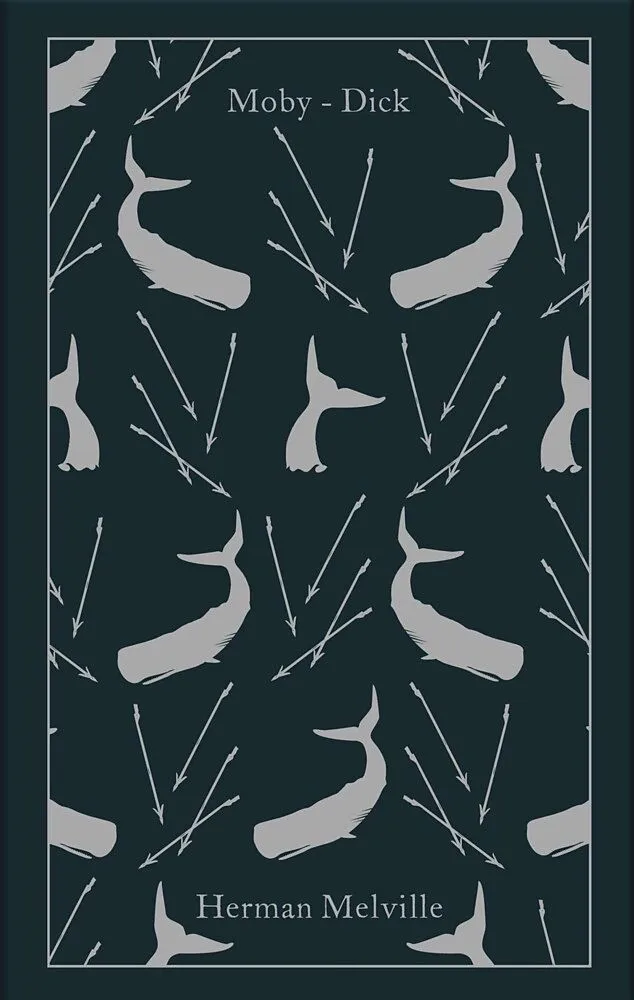
Part of Penguin's beautiful hardback Clothbound Classics series, designed by the award-winning Coralie Bickford-Smith, these delectable and collectible editions are bound in high-quality colourful, tactile cloth with foil stamped into the design.
In Herman Melville's Moby-Dick, Captain Ahab is an eerily compelling madman who focuses his distilled hatred and suffering (and that of generations before him) into the pursuit of a creature as vast, dangerous and unknowable as the sea itself. More than just a novel of adventure, this is a haunting social commentary populated with some of the most enduring characters in literature. Written with wonderfully redemptive humour, Moby Dick is a profound and timeless inquiry into character, faith and the nature of perception.
Zusammenfassung
Features Captain Ahab who is an eerily compelling madman who focuses his distilled hatred and suffering (and that of generations before him) into the pursuit of a creature as vast, dangerous and unknowable as the sea itself. This title is a haunting social commentary populated with some of the most enduring characters in literature.
Leseprobe
Call me Ishmael. This resonant opening of Moby-Dick, the greatest novel in American literature, announces the narrator, Herman Melville, as he with a measure of slyness thought of himself. In the Scriptures Ishmael, a wild man sired by the overwhelming patriarch Abraham, was nevertheless the bastard son of a serving girl Hagar. The author himself was the offspring of two distinguished American families, the Melvilles of Boston and the Gansevoorts of Albany.
Melville's father cast something of a blight on the family escutcheon by his tendency to bankruptcy which passed down to his son. Dollars damn me, the son was to say over and over. When he sat down in the green landscape of Pittsfield, Massachusetts, to compose Moby-Dick he was in debt, the father of one son, and another to be born a few days after the publication of the novel in England.
Melville had published five novels previous to Moby-Dick; the first two did well, and then with the capriciousness of the public the subsequent novels failed to please. He was a known literary figure with a fading reputation. How he came upon the courage to undertake the challenging creation of the epical battle between a sea creature, a white whale called Moby Dick, and an old captain from Nantucket by the name of Ahab is one of literature's triumphant mysteries. Add to that, as one reads, that he was only thirty-two years old.
Ten years before, in 1841, he had signed up as a common seaman on the whaling vessel Acushnet bound for the South Seas. Young Ishmael was drawn by the lure of the sea and by the wonder of the whale itself, the Leviathan, the monarch of the deep, "one grand hooded phantom, like a snow hill in the air." Until the discovery of petroleum oil in 1859 and Thomas Edison's invention of the incandescent lamp in 1879, whaling was a major commercial occupation in New England. Fortunes were made, grand houses were built, often with a "widow's walk" on the roof that testified to the great dangers of the enterprise. For the crew, service on…