Carbon
Beschreibung
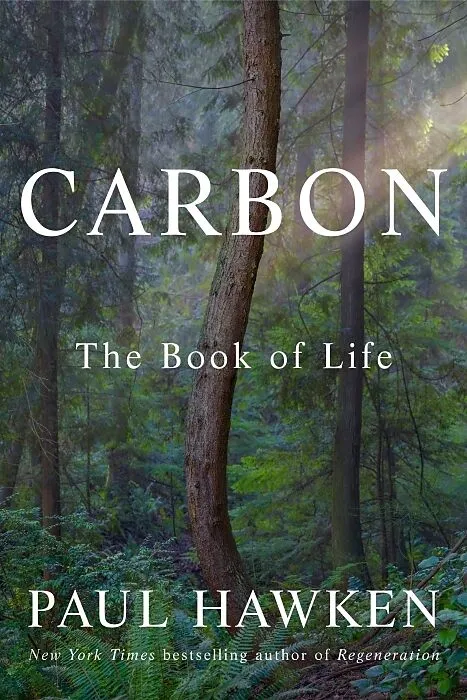
A journey into the world of carbon, the most versatile element on the planet, by the Carbon is the only element that animates the entirety of the living world. Though comprising a tiny fraction of Earth’s composition, our planet is lifeless without it. Y...Format auswählen
- Fester EinbandCHF 40.70

Wird oft zusammen gekauft
Andere Kunden kauften auch
Beschreibung
A journey into the world of carbon, the most versatile element on the planet, by the Carbon is the only element that animates the entirety of the living world. Though comprising a tiny fraction of Earth’s composition, our planet is lifeless without it. Yet it is maligned as the driver of climate change, scorned as an errant element blamed for the possible demise of civilization. Here In this stirring, hopeful, and deeply humane book, Hawken illuminates the subtle connections between carbon and our collective human experience and asks us to see nature, carbon, and ourselves as exquisitely intertwined--inseparably connected.
Autorentext
Paul Hawken is a bestselling author and leading voice calling for the regeneration of nature and humanity. He has authored nine books published in thirty languages, including The Ecology of Commerce, Blessed Unrest, and Regeneration. Founder of projects Drawdown and Regeneration, he is a renowned lecturer who consults with NGOs, governments, and corporations worldwide. He and his wife live in the Cascade Creek watershed in Northern California with coyotes, foxes, bobcats, ravens, flocks of nuthatches, red-tailed hawks, and pileated woodpeckers.
Leseprobe
One
Carbon
"There are things we must do, sayings we must say, thoughts we must think, that look nothing like the images of success that have so thoroughly possessed our visions of justice."
—BÁYÒ AKÓMOLÁFÉ
Carbon moves ceaselessly through the four realms—the biosphere, oceans, land, and atmosphere. It flows in rivers and veins, soil and skin, breath and wind. It is the narrator of lives born and lost, futures feared and imagined. It is the courier coursing through every particle of our existence, the interwoven lattice that permeates cultures, lagoons, minds, grasslands, organisms, and our temporal life. Carbon’s dance of life does not take sides; it is never right or wrong. It is a timeless path that endlessly unwinds before us. Like Ariadne’s thread, the flow of carbon is a story that may allow us to escape the labyrinth of anxiety, ignorance, and fear the world bequeaths. Carbon’s increase in the atmosphere moves in tandem with the loss of the living world. The Book of Life encircles what has always regulated climate, the pulsing, living mantle we call Earth.
Like you, I take in the news, the science, the confusion, the broken politics—a world unfurled, fearful, at wit’s end, shrouded in shallow certainties. To better understand the riddles and luminosity of life, I chose to go far upstream, to headwaters, and look at the flow of life through the lens of carbon. Rather than bemoan the plight of the world solely through forecasts and portents, I turned to voices who see the planet absent the overlay of threats. Might there be wisdom domes as well as heat domes? There are women and men merging observational Indigenous wisdom and Western science into a different understanding of our place on Earth, a perspective that reveals what we do not know. Certainties are dissolving. They are being replaced by unfathomable complexity. Though carbon comprises a tiny fraction of the Earth, a planet without it is a dead rock in space, like a sky without stars, a symphony without sound. We have reduced carbon to an errant element, the culprit in a civilization bent on self-termination. The crises of a warming planet, rampant injustice, and collapsing biodiversity form a whole. Carbon, people, and nature are set apart as if they were independent. Carbon is a window into the entirety of life, with all its beauty, secrets, and complexity. When discussing carbon, people refer to atoms instead of magnificence, physics rather than sentience. Life is a flow, a river, not isolated components. Stubborn beliefs, petty details, and irrelevant media can splinter our awareness. The flow of carbon provides better stories, other ways to see, visions of possibility different from the disjointed and chaotic narratives that engulf us.
From a planetary view, the warming atmosphere is a response, an adjustment, a teaching. Earth’s climate is not breaking down as some would have it. However, it is changing faster than humans can adapt. Global heating foretells a tumultuous future. If human-induced greenhouse gas emissions are not curtailed, civilization will be. After decades of unwavering coaching by climate scientists, the world has awakened to climate dynamics. The changing atmosphere is front and center for companies, countries, schools, and universities. Investors are creating the most significant capital event in human history. Climate will be the fulcrum of finance for decades to come. Although banks, investors, and pension funds were once apathetic to financing a livable future, the prospect of decarbonizing the $110 trillion global economy has changed many minds. What is on the agenda? Every home, car, train, plane, truck, city, ship, product, farm, building, and utility in the world. Regarding resources, all wood, steel, concrete, fiber, plastics, and minerals.
For industry, the changing climate is seen as an engineering problem, not a crisis of behavior, consumption, or disconnection. There is a tacit assumption that the current fossil fuel– based energy system can be swapped out for renewables and the privileged can continue to live the way they do. This is magical thinking. To remedy global warming, oil companies strive to capture and remove carbon from the atmosphere as if it were an overflowing storage depot. It is emblematic of how business has come to perceive the Earth—a manageable contrivance humans can service, modify, and fix. It implies that a juggernaut economy can tame the atmosphere with claims of being carbon neutral. The current lifestyle of the world is maintained at the cost of a terrifying future. There is no defense for our misguided conduct and the disintegration of the living world.
Entrepreneurs have created carbon dioxide markets, as was once done with enslaved human beings and ivory tusks. There is now a marketplace for biodiversity credits. The International Monetary Fund calculated the value of a blue whale at $2 million—a so‑called nature-based solution, a term that implies we can fix the natural world the same way we are attempting to repair the atmosphere. What could the monetization of a whale possibly mean? The unswerving belief in the marketplace as a means to create a better world is belied by history. Extracting and selling the biosphere to the highest bidder is the cause of global warming and social injustice. Stepping back from the inordinate obsession with wealth, it is apparent that commerce is eliminating life on Earth to pay shareholder dividends.
When Prince Hamlet lamented, “There’s the rub,” he was contemplating suicide and realized it required leaving his mortal coil. The rub for civilization is the curious, delusional beliefs of commerce. Citizen Potawatomi biologist Robin Wall Kimmerer explains the snag: “We need more than policy change; we need a change of worldview, from the fiction of human exceptionalism to the reality of our kinship and reciprocity with the living world. The planet asks us that we renounce a culture of endless taking so that the world can continue.” This cannot happen if political, financial, and corporate powers think solely about future gains. The task of modernity is to recognize that our existence rests upon the entirety of planetary life.
The world economy is undergoing a massive energy transition; a civilization based on fossil-fuel combustion is transforming into one powered by current solar income: solar panels, wind turbines, and hydro. The necessity is clear. Governing a…