
IHR WARENKORB IST AKTUELL LEER.
Haben Sie noch nichts passendes gefunden? Stöbern Sie durch unser komplettes Sortiment.
Oder melden Sie sich an bzw. registrieren Sie sich.
- Kostenlose Lieferung
- Kauf auf Rechnung
- Ex Libris Tiefpreis
- Filiallieferung und 650+ Abholorte
- Rabatt-Bons als Club-Mitglied
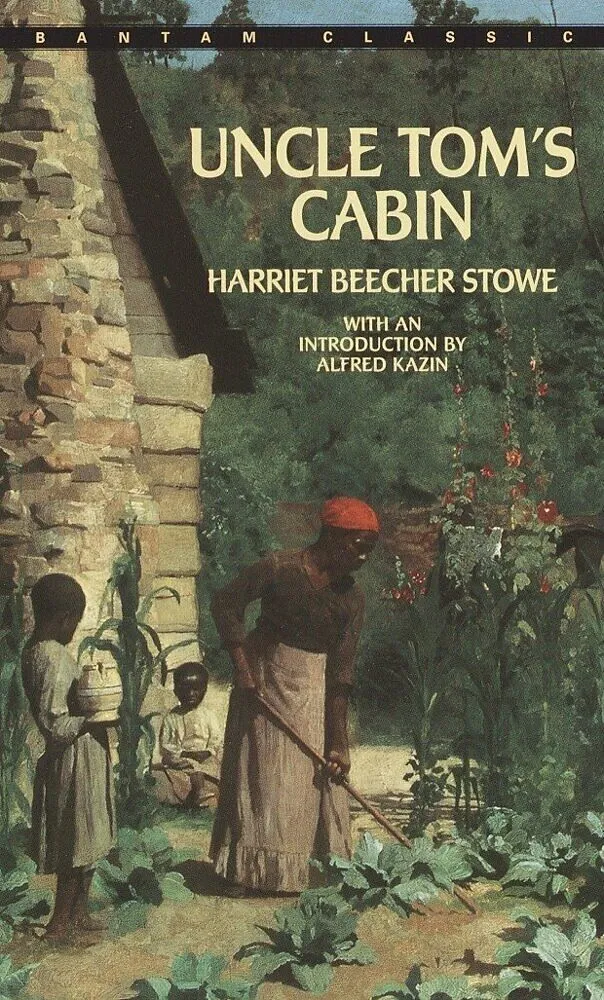
Uncle Tom's Cabin
Beschreibung
Zusatztext "Uncle Tom's Cabin is the most powerful and enduring work of art ever written about American slavery." Alfred Kazin Informationen zum Autor Harriet Beecher Stowe Klappentext Uncle Tom, Topsy, Sambo, Simon Legree, little Eva: their names are American...Format auswählen
- Kartonierter EinbandCHF 8.60

Wird oft zusammen gekauft
Andere Kunden kauften auch
Beschreibung
Zusatztext "Uncle Tom's Cabin is the most powerful and enduring work of art ever written about American slavery." Alfred Kazin Informationen zum Autor Harriet Beecher Stowe Klappentext Uncle Tom, Topsy, Sambo, Simon Legree, little Eva: their names are American bywords, and all of them are characters in Harriet Beecher Stowe's remarkable novel of the pre-Civil War South. Uncle Tom's Cabin was revolutionary in 1852 for its passionate indictment of slavery and for its presentation of Tom, "a man of humanity," as the first black hero in American fiction. Labeled racist and condescending by some contemporary critics, it remains a shocking, controversial, and powerful work -- exposing the attitudes of white nineteenth-century society toward "the peculiar institution" and documenting, in heartrending detail, the tragic breakup of black Kentucky families "sold down the river." An immediate international sensation, Uncle Tom's Cabin sold 300,000 copies in the first year, was translated into thirty-seven languages, and has never gone out of print: its political impact was immense, its emotional influence immeasurable.Late in the afternoon of a chilly day in February, two gentlemen were sitting alone over their wine, in a well-furnished dining parlor, in the town of P, in Kentucky. There were no servants present, and the gentlemen, with chairs closely approaching, seemed to be discussing some subject with great earnestness. For convenience sake, we have said, hitherto, two gentlemen. One of the parties, however, when critically examined, did not seem, strictly speaking, to come under the species. He was a short, thick-set man, with coarse, commonplace features, and that swaggering air of pretension which marks a low man who is trying to elbow his way upward in the world. He was much over-dressed, in a gaudy vest of many colors, a blue neckerchief, bedropped gayly with yellow spots, and arranged with a flaunting tie, quite in keeping with the general air of the man. His hands, large and coarse, were plentifully bedecked with rings; and he wore a heavy gold watch-chain, with a bundle of seals of portentous size, and a great variety of colors, attached to it,which, in the ardor of conversation, he was in the habit of flourishing and jingling with evident satisfaction. His conversation was in free and easy defiance of Murray's Grammar, and was garnished at convenient intervals with various profane expressions, which not even the desire to be graphic in our account shall induce us to transcribe. His companion, Mr. Shelby, had the appearance of a gentleman; and the arrangements of the house, and the general air of the housekeeping, indicated easy, and even opulent circumstances. As we before stated, the two were in the midst of an earnest conversation. 'That is the way I should arrange the matter,' said Mr. Shelby. 'I can't make trade that wayI positively can't, Mr. Shelby,' said the other, holding up a glass of wine between his eye and the light. 'Why, the fact is, Haley, Tom is an uncommon fellow; he is certainly worth that sum anywheresteady, honest, capable, manages my whole farm like a clock.' 'You mean honest, as niggers go,' said Haley, helping himself to a glass of brandy. 'No; I mean, really, Tom is a good, steady,...
Autorentext
Harriet Beecher Stowe
Klappentext
Uncle Tom, Topsy, Sambo, Simon Legree, little Eva: their names are American bywords, and all of them are characters in Harriet Beecher Stowe's remarkable novel of the pre-Civil War South. Uncle Tom's Cabin was revolutionary in 1852 for its passionate indictment of slavery and for its presentation of Tom, "a man of humanity," as the first black hero in American fiction. Labeled racist and condescending by some contemporary critics, it remains a shocking, controversial, and powerful work -- exposing the attitudes of white nineteenth-century society toward "the peculiar institution" and documenting, in heartrending detail, the tragic breakup of black Kentucky families "sold down the river." An immediate international sensation, Uncle Tom's Cabin sold 300,000 copies in the first year, was translated into thirty-seven languages, and has never gone out of print: its political impact was immense, its emotional influence immeasurable.
Leseprobe
Late in the afternoon of a chilly day in February, two gentlemen were sitting alone
over their wine, in a well-furnished dining parlor, in the town of P—, in Kentucky.
There were no servants present, and the gentlemen, with chairs closely
approaching, seemed to be discussing some subject with great earnestness.
For convenience sake, we have said, hitherto, two gentlemen. One of the parties,
however, when critically examined, did not seem, strictly speaking, to come under
the species. He was a short, thick-set man, with coarse, commonplace features, and
that swaggering air of pretension which marks a low man who is trying to elbow his
way upward in the world. He was much over-dressed, in a gaudy vest of many
colors, a blue neckerchief, bedropped gayly with yellow spots, and arranged with a
flaunting tie, quite in keeping with the general air of the man. His hands, large and
coarse, were plentifully bedecked with rings; and he wore a heavy gold
watch-chain, with a bundle of seals of portentous size, and a great variety of colors,
attached to it,—which, in the ardor of conversation, he was in the habit of
flourishing and jingling with evident satisfaction. His conversation was in free and
easy defiance of Murray's Grammar, and was garnished at convenient intervals with
various profane expressions, which not even the desire to be graphic in our account
shall induce us to transcribe.
His companion, Mr. Shelby, had the appearance of a gentleman; and the
arrangements of the house, and the general air of the housekeeping, indicated easy,
and even opulent circumstances. As we before stated, the two were in the midst of
an earnest conversation.
'That is the way I should arrange the matter,' said Mr. Shelby.
'I can't make trade that way—I positively can't, Mr. Shelby,' said the other, holding
up a glass of wine between his eye and the light.
'Why, the fact is, Haley, Tom is an uncommon fellow; he is certainly worth that sum
anywhere—steady, honest, capable, manages my whole farm like a clock.'
'You mean honest, as niggers go,' said Haley, helping himself to a glass of brandy.
'No; I mean, really, Tom is a good, steady, sensible, pious fellow. He got religion at
a camp-meeting, four years ago; and I believe he really did get it. I've trusted him,
since then, with everything I have,—money, house, horses,—and let him come and
go round the country; and I always found him true and square in everything.'
'Some folks don't believe there is pious niggers, Shelby,' said Haley, with a candid
flourish of his hand, 'but I do. I had a fellow, now, in this yer last lot I took to
Orleans—'twas as good as a meetin', now, really, to hear that critter pray; and he was
quite gentle and quiet like. He fetched me a good sum, too, for I bought him cheap
of a man that was 'bliged to sell out; so I realized six hundred on him. Yes, I consider
religion a valeyable thing in a nigger, when it's the genuine article, and no mistake.'
'Well, Tom's got the real article, if ever a fellow had,' rejoined the other. 'Why, last
fall, I let him go to Cincinnati alone, to do business for me, and bring home five
hundred dollars. 'Tom,' says I to him, 'I trust you, because I think you're a
Christian—'I know you wouldn't cheat.' Tom comes back, sure enough; I knew he
would. Some low fellows, they say, said to him—'Tom, why don't you make tracks
for Canada?' 'Ah, master trusted me, and I couldn't'—they told me about it. I am sorry
to part with Tom, I must sa…