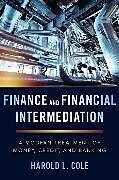
Finance and Financial Intermediation
Beschreibung
Zusatztext 14/01/2019 Informationen zum Autor Harold L. Cole is a Professor of Economics at the University of Pennsylvania and the Editor of the International Economic Review. He is a Fellow of the Econometric Society and the Society for the Advancement of The...Format auswählen
- Kartonierter EinbandCHF 69.60

Wird oft zusammen gekauft
Andere Kunden kauften auch
Beschreibung
Zusatztext 14/01/2019 Informationen zum Autor Harold L. Cole is a Professor of Economics at the University of Pennsylvania and the Editor of the International Economic Review. He is a Fellow of the Econometric Society and the Society for the Advancement of Theory. He is a research associate of the NBER and a visiting scholar at the Federal Reserve Banks of Philadelphia Klappentext The financial system is a densely interconnected network of financial intermediaries, facilitators, and markets that serves three major purposes: allocating capital, sharing risks, and facilitating intertemporal trade. Finance and Financial Intermediation provides a broad overview of the financial system and assets pricing, covering history, institutional detail, and theory. It also examines soverign debt crises and their forms through analysis of cases likethe Great Recession of the 2000s. Zusammenfassung The financial system is a densely interconnected network of financial intermediaries, facilitators, and markets that serves three major purposes: allocating capital, sharing risks, and facilitating intertemporal trade. Asset prices are an important mechanism in each of these phenomena. Capital allocation, whether through loans or other forms of investment, can vary both across sectors-at the broadest, manufactures, agriculture, and services-and within sectors, for example different firms. The risk that various investors are willing to take reflects their financial position and alternative opportunities. Risk and asset allocation are also influenced by whether money, and especially its expenditure, is more important now or in the future. These decisions are all influenced by governmental policies. When there are mismatches, the results include financial meltdowns, fiscal deficits, sovereign debt, default and debt crises.Harold L. Cole provides a broad overview of the financial system and assets pricing, covering history, institutional detail, and theory. The book begins with an overview of financial markets and their operation and then covers asset pricing for standard assets and derivatives, and analyzes what modern finance says about firm behavior and capital structure. It then examines theories of money, exchange rates, electronic payments methods, and cryptocurrencies. After exploring banks and other forms of financial intermediation, the book examines the role they played in the Great Recession. Having provided an overview of the provate sector, Cole switches to public finance and government borrowing as well as the incentives to monetize the public debt and its consequences. The book closes with an examination of sovereign debt crises and an analysis of their various forms.Finance and financial intermediation are central to modern economies. This book covers all of the material a sophisticated economist needs to know about this area. Inhaltsverzeichnis Preface i Part 1. Assets and the Structure of Financial Markets Chapter 1. Overview of the Financial System Chapter 2. Market Operation Chapter 3. Asset Pricing I: Risk-Neutral Pricing Chapter 4. Asset Pricing with Growth Chapter 5. Asset Pricing II Chapter 6. Asset Pricing III: Arbitrage-Based Pricing Chapter 7. Derivatives Chapter 8. Investment and Capital Structure of the Firm Chapter 9. Money Chapter 10. Exchange Rates and Nominal Interest Rates Chapter 11. Moving Away From Money Chapter 12. Lending and the Development of Banks Chapter 13. More on Banks and Banking Chapter 14. The Financial Meltdown and the Great Recession Chapter 15. Debt, Spending and Inflation Chapter 16. Modeling Government Debt and Inflation Chapter 17. Debt, Default and Interest Rates Chapter 18. Math Reviews Index ...
14/01/2019
Autorentext
Harold L. Cole is a Professor of Economics at the University of Pennsylvania and the Editor of the International Economic Review. He is a Fellow of the Econometric Society and the Society for the Advancement of Theory. He is a research associate of the NBER and a visiting scholar at the Federal Reserve Banks of Philadelphia
Klappentext
The financial system is a densely interconnected network of financial intermediaries, facilitators, and markets that serves three major purposes: allocating capital, sharing risks, and facilitating intertemporal trade. Finance and Financial Intermediation provides a broad overview of the financial system and assets pricing, covering history, institutional detail, and theory. It also examines soverign debt crises and their forms through analysis of cases likethe Great Recession of the 2000s.
Inhalt
Preface i
Part 1. Assets and the Structure of Financial Markets
Chapter 1. Overview of the Financial System
Chapter 2. Market Operation
Chapter 3. Asset Pricing I: Risk-Neutral Pricing
Chapter 4. Asset Pricing with Growth
Chapter 5. Asset Pricing II
Chapter 6. Asset Pricing III: Arbitrage-Based Pricing
Chapter 7. Derivatives
Chapter 8. Investment and Capital Structure of the Firm
Chapter 9. Money
Chapter 10. Exchange Rates and Nominal Interest Rates
Chapter 11. Moving Away From Money
Chapter 12. Lending and the Development of Banks
Chapter 13. More on Banks and Banking
Chapter 14. The Financial Meltdown and the Great Recession
Chapter 15. Debt, Spending and Inflation
Chapter 16. Modeling Government Debt and Inflation
Chapter 17. Debt, Default and Interest Rates
Chapter 18. Math Reviews
Index